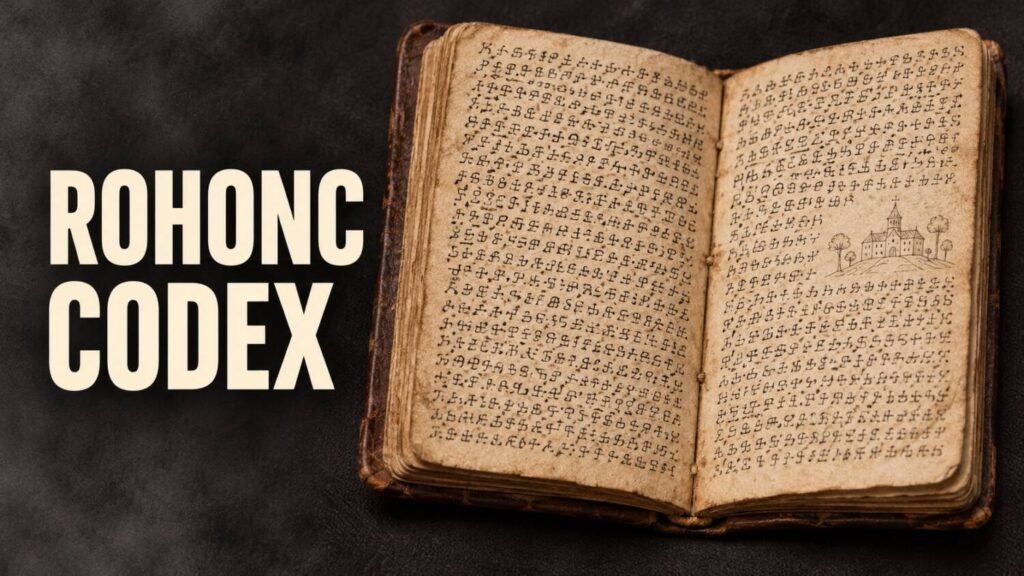
Four pages attached to a letter gave researchers a new place to try a reading of the Rohonc Codex. The pages carry the same unusual writing as the book. They also come with a document that can be read independently. That combination gives the proposed decipherment a test beyond the manuscript that inspired it.
The book in the library
The manuscript is a small paper volume of 224 leaves. The Library of the Hungarian Academy of Sciences catalogues it as K 114 and records its arrival from the Batthyány library at Rohonc in 1838. Its digital facsimile preserves the close rows of signs and the illustrations that gave researchers their first clues about the contents. Library catalogue and facsimile
In 2018, Levente Zoltán Király and Gábor Tokai presented a reading that treats many signs or sign groups as units of meaning. They used recurring sequences and the relationship between passages and Christian images to propose readings. A picture can suggest a scene. The value of a proposed reading depends on whether the same signs keep doing comparable work on other pages. The 2018 decipherment paper
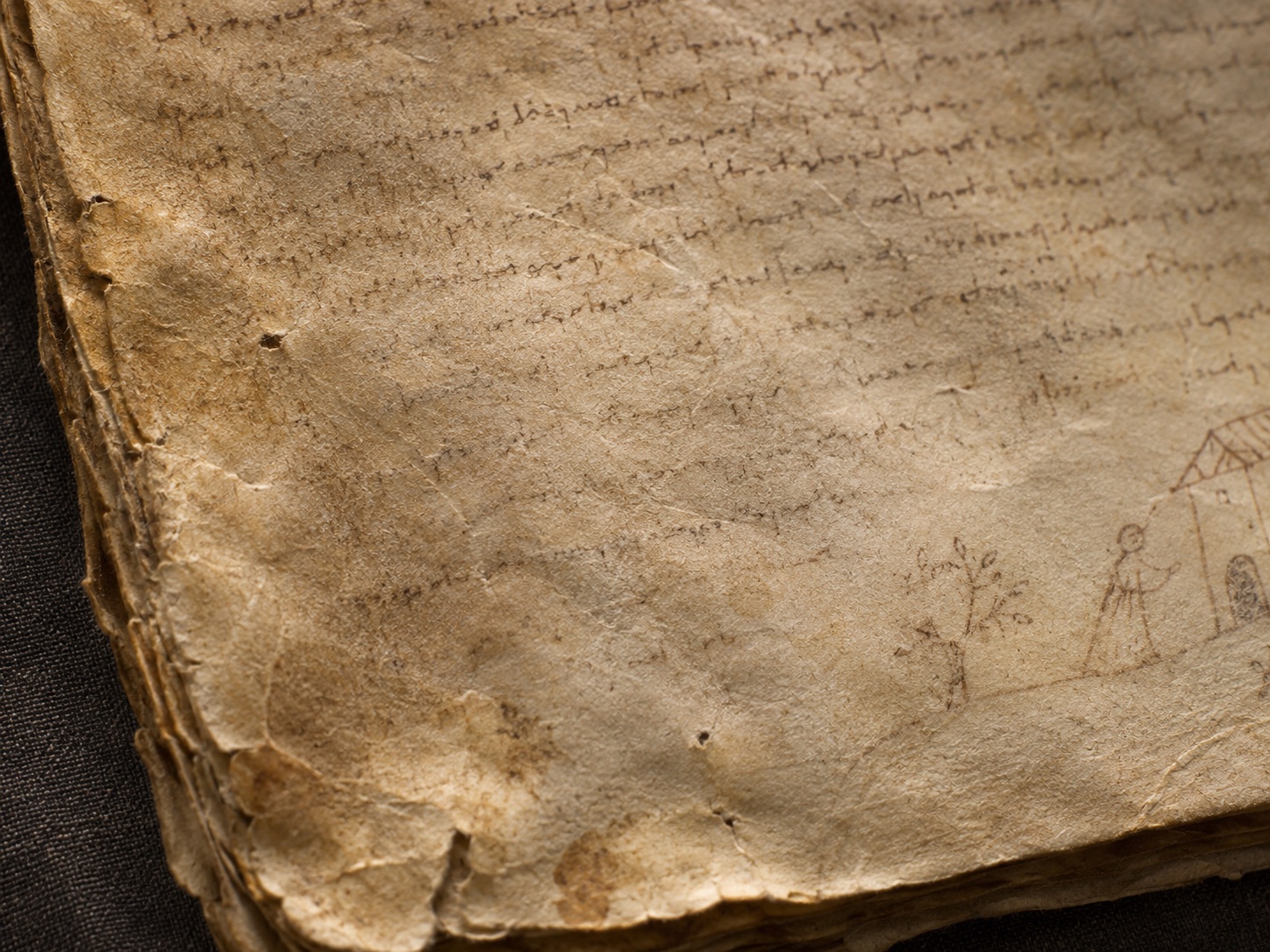
Four pages outside the book
Tokai’s 2026 paper describes four pages of the same writing attached to a letter. He argues that the material links the manuscript to the Batthyány circle around 1571. He also reports that the existing method produced coherent readings of the newly identified pages. The letter supplies evidence about transmission. The attached writing supplies more material on which to test the proposed rules. Tokai’s provenance study
A separate 2026 grammar study argues that patterns in the text point towards a deliberately constructed written language. The authors describe recurring behaviour in elements they interpret as prepositions and in endings attached to verbs and pronouns. They also identify unresolved passages. Those details give another reader specific rules to check. The grammar study
How to check a reading
A strong test starts with a folio and a set of sign values and rules. Apply them to a passage that did not supply those rules, then compare the result with any external clue. The newly identified pages matter because the reading can be checked against material outside the bound codex. The illustrated manuscript, the letter and the proposed grammar can now be compared directly.
The guide to why ancient scripts stay unread compares the evidence available for other inscriptions and manuscripts in this series.