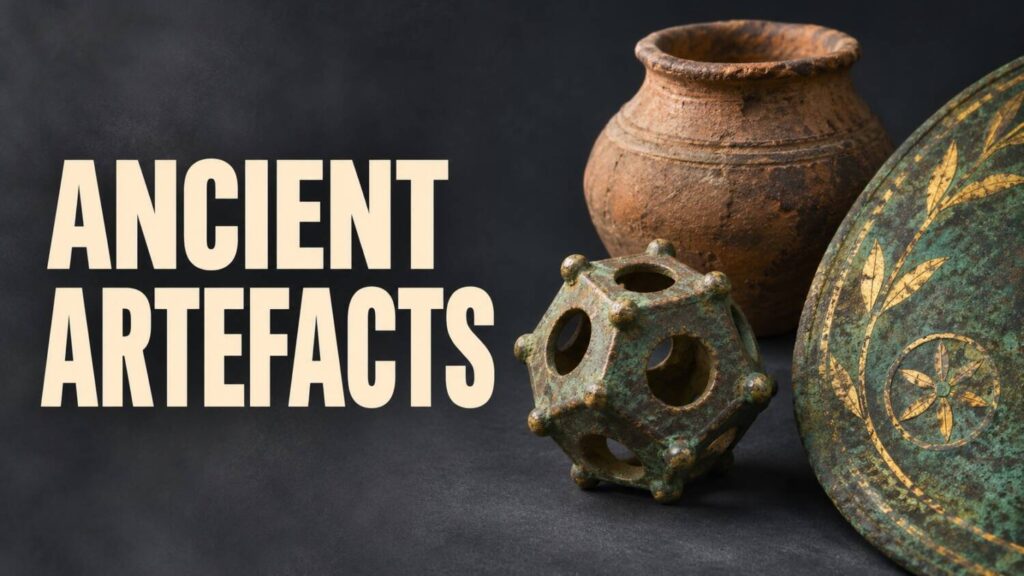
A jar near Baghdad contained two metals. A Roman cup turns red when light passes through it. A bronze disc recovered by police carries gold shapes that seem to describe the sky. Each detail is worth following, and each takes a reader to a different kind of evidence.
Start with where it was found
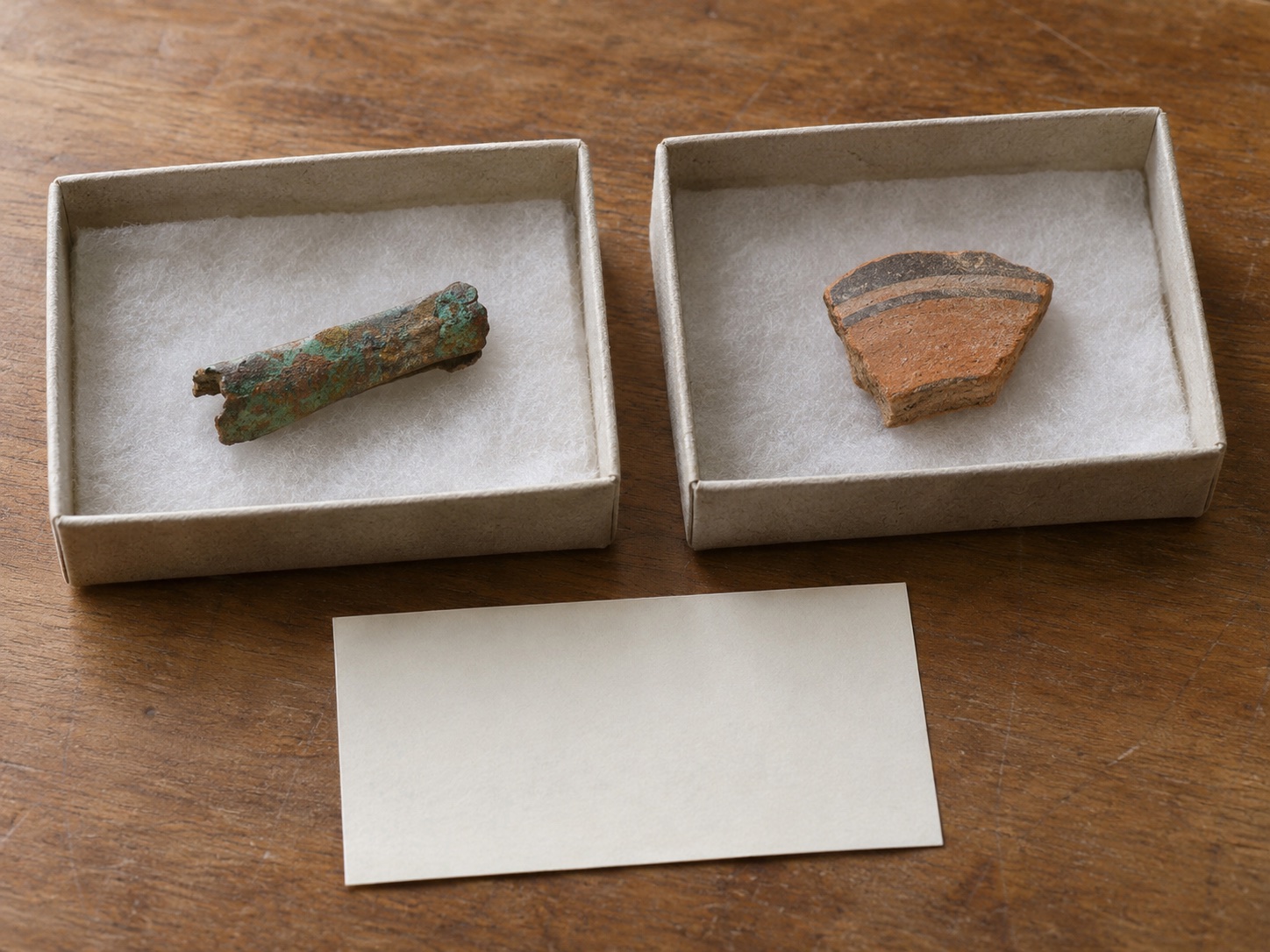
Look for a museum record or an excavation report with a number you can follow. In the Roman dodecahedron case, the Norton Disney excavation team could return to the trench where a volunteer found the object. A separate museum record for a London example provides measurements for comparison. Together, those records let readers ask how similar the objects are and what each findspot can tell us.
For the Nebra Sky Disc, the route from the ground to the museum ran through dealers and a police recovery. The case for its Bronze Age date depends on reconstructing the association with the objects reported alongside it. That makes the evidence linking the disc to the deposit as important as the appearance of the disc itself.
Ask what the material can tell you
A sample can show what an object contains and sometimes how it was worked. The particles found in the glass of the Lycurgus Cup help explain its change from green to red. Their presence leaves room for more than one production route. A sample can preserve the effect of the maker’s decisions even when the steps behind it have been lost.
Check which part of an object was sampled and which claim the analysis addresses. A study of metal from the edge of a disc may explain how the rim took shape. Establishing a date for its burial can still depend on soil, associated objects and the records of the find.
Follow the experiment back to the object
The Baghdad Battery can be represented by a jar, a pair of metals and a suitable liquid. A voltage reading shows what that setup can do. To connect the result to ancient use, a reader would also need evidence for the liquid, a circuit or a task that the device could actually perform.
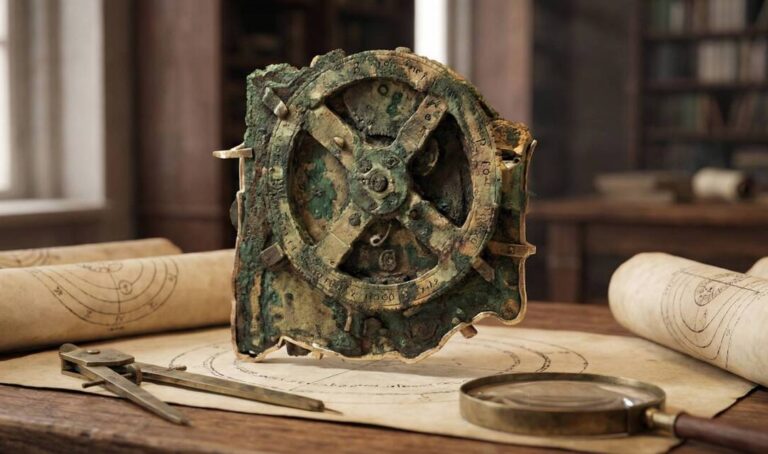
Our guide to what a replica can prove follows the same question through the Antikythera Mechanism. Some parts of a model can follow measured remains. Others are choices a builder has to make. Look for measurements, documented substitutions and a test that another builder could repeat.
A good place to finish is the first detail that made the object puzzling. Ask which record establishes that detail, what a test showed and what evidence might distinguish the competing explanations. You should be able to point to the hole, coating or line in the catalogue that the argument depends on.