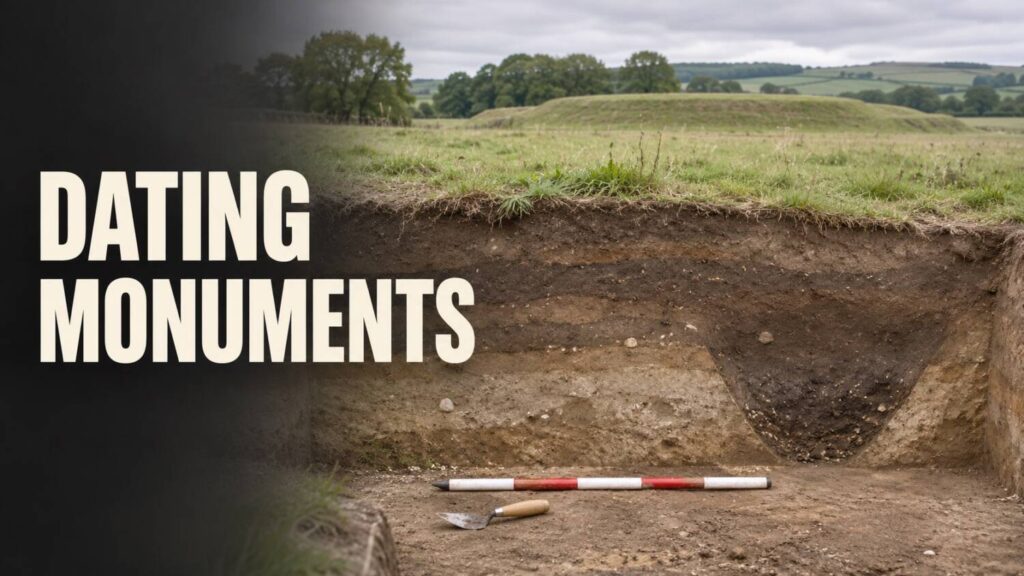
Between two pillars in Enclosure D at Göbekli Tepe, archaeologists sampled clay plaster from the wall. It held enough organic material for a radiocarbon test. The result pointed to the tenth millennium BCE. What made the date useful was where the sample came from. It belonged to the wall, where it could tell researchers about building activity.
At Scorton in North Yorkshire, the question was much the same. When did people build the monument? The surviving evidence lay in the sand and gravel of a bank and ditch. The team needed a method that could date the burial of sediment.
Radiocarbon and the wall at Göbekli Tepe
Radiocarbon dating measures the radioactive carbon remaining in a sample of once-living material. A calibration curve lets researchers express the result in calendar years, usually as a range. The carbon in a tree ring dates to when that ring grew. Charcoal from the centre of an old tree can therefore give an age much older than the fire that produced it.
The excavators’ radiocarbon study reports a calibrated span from 9745 to 9314 BCE for the plaster sample, with 95.4 percent of the probability across two intervals within that span. Charcoal samples found next to the enclosure also point to activity in the tenth millennium BCE. Material in the fill can tell a different story. It may have arrived after the wall was built or come from an older deposit. The researchers had to establish which event each sample could date.
Buried sediment at Scorton
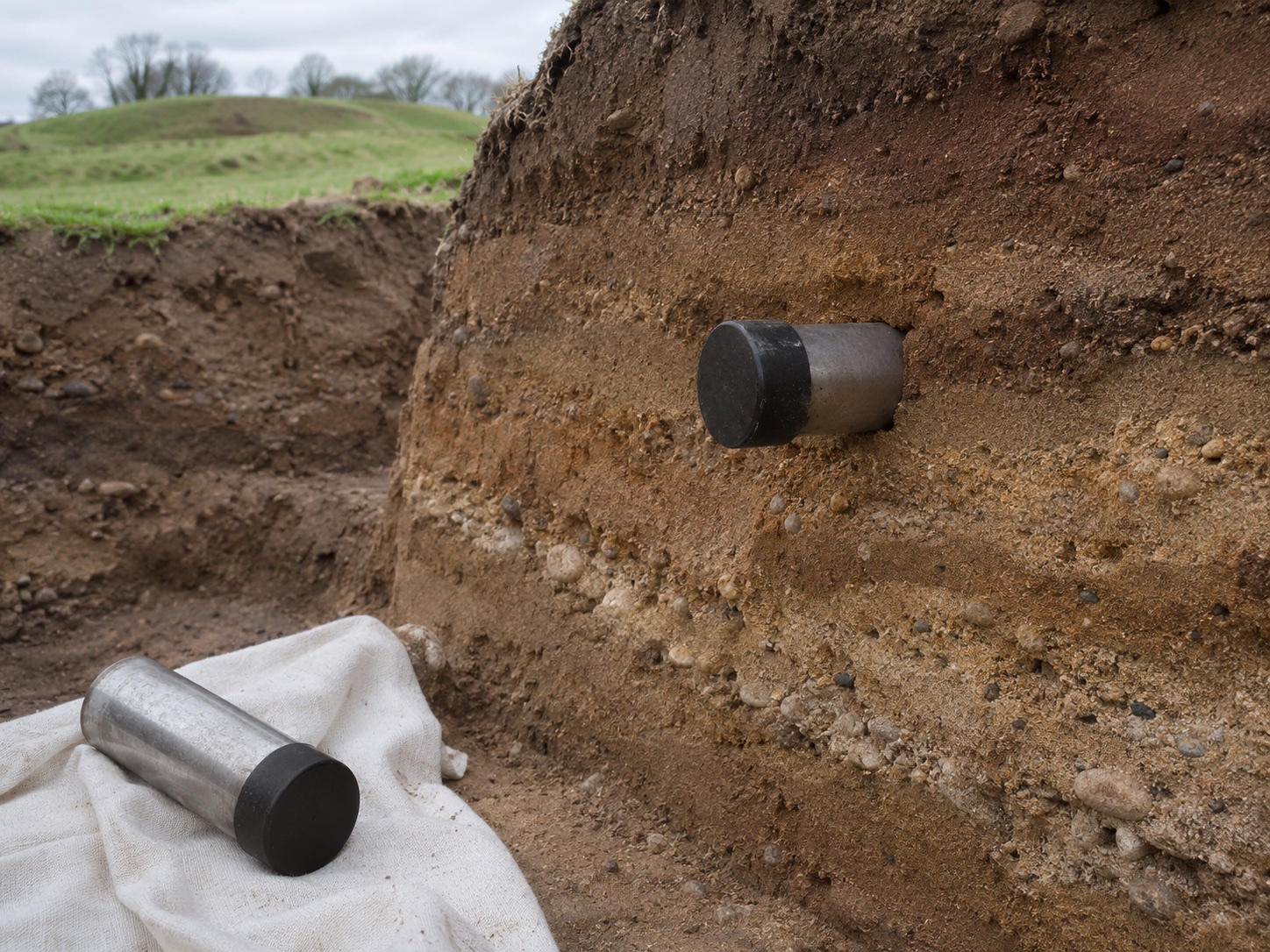
Scorton’s Neolithic monument had two long parallel ditches and a bank. Researchers used optically stimulated luminescence, often shortened to OSL, to estimate when sediment was buried. Daylight can reset a signal in mineral grains. After burial, natural radiation builds that signal again. In the lab, researchers use light to release some of the stored energy and measure how long the grains have been buried.
Sampling tubes keep fresh daylight away from the sediment. Grains that had too little exposure to light before burial can retain an older signal. The Scorton lab report combines results from the main ditch and bank with their positions in the ground. The team estimated construction at about 3680 BCE, with an uncertainty of 170 years either side at 68.3 percent probability. Other ditches nearby yielded much younger results. They belonged to different phases of work.
Read the sample before the date
When you encounter a date for a monument, look for the material, where it was found and the event the researchers think it represents. A result from a wall can help place building activity. A sample from a deposit that covered the wall can help place burial or later use. At Giza, records and construction evidence offer another way to test the sequence.
At Scorton, the team had to account for both a Neolithic bank and younger ditches. The order of the layers gave those numbers a place in the history of the site.