The Anti-Masonic Party was America’s first major third party, emerging from a scandal that many citizens interpreted as proof of a hidden political order. Its rise shows how conspiracy claims can move from rumor and outrage into organized electoral politics, especially when institutions appear unwilling or unable to punish the powerful.
The Morgan affair turned suspicion into a political movement
The immediate trigger was the 1826 disappearance of William Morgan. Morgan had threatened to publish a book exposing Freemason rituals. After he was arrested on minor charges, he vanished.
Many Americans believed that local Freemasons had kidnapped and murdered him. The fact that courts did not hold many Masons accountable intensified the suspicion. The alleged crime became inseparable from a broader complaint: that a secret, oath-bound society had influence inside government and could protect its members from consequences.
What began as anger over one disappearance therefore became a challenge to the legitimacy of public institutions. If men connected to a powerful private network could evade accountability, critics argued, ordinary citizens could not trust the legal or political system to govern fairly.
From protest to America’s first third party
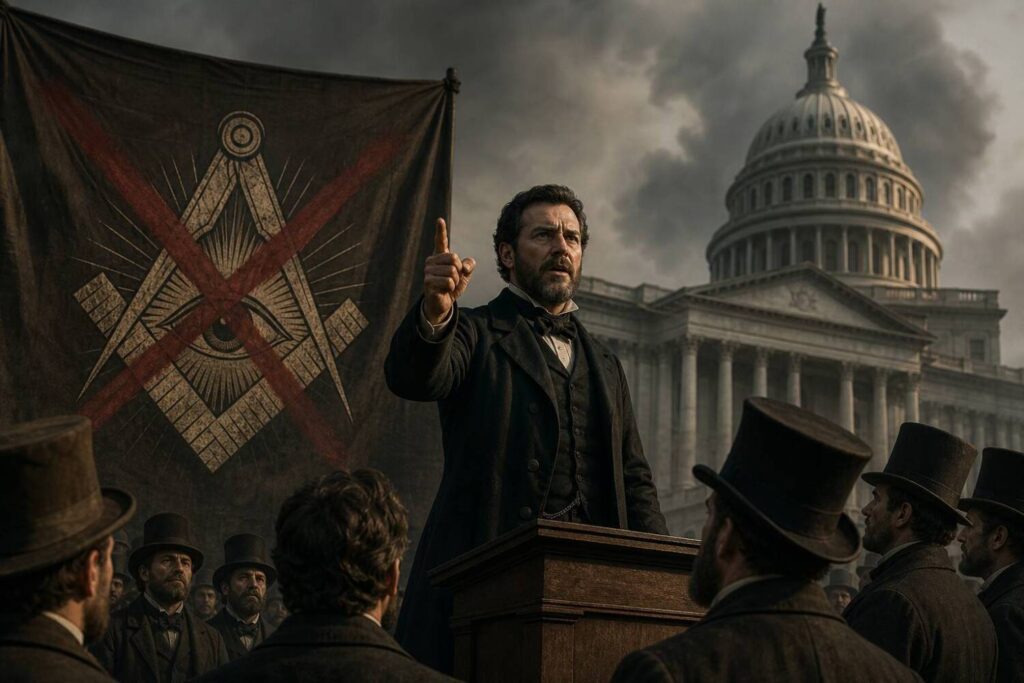
The Anti-Masonic Party organized around the belief that Freemasonry represented a corrupt secret network within government. Its central demand was that the organization’s influence be exposed and removed from public life.
The party existed from 1828 to 1838 and is described in the source material as the first third party in American history. That achievement mattered because it demonstrated that a movement built around opposition to a perceived hidden power could create a durable political organization rather than remain a loose campaign of pamphlets, meetings, and accusations.
The party’s development also illustrates a recurring pattern in conspiracy politics:
- A dramatic event provides a concrete story around which anxiety can gather.
- Institutional failure or perceived impunity makes the story more persuasive to people who already distrust authorities.
- A broad explanation connects one incident to a larger theory about society and government.
- Political organization turns suspicion into candidates, platforms, and electoral competition.
The movement’s core claim was about secrecy and accountability
Anti-Masonic politics did not depend only on proving what happened to Morgan. It also depended on the argument that Freemasonry itself was incompatible with democratic government.
Opponents focused on the fraternity’s secrecy and oaths. In their view, private obligations could conflict with public duties, allowing members to favor one another in courts, churches, and government. The movement consequently framed Freemasonry not simply as a social organization but as a parallel structure of power.
This distinction helps explain the party’s appeal. A single unexplained disappearance might have produced a short-lived scandal. The claim of a hidden network offered a more comprehensive explanation for why justice seemed absent and why influential people appeared protected.
Conspiracy politics thrives on a gap between evidence and trust
The historical episode does not establish every allegation made against Freemasons. It does show how a contested event can become politically powerful when citizens believe official systems are concealing the truth.
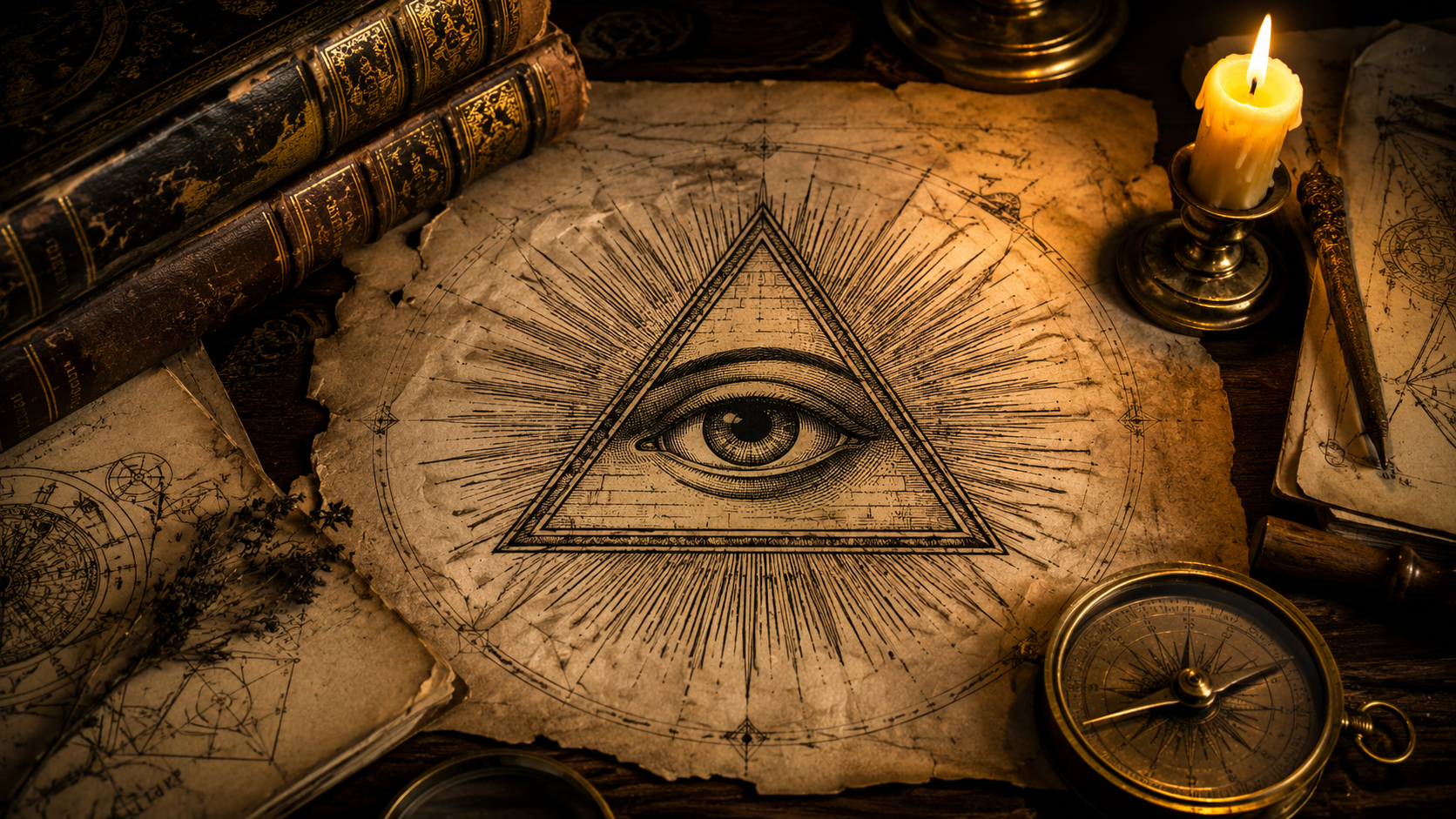
That dynamic remains visible in modern conspiracy discussions. Claims about Freemasons and the Illuminati, secret control of government, or hidden influence over food and consumer choices often combine a specific suspicion with a much larger account of social power. In the supplied discussions, users move from alleged lobbying over pumpkin and sunflower seeds to claims that ingredients are designed to control emotions, and from corporate branding to theories about occult or Masonic symbolism.
These claims vary widely in subject and credibility, but they share a structure familiar from the Anti-Masonic movement: an everyday experience is presented as evidence of an unseen system, while disagreement is interpreted as proof that the system is being protected.
Political success can outlast factual certainty
The Anti-Masonic Party’s influence also reveals that conspiracy movements do not need universal agreement to reshape politics. They need enough people to accept a common diagnosis of the problem and to believe that established institutions cannot correct it.
Even the party’s presidential politics exposed tensions within that strategy. A discussion of the movement notes that its presidential nominee was himself a Freemason and had positive things to say about Freemasonry. The episode highlights a familiar difficulty: a movement may define itself through opposition to a broad category while struggling to apply that standard consistently to its own candidates and allies.
That contradiction does not necessarily destroy a conspiracy movement. Political identities are often built less on a fully consistent account of events than on shared distrust, shared grievance, and the belief that insiders have been shielded from scrutiny.
What the Anti-Masonic episode reveals
The party’s rise offers an early American example of conspiracy politics becoming a mainstream political force. Its story suggests three enduring lessons.
- Secrecy is politically combustible. Organizations that operate through private rituals, oaths, or networks can become symbols of hidden authority, especially during periods of institutional distrust.
- Unresolved scandals invite expansive explanations. When courts and officials fail to produce an account that the public accepts, a single case can become evidence of a nationwide system.
- Conspiracy claims can organize voters. They may produce parties and platforms even when the underlying allegations remain disputed or internally inconsistent.
The Anti-Masonic Party eventually disappeared, but the political mechanism it demonstrated did not. A suspicious event, an alleged protected elite, and a demand to expose the hidden order can still turn private distrust into public mobilization. The historical significance of the movement lies not only in its opposition to Freemasonry, but in how clearly it showed that conspiracy theories can become a language of political accountability, and, at the same time, a substitute for evidence.