

The Seal of Solomon is one of the most famous magical symbols associated with protection, command, wisdom, and hidden power. It is usually linked to King Solomon, the biblical ruler remembered for his extraordinary wisdom, his temple, and later legends that gave him mastery over spirits, demons, animals, and unseen forces.
The symbol is often imagined as a six-pointed star, a hexagram, or a magical seal engraved on a ring. In legend, this seal gave Solomon authority over supernatural beings and allowed him to build, judge, protect, and command with divine assistance. Over time, the Seal of Solomon became important in Jewish, Islamic, Christian, magical, and occult traditions.
Like many esoteric symbols, the Seal of Solomon has no single fixed meaning. It can represent divine wisdom, protection, kingship, magical authority, sacred geometry, or the power to bind chaotic forces. Its long history moves between scripture, folklore, grimoires, talismans, and modern occult symbolism.
What the Seal of Solomon Looks Like
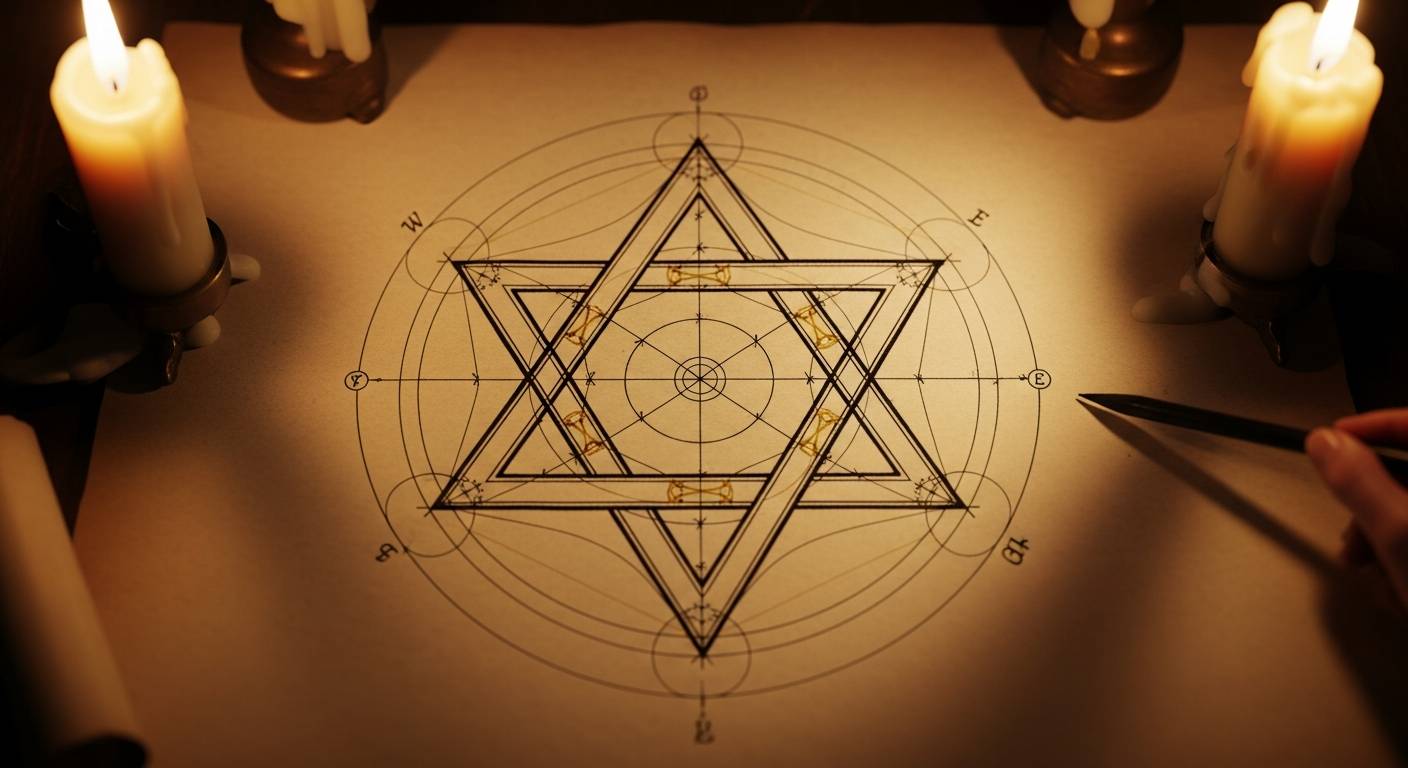
The Seal of Solomon is most commonly represented as a six-pointed star or hexagram, formed by two overlapping triangles. One triangle points upward, the other downward. Together, they create a balanced geometric figure with six outer points and a central hexagon.
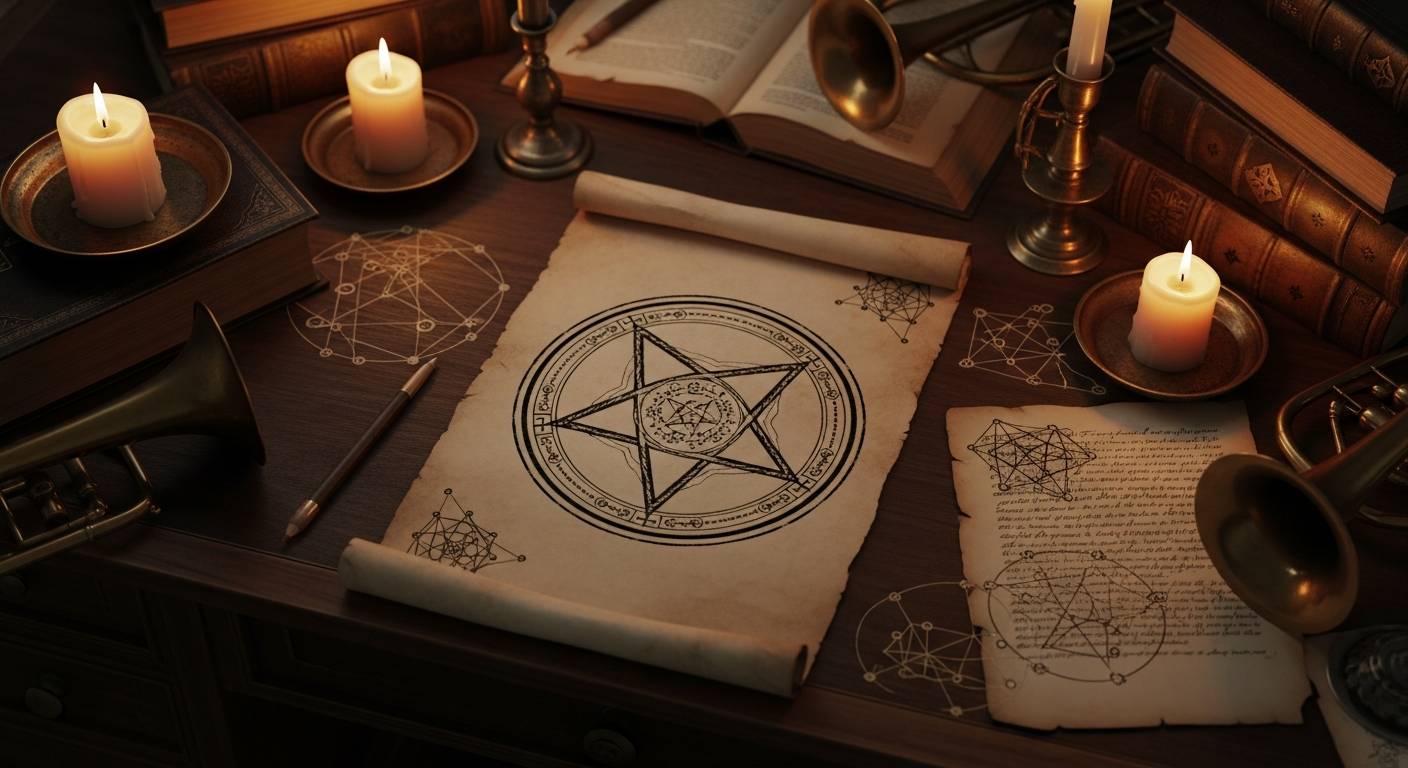
In some traditions, the seal appears as a simple geometric star. In others, it is placed inside a circle, surrounded by names, sacred letters, planetary signs, or magical characters. It may also be imagined as an engraving on Solomon’s ring, the legendary object through which he was said to command spirits.
The symbol overlaps visually with the Star of David, but the two should not always be treated as identical. The same six-pointed shape can carry different meanings in different contexts. In the Seal of Solomon tradition, the emphasis is usually on protection, authority, divine wisdom, and magical command.
King Solomon and the Legend of Hidden Wisdom
King Solomon is a central figure in biblical tradition, remembered as the son of David, ruler of Israel, builder of the First Temple, and a king famous for wisdom. In scripture, Solomon is associated with judgement, wealth, royal authority, and divine favour.
Later traditions expanded this image dramatically. Solomon became not only a wise king, but also a master of hidden knowledge. Legends credited him with understanding the languages of animals, controlling winds, commanding spirits, and using divine names or sacred seals to bind supernatural forces.
This legendary Solomon became especially important in magical literature. His name carried authority because he stood at the intersection of kingship, wisdom, temple religion, and mystery. A seal attributed to him therefore seemed more than decorative. It suggested access to ancient power and divinely sanctioned command.
The Ring of Solomon
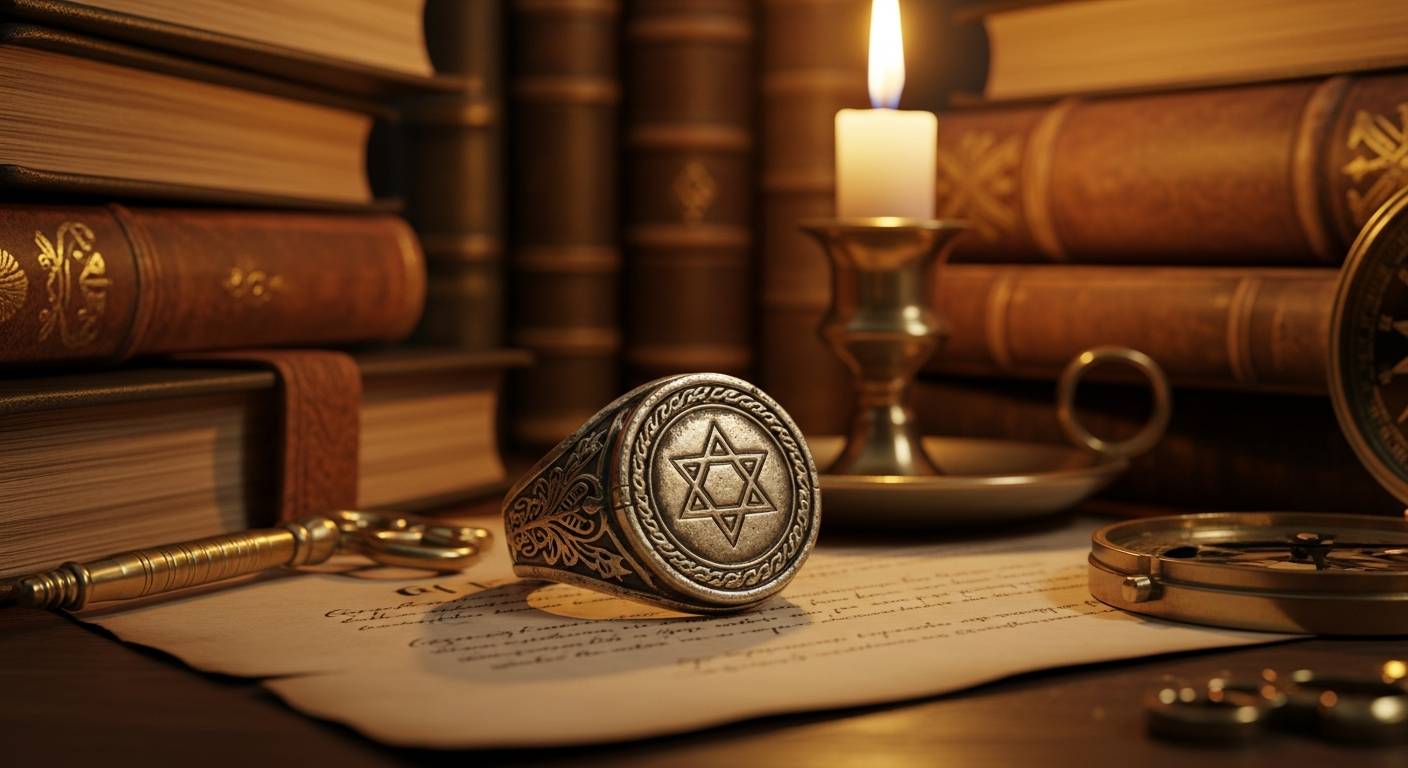
The Ring of Solomon is one of the most famous legends connected with the seal. In many versions of the story, Solomon receives a ring engraved with a divine name, sacred symbol, or magical seal. This ring gives him power over demons, jinn, spirits, or hidden forces.
The details vary across Jewish, Islamic, Christian, and occult retellings. Sometimes the ring is used to command demons during the building of the Temple. Sometimes it allows Solomon to speak with animals or control supernatural beings. In other versions, the ring is stolen, lost, or used as a test of Solomon’s authority.
The ring matters because it turns the seal into a working emblem of power. The symbol is not merely drawn on a page. It becomes an object carried by a king, a portable sign of wisdom, authority, and divine permission.
Protection and Magical Authority
The Seal of Solomon is often treated as a protective symbol. In talismanic and magical traditions, it can mark a boundary between order and chaos, the sacred and the dangerous, the commanded and the uncontrolled. Its connection to Solomon makes it a sign of authority over forces that might otherwise threaten human life.
Protection in this context does not only mean defence from physical danger. It can also mean spiritual order, containment, purification, or the binding of harmful influences. The seal’s geometry suggests balance, while Solomon’s name adds the weight of wisdom and command.
This protective role links the Seal of Solomon to other esoteric emblems, including the pentagram, which has also been used as a sign of boundary, balance, and spiritual defence across different traditions.
The Hexagram and Sacred Geometry
The hexagram form of the Seal of Solomon is built from two interlocking triangles. The upward triangle and downward triangle are often interpreted as opposing or complementary forces. Depending on the tradition, they may represent heaven and earth, fire and water, spirit and matter, masculine and feminine, or ascent and descent.
This structure makes the symbol especially attractive to esoteric systems that value balance and correspondence. The two triangles do not cancel each other out. They interlock, creating a stable form from opposing directions.
Sacred geometry often treats shapes as more than decoration. A symbol such as the hexagram can become a map of relationships: above and below, visible and invisible, divine and earthly. In the Seal of Solomon, that geometry reinforces the idea of ordered power.
The Seal of Solomon in Grimoires
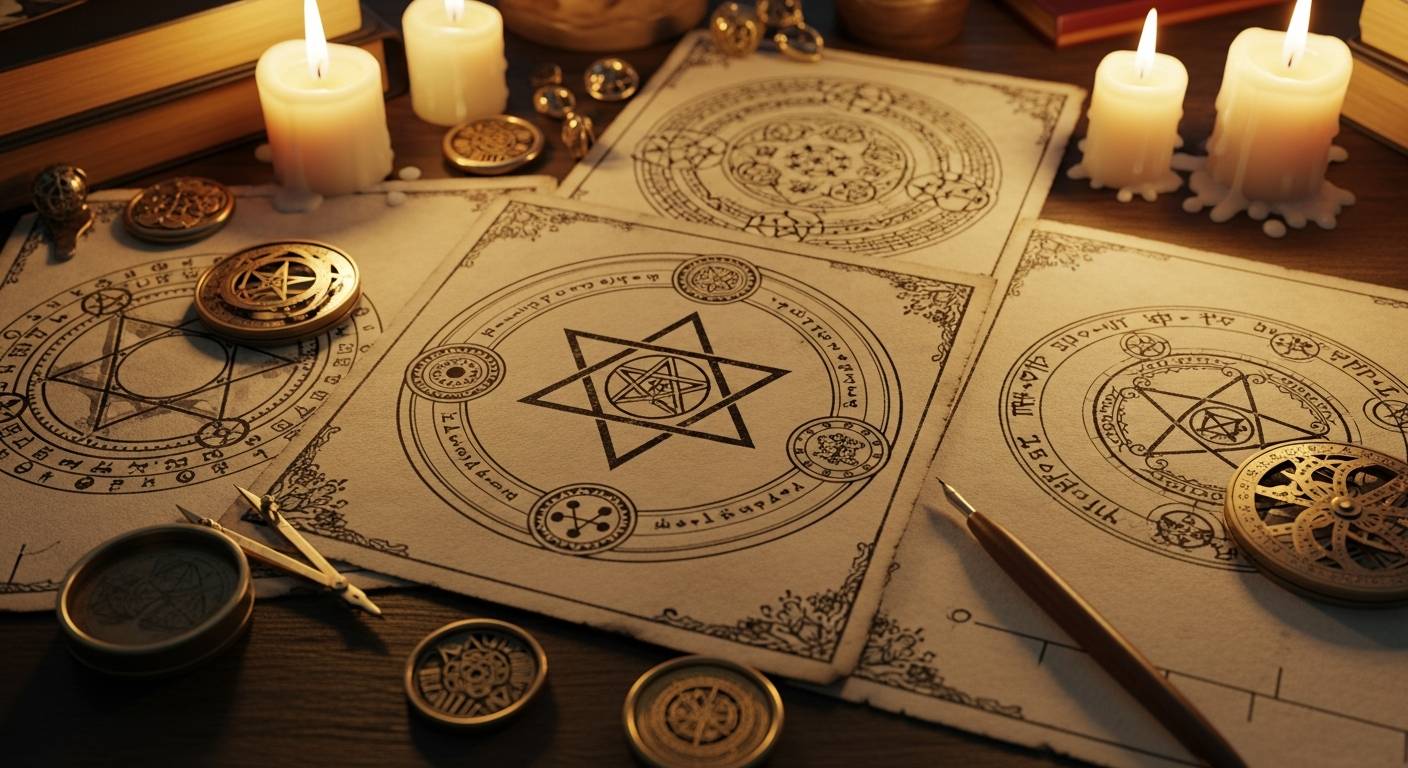
The Seal of Solomon became especially influential in grimoires, the magical books and manuscripts that circulated through medieval and early modern occult traditions. These texts often attributed magical knowledge to Solomon or claimed to preserve secrets connected with his authority.
Solomonic grimoires include complex systems of seals, names, diagrams, planetary correspondences, and spirit catalogues. The seal became part of a wider symbolic language in which geometry, sacred names, and ritual authority were arranged into diagrams of command and protection.
This grimoire tradition helped make the Seal of Solomon a major symbol in Western occultism. Even when individual texts differed, the basic idea remained powerful: Solomon’s name and seal represented structured authority over hidden forces.
Jinn, Demons, and Bound Spirits
Many stories about Solomon describe his power over spirits. In Jewish and Christian demonological legends, these beings are often demons. In Islamic tradition, Solomon is strongly associated with command over jinn. The categories differ, but the underlying theme is similar: Solomon possesses authority over beings beyond ordinary human control.
The seal or ring often acts as the visible sign of that authority. It represents not brute force, but legitimate command supported by divine favour or sacred knowledge. Spirits obey because the seal carries a higher order.
These stories gave the Seal of Solomon a dramatic reputation. It became a symbol not only of protection, but of mastery over invisible worlds. That reputation helped it survive in folklore, magical manuscripts, occult art, and modern mystery culture.
Seal of Solomon and Star of David
The Seal of Solomon is often confused with the Star of David because both are commonly represented as a six-pointed star. The visual overlap is real, but the meanings are not always the same. A symbol’s meaning depends on its context, use, and tradition.
The Star of David is now strongly associated with Jewish identity, community, and religious symbolism. The Seal of Solomon, in contrast, usually appears in magical, protective, legendary, or esoteric contexts connected with Solomon’s authority and hidden wisdom.
Historically, six-pointed stars have appeared in many settings, including decorative art, religious architecture, talismans, manuscripts, and magical diagrams. It is therefore important not to assume that every hexagram has one meaning or one origin.
The Seal in Islamic and Middle Eastern Traditions
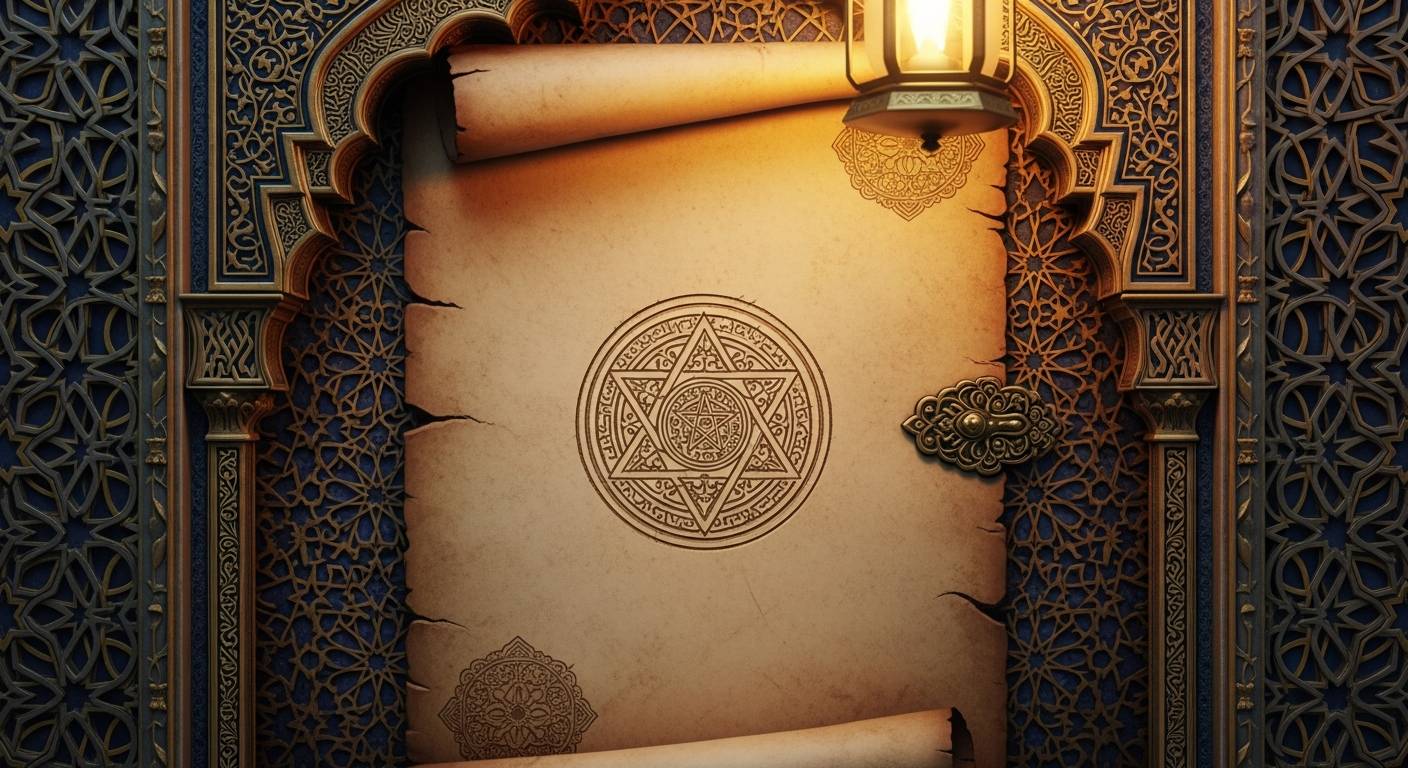
The Seal of Solomon also has a strong place in Islamic and Middle Eastern tradition. Solomon, known as Sulayman in Islam, is remembered as a prophet and king with command over jinn, animals, winds, and hidden forces by the permission of God.
In this context, the seal is linked with divine authority rather than independent magical power. Solomon’s command comes from God, and the seal becomes a sign of that granted authority. This distinction matters because it shows how the same legendary object can be understood differently across religious cultures.
The symbol’s movement through Jewish, Islamic, Christian, and occult settings helped make it unusually durable. It could be read as a religious emblem, a royal sign, a magical seal, a protective charm, or a mark of supernatural command.
Modern Occult and Popular Uses
Today, the Seal of Solomon appears in occult art, jewellery, talismans, tattoos, fantasy fiction, supernatural horror, magical diagrams, and esoteric design. Sometimes it is used seriously as a protective symbol. Sometimes it appears simply because it carries an atmosphere of ancient magic and hidden authority.
Modern mystery culture often treats the seal as a shorthand for control over spirits, ancient grimoires, demonology, or forbidden knowledge. Its connection to Solomon gives it a stronger story than a purely abstract geometric design.
Like the Sigil of Baphomet, the Seal of Solomon shows how symbols can become more powerful as they pass through religion, folklore, occultism, and popular imagination.
Common Misunderstandings
One common misunderstanding is that the Seal of Solomon has always had one fixed appearance. In reality, the symbol appears in several forms, including hexagrams, rings, talismanic diagrams, and magical seals surrounded by names or characters.
Another misunderstanding is that the Seal of Solomon and the Star of David are always the same thing. They may share the hexagram form, but their meanings differ depending on context. One may function as a Jewish identity symbol, while the other may appear as a magical or legendary Solomonic emblem.
It is also misleading to treat the seal only as a dark occult symbol. Much of its history is connected with wisdom, protection, divine authority, order, and the containment of chaos rather than simple danger or evil.
Why the Seal of Solomon Still Matters
The Seal of Solomon still matters because it combines several powerful ideas in one symbol: wisdom, protection, geometry, kingship, divine authority, and command over the unseen. Few esoteric emblems carry such a strong blend of religious memory and magical legend.
Its power comes from the figure behind it. Solomon is remembered as a wise king, a temple builder, a judge, and a master of hidden knowledge. A seal connected with him naturally became a symbol of order imposed on mystery.
Whether seen as a hexagram, a ring, a talisman, or a magical diagram, the Seal of Solomon remains one of the great symbols of esoteric authority. It stands at the boundary between faith, folklore, magic, and the enduring human desire to give shape to invisible power.