

The Sigil of Baphomet is one of the most recognisable occult symbols in modern culture. It is usually shown as a goat’s head placed inside an inverted pentagram, often surrounded by a double circle and five Hebrew letters. To some people, it represents Satanism. To others, it is a symbol of rebellion, individualism, mystery, or forbidden knowledge. Its meaning depends heavily on context, tradition, and the group using it.
Although the image is now strongly associated with modern Satanism, its ingredients are older than its most famous twentieth-century use. The goat, the pentagram, the name Baphomet, and the idea of hidden esoteric symbolism all developed through different strands of religious fear, occult writing, magical imagery, and popular imagination. The modern sigil brings those strands together in a compact and provocative design.
This article explains where the Sigil of Baphomet came from, what its parts represent, how it became linked to the Church of Satan, and why it is so often misunderstood in wider popular culture.
What the Sigil Looks Like
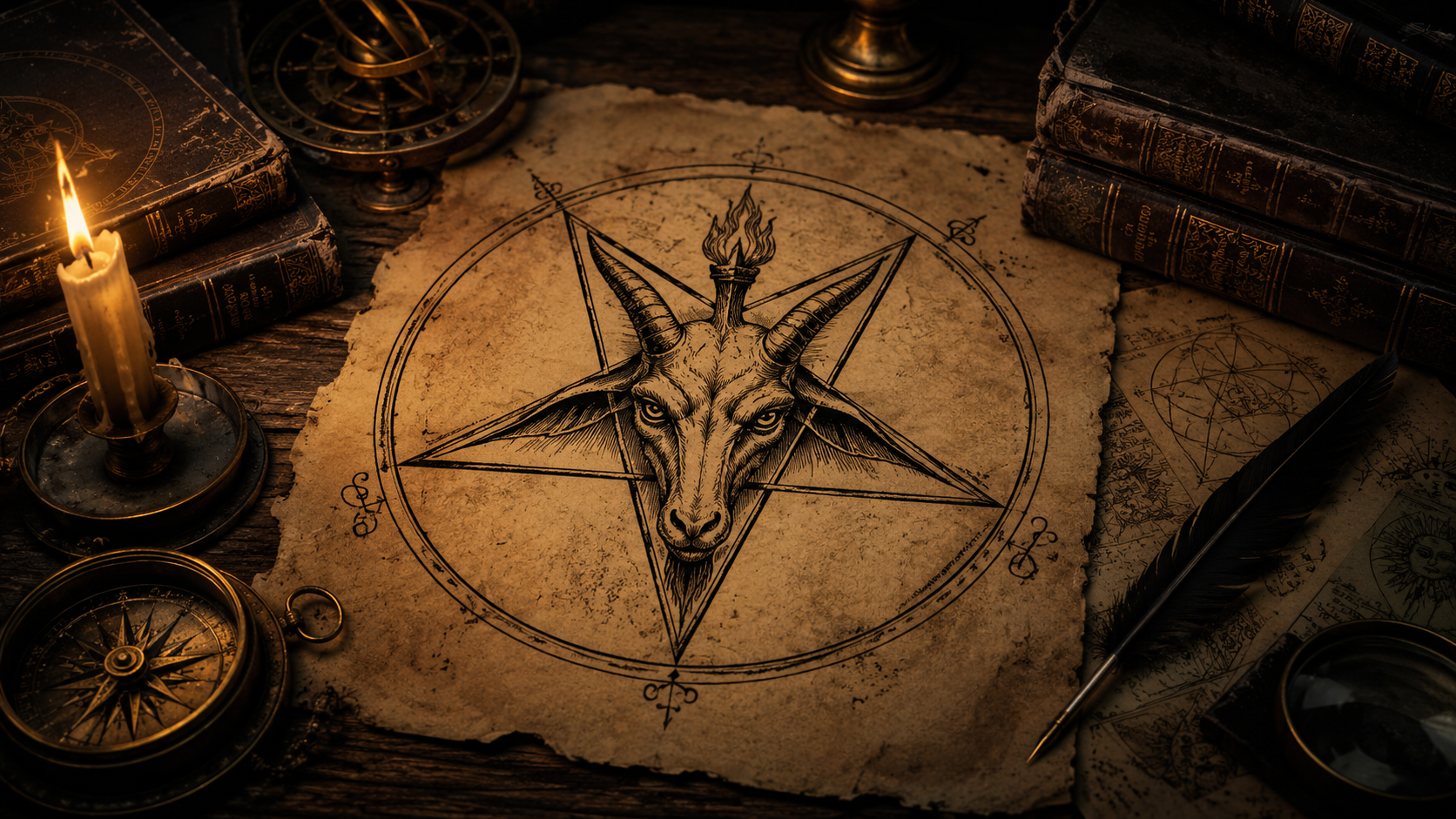
The most familiar version of the Sigil of Baphomet contains several distinct visual elements. At the centre is the head of a goat. Around the goat is a five-pointed star, usually inverted so that one point faces downward and two points rise upward. The star is set inside one or two circles. Around the outer points are Hebrew letters commonly read as Leviathan.
The design is stark because every part is arranged for visual impact. The goat’s ears align with the side points of the pentagram. The horns reach into the two upper points. The beard points downward into the lowest point. This makes the animal head appear locked into the geometry of the star.
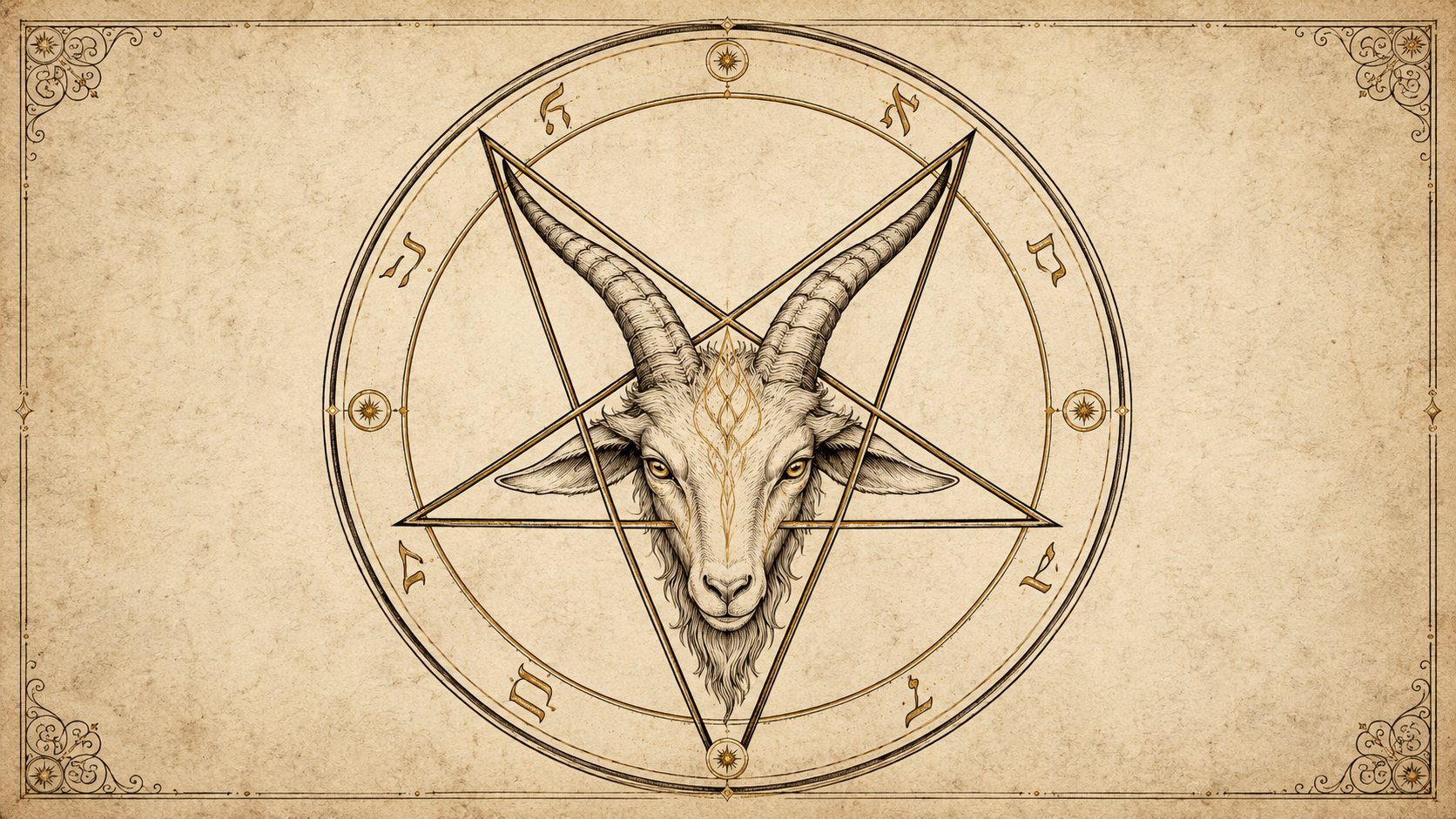
The result is not a loose illustration of a goat. It is a constructed emblem. The geometry, the animal face, the letters, and the circle work together to create a symbol that feels formal, ritualistic, and deliberately charged with hidden meaning.
Baphomet Before the Sigil
The name Baphomet is older than the modern sigil. It appears most famously in connection with accusations made against the Knights Templar in the early fourteenth century. During the trials of the Templars, some members were accused of worshipping a mysterious idol or head called Baphomet. The historical record is difficult and often contradictory, partly because confessions were shaped by pressure, politics, and the methods of interrogation used at the time.
In later centuries, Baphomet became less a specific medieval accusation and more a blank space for the imagination. Writers, occultists, anti-Masonic polemicists, and conspiracy theorists used the name to suggest secret worship, heresy, hidden rites, or forbidden knowledge. This made Baphomet a useful symbol for mystery culture because the name already carried an aura of secrecy.
The Baphomet known today owes much to nineteenth-century occultism. French occult writer Éliphas Lévi drew a famous goat-headed, winged, androgynous figure in his work on high magic. His image, often called the Sabbatic Goat, was not identical to the modern Sigil of Baphomet, but it helped establish the goat-headed Baphomet as a central visual figure in Western occult symbolism.
The Inverted Pentagram
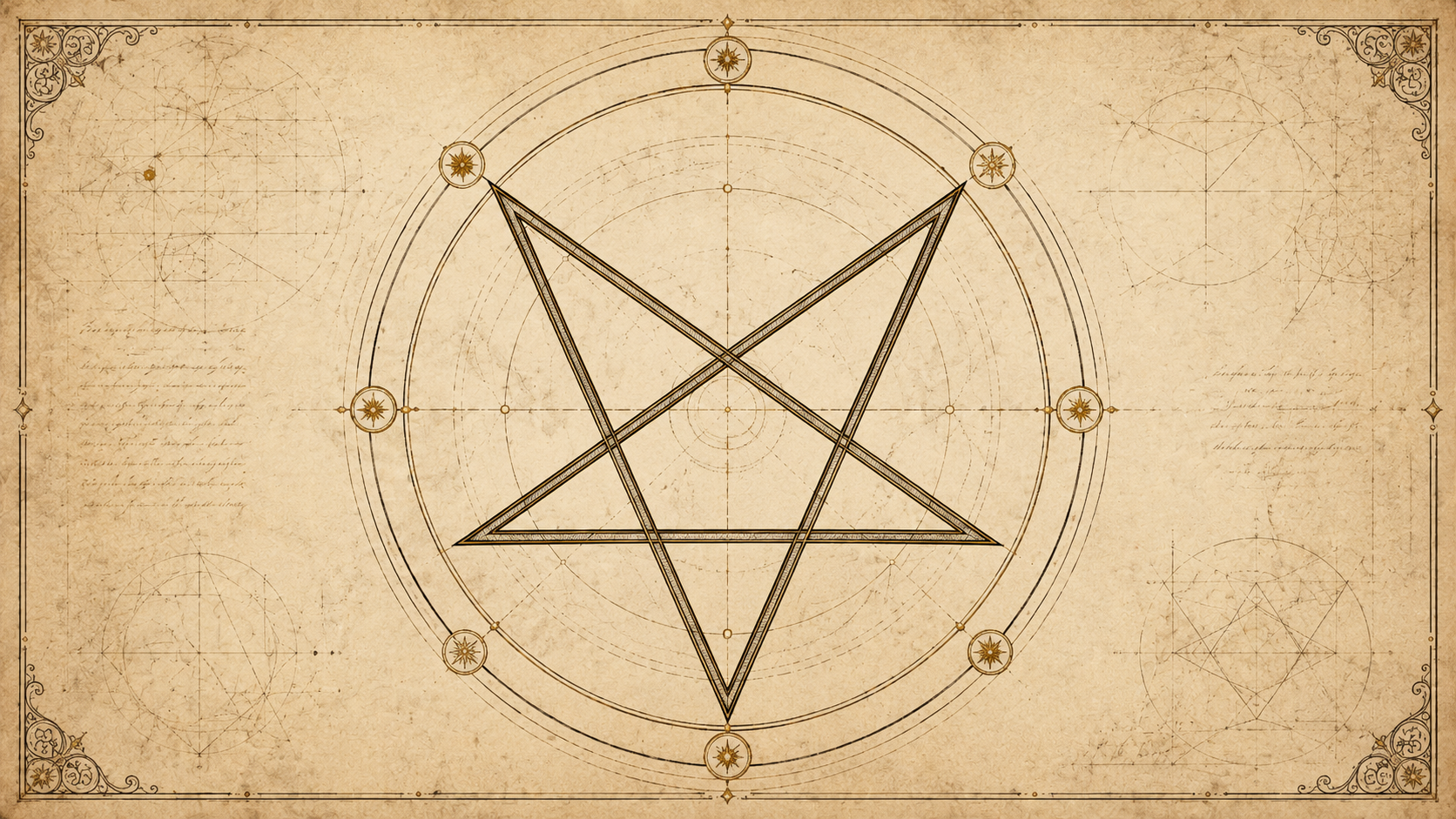
The pentagram is a five-pointed star that has appeared in many religious, magical, and symbolic systems. It has been used in protective magic, ceremonial traditions, Christian symbolism, folk belief, and occult diagrams. Its meaning is not fixed by the shape alone. Orientation, context, and interpretation matter.
In many occult systems, an upright pentagram has been interpreted as a symbol of spirit ordering or rising above matter. An inverted pentagram, with two points upward and one downward, has often been treated as a reversal of that structure. In nineteenth-century occult writing, this inverted form became increasingly associated with materiality, instinct, the earthly realm, or darker magical associations.
The Sigil of Baphomet uses the inverted pentagram in a way that emphasises the goat’s head. The two upper points become horns. The side points suggest ears. The lower point becomes the beard. This gives the geometry an animal form and turns an abstract star into a more confrontational emblem.
The Goat Head and the Sabbatic Goat
The goat has long carried layered symbolic meaning. In different traditions it can suggest fertility, wilderness, stubbornness, sacrifice, appetite, vitality, or transgression. In Christian demonology and later occult imagery, goat-like figures were often connected to the Devil, the witches’ sabbath, or the idea of nature turned against religious order.
Éliphas Lévi’s Baphomet helped fix the goat-headed image in modern occult imagination. His figure was not simply a monster. It combined male and female traits, light and darkness, animal and human features, and gestures that suggested balance between opposites. Lévi’s Baphomet was an esoteric image built from contrasts.
The Sigil of Baphomet simplifies that more complex figure. Instead of a full winged body, torch, arms, and occult gestures, it focuses on the goat’s head inside the inverted pentagram. That simplification made the image easier to reproduce as a symbol, logo, medallion, altar mark, or printed emblem.
The Hebrew Letters and Leviathan
Many versions of the Sigil of Baphomet include five Hebrew letters placed around the points of the pentagram. These letters are commonly read as spelling Leviathan, the sea monster from biblical and mythic tradition. Leviathan has been interpreted in many ways, including as a creature of chaos, a symbol of the abyss, or a force of untamed power.
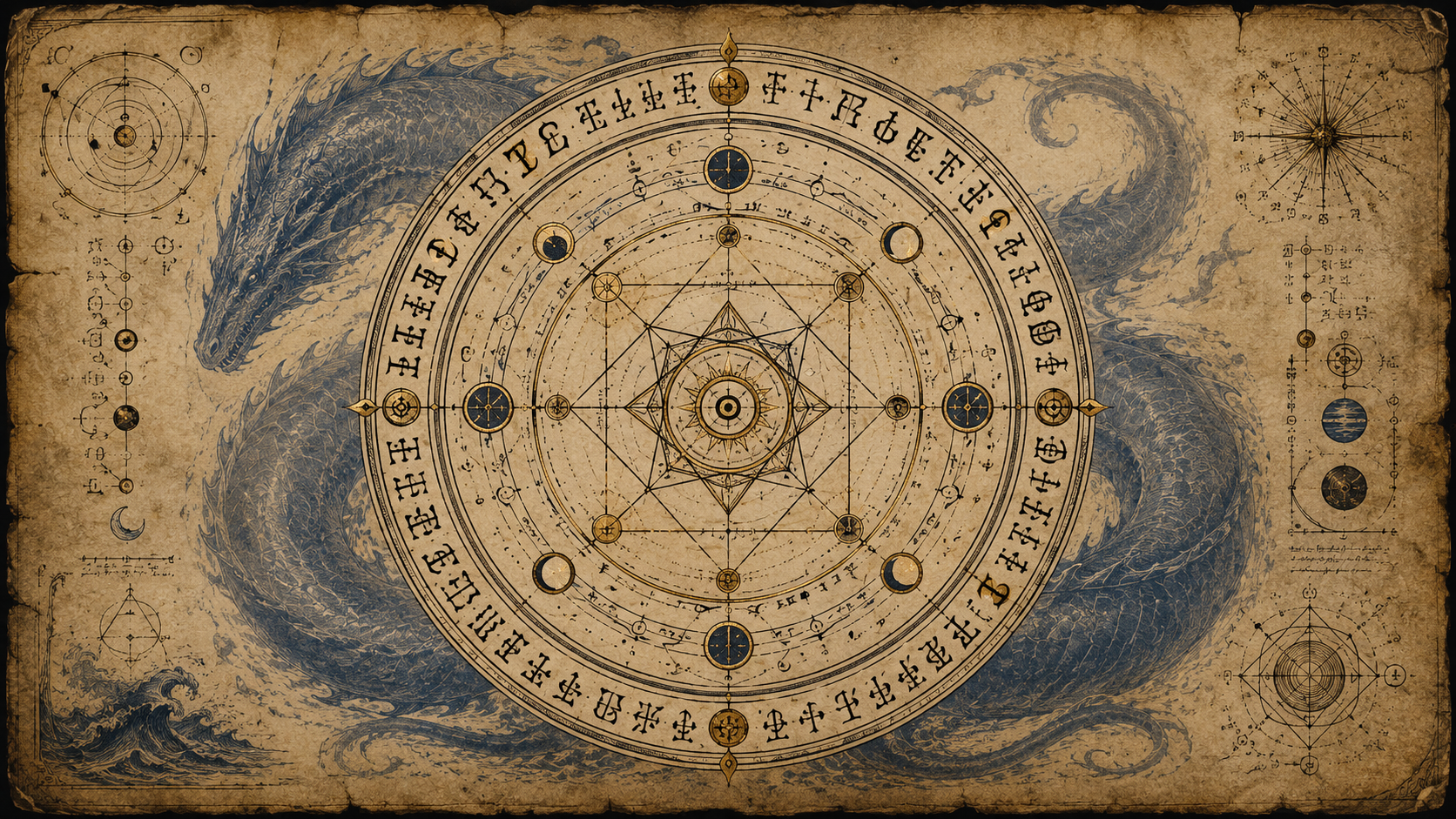
In the sigil, the letters add an extra layer of esoteric atmosphere. They make the design feel less like a simple animal emblem and more like a magical seal. For many viewers, the unfamiliar script increases the sense of secrecy, even when the basic meaning is known.
The use of Hebrew lettering also reflects a broader feature of Western occultism. Esoteric diagrams often borrow sacred languages, alphabets, and names of power to suggest hidden structure and ancient authority. The Sigil of Baphomet belongs to that visual tradition, even in its modern form.
How the Church of Satan Made the Symbol Famous
The Sigil of Baphomet became famous largely through the Church of Satan, founded by Anton Szandor LaVey in San Francisco in 1966. The Church of Satan adopted a version of the goat head within an inverted pentagram as its central visual emblem. From there, the symbol appeared on ritual material, publications, membership items, and public-facing imagery connected with LaVeyan Satanism.
This adoption gave the sigil a sharper modern identity. Earlier goat-pentagram designs existed in occult sources, but the Church of Satan helped turn the image into a widely recognised insignia. For many people, the symbol became inseparable from Satanism because of its repeated use in that context.
LaVeyan Satanism itself is often described as atheistic and symbolic rather than based on worship of a literal Devil. Within that framework, Satan is commonly treated as an emblem of individualism, self-assertion, carnality, opposition to religious submission, and the rejection of imposed guilt. The Sigil of Baphomet functions as a visual expression of that philosophy in Church of Satan usage.
Common Misunderstandings
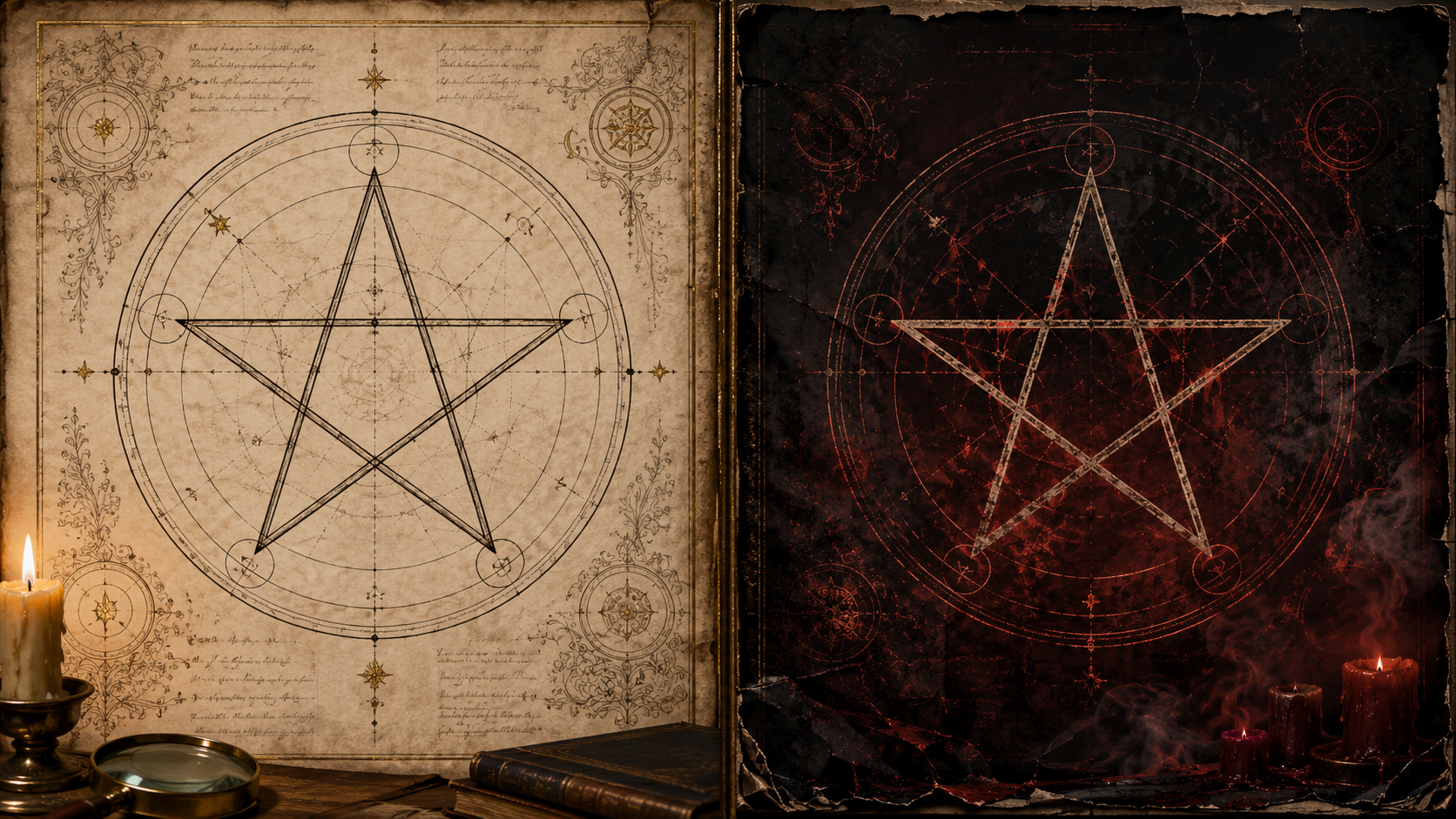
The Sigil of Baphomet is often treated as if it has one simple meaning. In reality, its meaning changes depending on who is using it and why. In popular horror, it may function as a sign of danger or demonic presence. In modern Satanist contexts, it can represent a philosophical or religious identity. In occult studies, it may be examined as a layered symbol built from older magical and esoteric imagery.
Another misunderstanding is that every pentagram is automatically Satanic. The pentagram has a much wider symbolic history. It has appeared in protective magic, religious art, ceremonial magic, and modern Pagan traditions. The inverted pentagram with a goat’s head has a more specific modern association, but the five-pointed star itself cannot be reduced to one meaning.
The symbol is also sometimes treated as ancient in its complete modern form. Its components have older roots, but the recognisable Sigil of Baphomet as a named modern emblem belongs mainly to the nineteenth and twentieth-century development of occult and Satanic imagery.
Why the Symbol Still Has Power
The Sigil of Baphomet remains powerful because it compresses several fears and fascinations into one image. It suggests hidden knowledge, religious inversion, animal instinct, secrecy, rebellion, and forbidden ritual. The viewer does not need to understand every element for the symbol to feel charged.
It also benefits from ambiguity. It can be read as sinister, philosophical, theatrical, occult, religious, anti-religious, or symbolic depending on the setting. That flexibility has made it useful in music, horror, alternative spirituality, Satanic identity, conspiracy culture, and visual art.
For mystery culture, the sigil stands at the intersection of history and myth. It is not simply an ancient demonic mark, nor is it merely a modern logo. It is a layered symbol shaped by medieval accusation, nineteenth-century occult imagination, twentieth-century religious rebellion, and decades of popular fear and fascination.
The Sigil of Baphomet is best understood as a modern occult emblem built from older symbolic materials. Its goat head recalls the Baphomet image shaped by nineteenth-century occultism. Its inverted pentagram draws on magical and esoteric interpretations of orientation, matter, and inversion. Its Hebrew letters add the mythic force of Leviathan and the atmosphere of a magical seal.
The symbol became internationally recognisable through the Church of Satan, but its meaning is not limited to shock value or horror imagery. It carries a complicated history of accusation, reinvention, symbolism, and identity. That is why it continues to appear wherever culture turns toward the forbidden, the hidden, and the misunderstood edges of belief.