
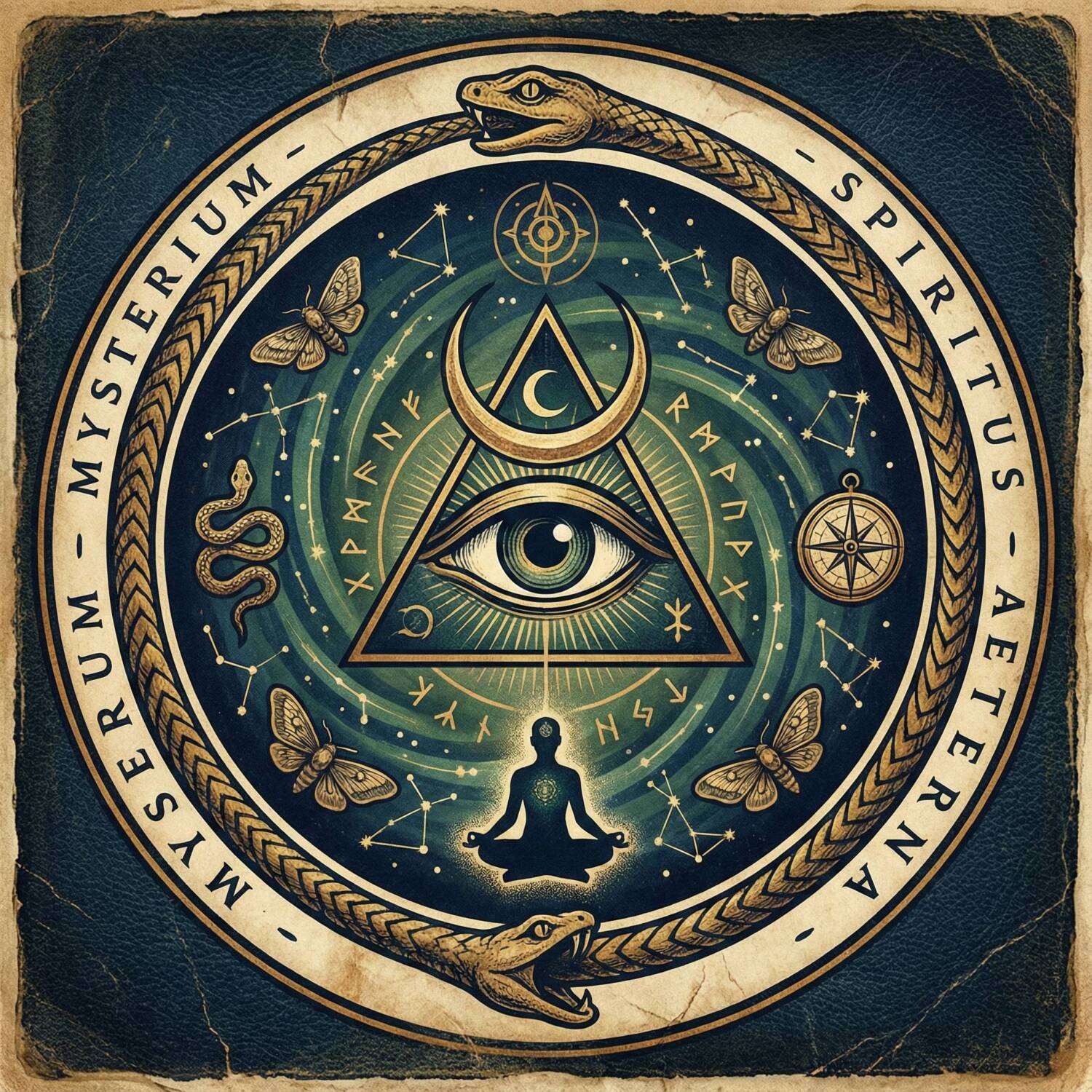

The Eye of Providence is one of the most widely recognised symbols in Western culture. It is usually shown as a single eye set inside a triangle, often surrounded by rays of light. To some, it represents divine watchfulness. To others, it suggests hidden power, secret societies, surveillance, or the mysterious influence of unseen forces.
The symbol is often called the All-Seeing Eye, but that name can create confusion. In its older Christian context, the eye represented the watchful presence of God. In later Masonic and esoteric settings, it became associated with enlightenment, moral awareness, and the idea that human actions are seen by a higher order. In modern conspiracy culture, the same image is often linked to the Illuminati, elite control, and occult secrecy.
The Eye of Providence has endured because it is simple, striking, and open to interpretation. A single eye is intimate and unsettling. A triangle suggests structure, divinity, and hierarchy. Rays of light imply revelation. Together, those elements form a symbol that can feel sacred, mysterious, protective, or threatening depending on where it appears.
What the Eye of Providence Looks Like
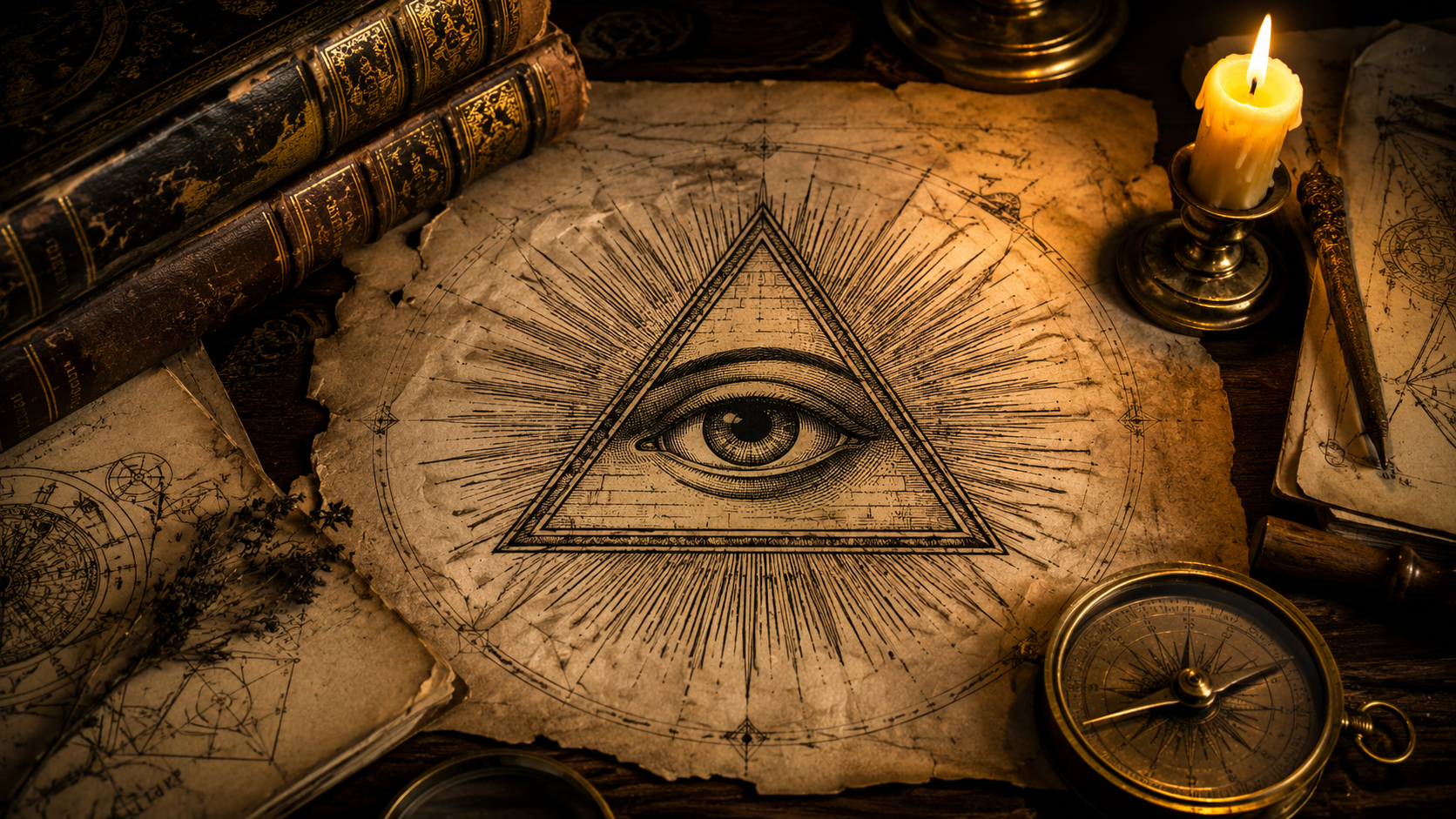
The classic Eye of Providence contains three main visual elements: an eye, a triangle, and light. The eye is usually placed at the centre of the image. The triangle surrounds or frames it. Rays of light often extend outward from the triangle, creating the impression of illumination, divinity, or revelation.
The design is powerful because it combines human recognition with abstract geometry. The eye is instantly personal. It suggests sight, awareness, judgement, and attention. The triangle adds symbolic order. In Christian art, it has often been connected with the Trinity. In broader esoteric interpretation, it can suggest balance, ascent, or the union of different forces.
The surrounding rays are also important. They do not merely decorate the symbol. They imply that the eye is not ordinary sight, but a form of higher vision. The image suggests an intelligence that watches from above, sees what is hidden, and shines light into darkness.
Christian Origins and Divine Watchfulness
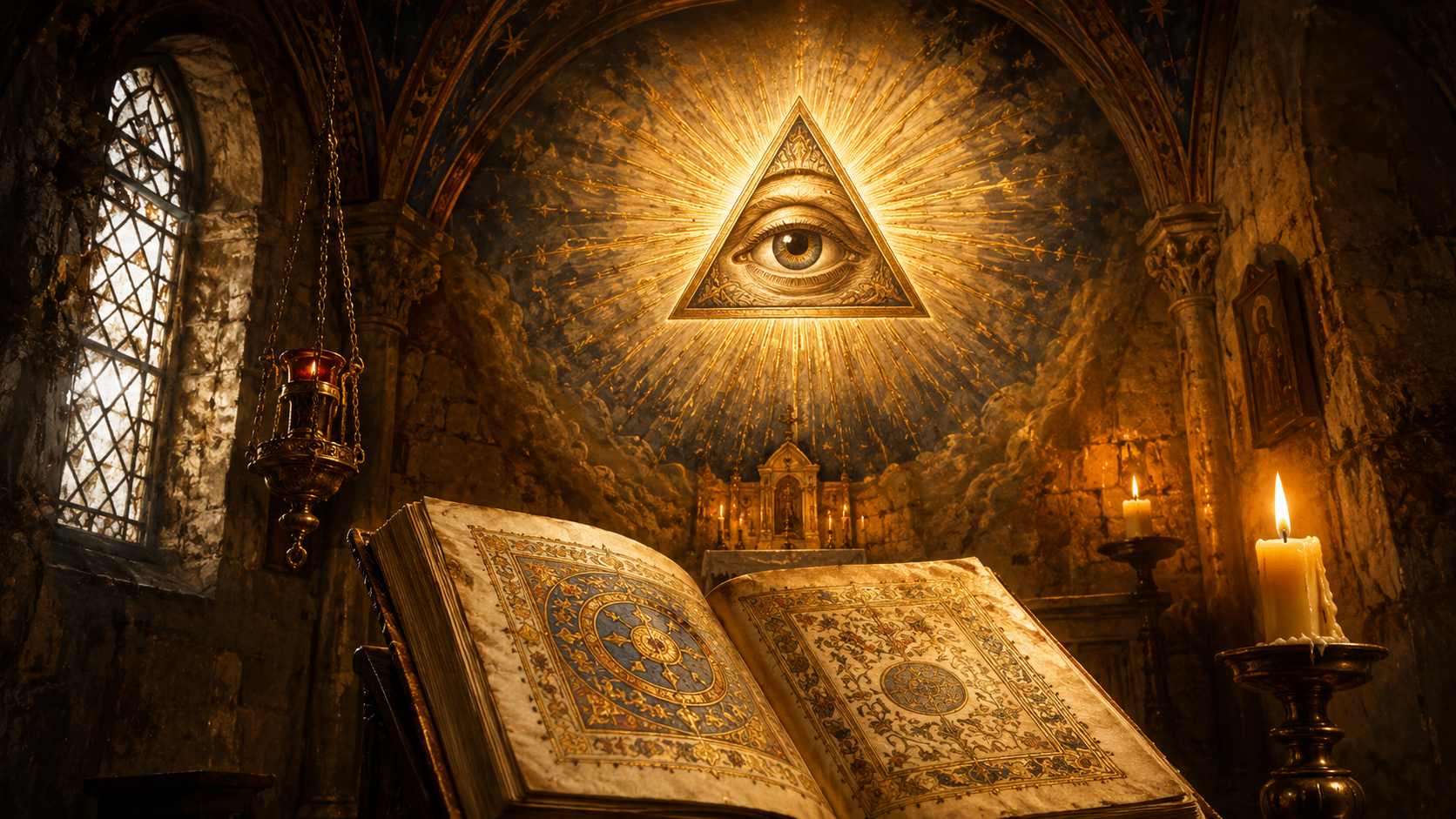
The Eye of Providence is rooted most strongly in Christian visual symbolism. In Christian art, an eye surrounded by light came to represent the watchful presence of God. The idea was not that God had a literal single eye, but that divine awareness saw all things. Nothing was hidden from providence, judgement, or grace.
The triangle became especially important because of its connection with the Christian Trinity: Father, Son, and Holy Spirit. When the eye was placed inside a triangle, the image could be read as a symbolic representation of divine sight framed by Trinitarian theology. Rays of light strengthened the sense of holiness and heavenly illumination.
This religious context matters because the symbol was not originally an emblem of secret societies or modern conspiracy. Before it became attached to theories about hidden power, it appeared in churches, religious paintings, devotional art, and architectural decoration. Its earliest widespread meaning was sacred watchfulness rather than covert control.
Providence as a Religious Idea
The word providence refers to divine guidance, care, and foresight. In religious thought, it describes the belief that God is not distant from the world, but actively aware of creation and human life. The Eye of Providence visually expresses that idea through the image of a watchful eye shining above the world.
This meaning is different from simple surveillance. In its religious setting, the eye does not only watch to punish. It also represents protection, order, wisdom, and moral accountability. The symbol suggests that history and human action unfold under a higher gaze.
That deeper meaning helps explain why the symbol could appear in public buildings, churches, and state imagery without originally being seen as sinister. It communicated divine favour, moral seriousness, and the hope that human affairs were guided by more than chance.
The Eye of Providence in Freemasonry
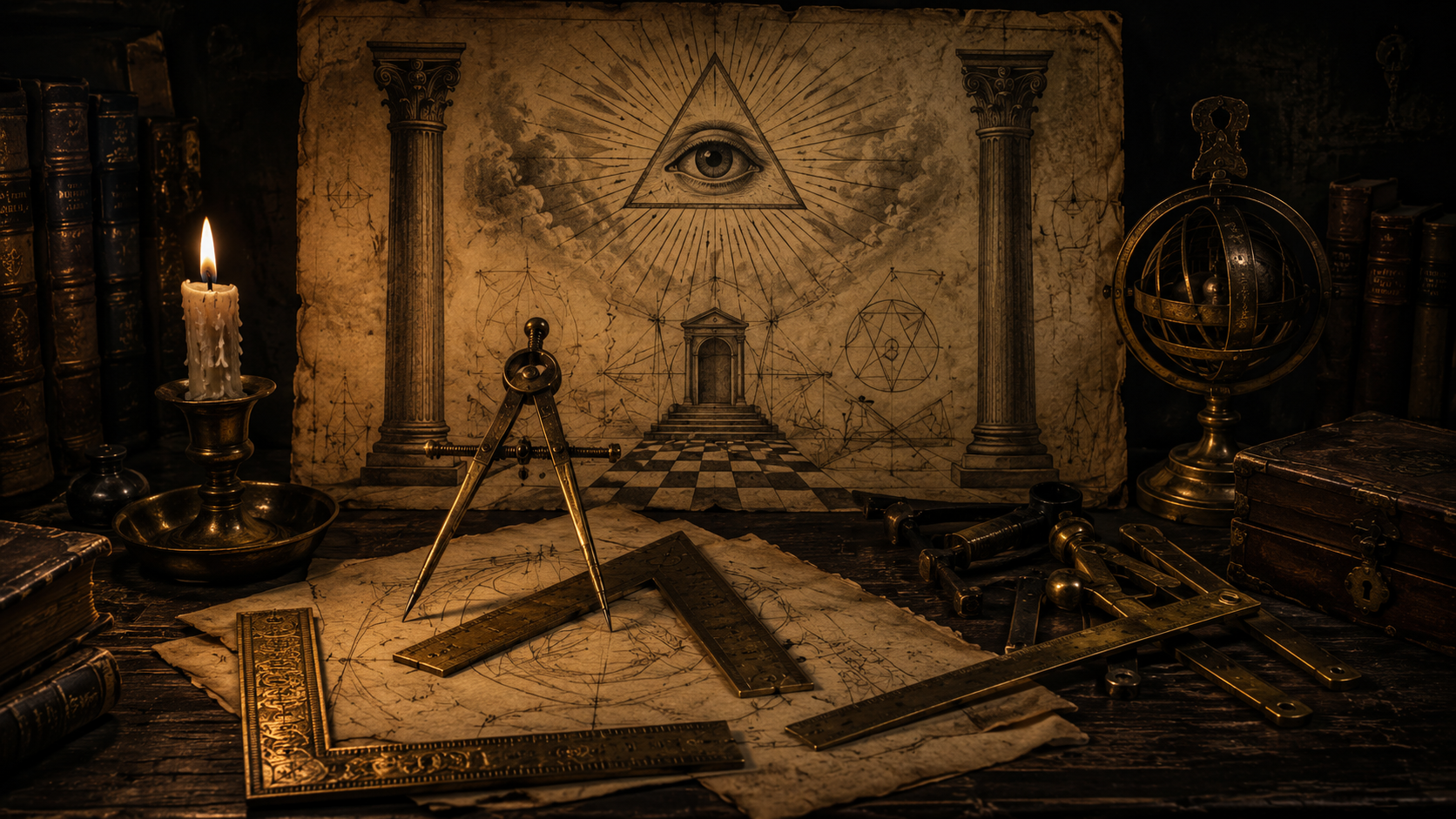
The Eye of Providence is often associated with Freemasonry, but it was not created by Freemasons and has never belonged exclusively to them. Freemasonry drew from a wide range of symbolic sources, including architecture, geometry, biblical imagery, moral allegory, and Enlightenment-era ideas about reason and virtue.
In Masonic settings, the eye is commonly interpreted as a reminder that human actions are observed by the Great Architect of the Universe, a term used in Masonic language for the divine or supreme ordering principle. The symbol can therefore represent moral awareness, conscience, and accountability.
The Masonic use of the Eye of Providence helped give the symbol a more esoteric reputation. Because Freemasonry itself uses initiation, ritual, and layered symbolism, outsiders often interpreted its imagery as evidence of hidden doctrine. The eye became one of the symbols most easily pulled from that context and reimagined as a sign of secret control.
The Great Seal of the United States
The Eye of Providence is famously visible on the reverse side of the Great Seal of the United States, where it appears above an unfinished pyramid. This version is also printed on the back of the American one-dollar bill, which has made it one of the most widely reproduced symbols in the world.
In this setting, the eye is usually understood as a symbol of divine favour or providential guidance over the new nation. The unfinished pyramid suggests strength, endurance, and a project still being built. The eye above it suggests that the national experiment exists under the gaze of providence.
This image has become central to modern conspiracy theories because it combines several powerful ingredients: an all-seeing eye, a pyramid, Latin mottos, national power, and money. Even when the original design is explained historically, the image continues to invite speculation because it looks intentionally cryptic.
Why It Became Linked to the Illuminati
The modern link between the Eye of Providence and the Illuminati is mostly the result of later interpretation, not direct historical ownership of the symbol. The historical Bavarian Illuminati was a real eighteenth-century secret society, but the popular idea of the Illuminati has grown far beyond that original group. In modern culture, the name often refers to an imagined hidden elite controlling politics, finance, entertainment, or world events.
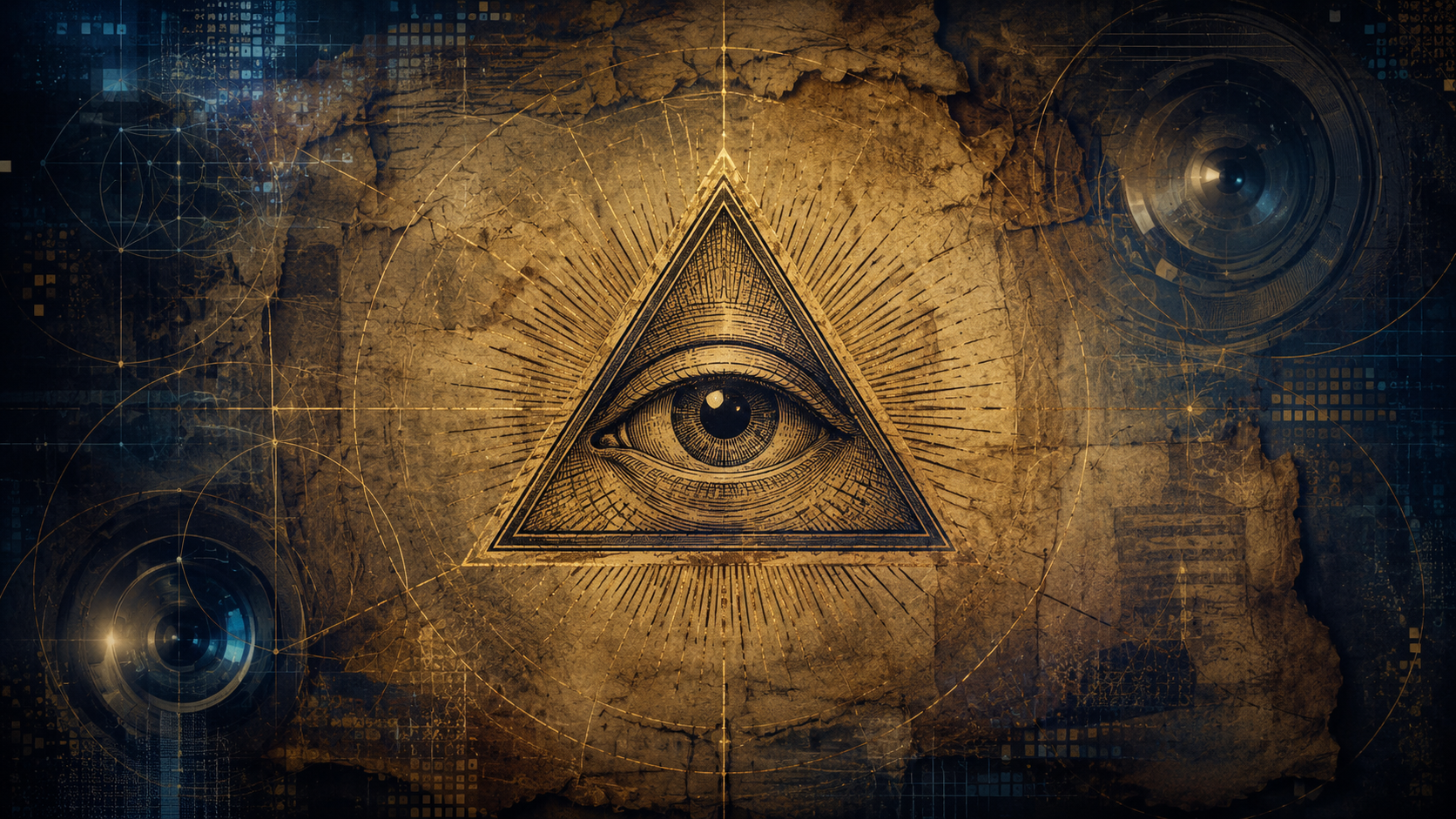
The Eye of Providence became useful to this mythology because it already suggested watchfulness and hidden authority. When placed on currency, in architecture, or in corporate and entertainment imagery, it seemed to offer visual evidence for people already looking for patterns of secret influence.
The symbol’s ambiguity makes it especially vulnerable to this kind of reinterpretation. An eye can mean God, conscience, insight, power, surveillance, initiation, or control. Because it has no single modern meaning, it can be pulled into many different narratives.
Occult and Esoteric Interpretations
In occult and esoteric interpretation, the Eye of Providence is often connected with higher sight, awakened consciousness, illumination, and hidden knowledge. The image of an eye has appeared across many traditions as a sign of perception beyond ordinary vision. It can suggest spiritual insight, inner awareness, or the ability to see what is concealed.
Like the Sigil of Baphomet, the Eye of Providence shows how a symbol can move between religious history, esoteric interpretation, and modern popular misunderstanding.
The triangle adds another layer. In esoteric symbolism, triangles can represent ascent, manifestation, fire, harmony, or the joining of different principles. When the eye is placed within the triangle, the symbol can be read as awakened perception held within sacred order.
This does not mean every use of the Eye of Providence is occult. A church carving, a Masonic tracing board, and a conspiracy poster may all use similar imagery for different reasons. The symbol’s power comes from its ability to move between religious, moral, esoteric, political, and popular meanings.
The All-Seeing Eye and Surveillance Culture
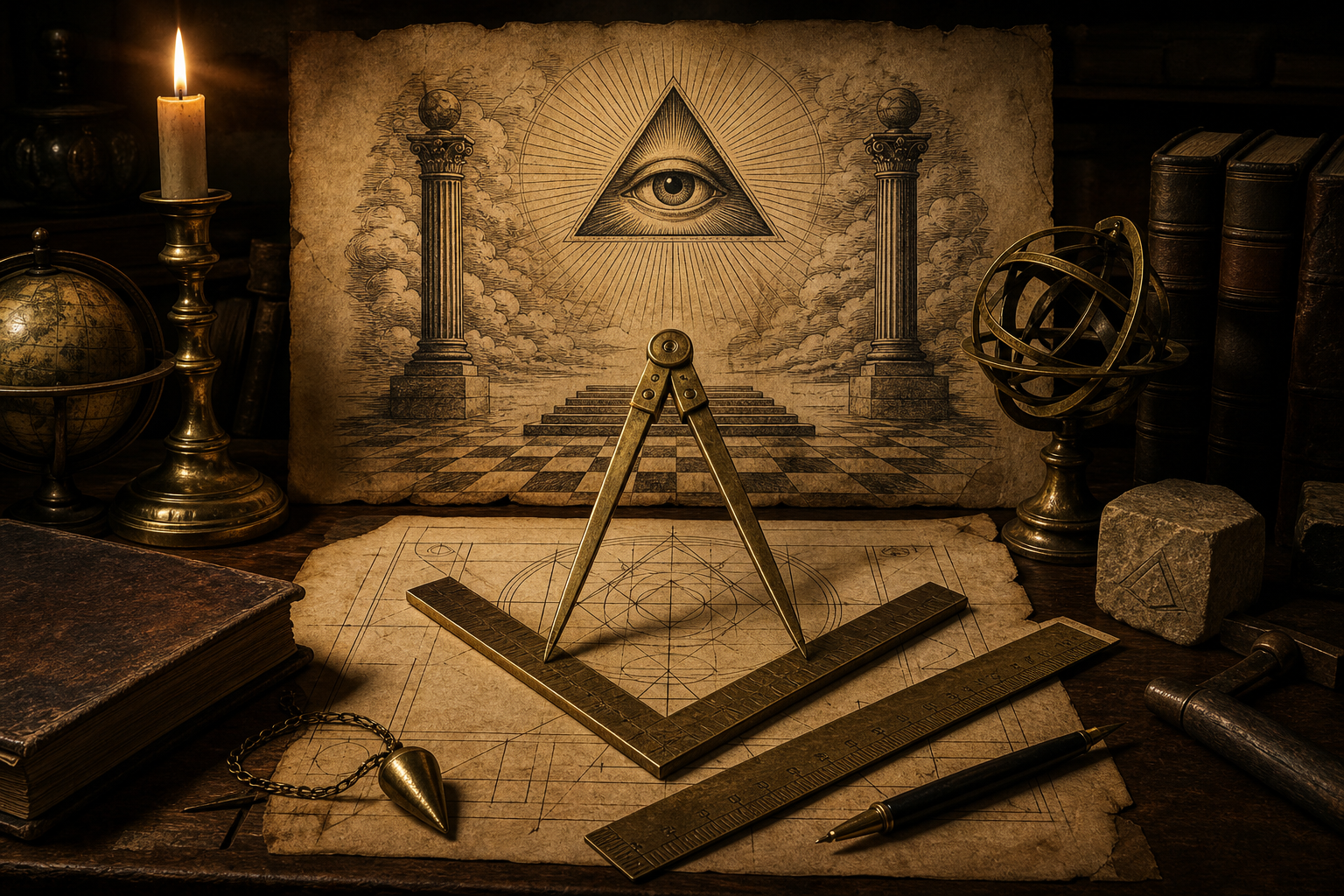
Modern audiences often read the Eye of Providence through the lens of surveillance. Cameras, data tracking, state power, corporate monitoring, and digital life have changed how people respond to images of watching. A symbol once associated with divine care can now feel like a warning that someone, somewhere, is always observing.
This shift helps explain why the All-Seeing Eye remains so effective in films, music videos, games, posters, and conspiracy media. It visually captures a modern anxiety: the fear of being watched by forces that are powerful, distant, and difficult to identify.
That modern interpretation does not erase the symbol’s older meanings. Instead, it adds another layer. The Eye of Providence now sits between sacred watchfulness and secular unease, between protection and control, between insight and surveillance.
Common Misunderstandings
One common misunderstanding is that the Eye of Providence is automatically an Illuminati symbol wherever it appears. In reality, the symbol has been used in Christian art, civic design, Freemasonry, decorative architecture, popular media, and occult contexts. Its meaning depends on use, setting, and intention.
Another misunderstanding is that the symbol is purely evil or purely benevolent. Its older religious meaning was connected with divine watchfulness, but modern culture has also made it a symbol of hidden power and suspicion. Both readings exist because the image is flexible enough to support very different emotional responses.
It is also inaccurate to treat the Eye of Providence, the All-Seeing Eye, and every eye-in-triangle design as exactly the same thing. They overlap visually, but not every eye symbol belongs to the same tradition. Some are religious, some decorative, some political, some Masonic, and some deliberately occult in tone.
Why the Symbol Endures
The Eye of Providence endures because it is visually simple and symbolically dense. It can be understood instantly, but it cannot be exhausted quickly. A single eye carries the emotional force of attention and judgement. A triangle gives it structure and mystery. Light turns it into a sign of revelation.
Its history also gives it unusual reach. It can be found in religious art, Masonic symbolism, national iconography, conspiracy theories, occult diagrams, and popular entertainment. Few symbols move so easily between church, lodge, state, and screen.
For mystery culture, the Eye of Providence is compelling because it always seems to be watching from just beyond the surface. It suggests that there may be a deeper order behind visible events, whether that order is divine, symbolic, political, or imagined. That uncertainty is the source of its lasting power.
The Eye of Providence is not a symbol with one simple origin or one fixed meaning. It developed through Christian ideas of divine watchfulness, appeared in art and architecture, entered Masonic symbolic language, became part of the Great Seal of the United States, and was later absorbed into modern theories about secret societies and hidden control.
Its reputation as an occult or Illuminati symbol is only one chapter in a much longer history. The same image can represent God, conscience, enlightenment, authority, surveillance, initiation, or mystery. That range is precisely why the Eye of Providence continues to fascinate people. It is a symbol of seeing, but also a symbol that people never stop trying to interpret.