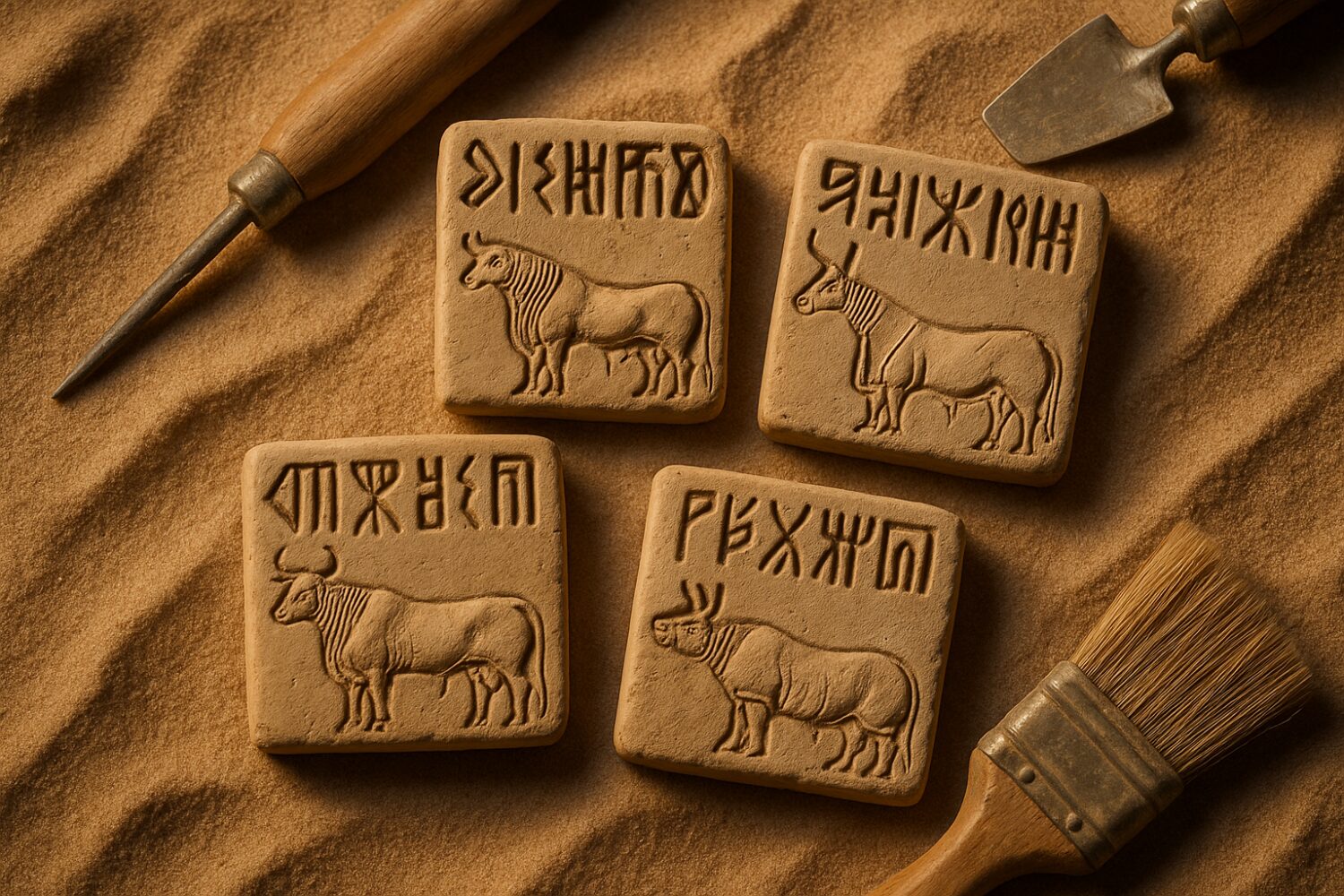
A Cretan tablet gives a total. A wooden board from Rapa Nui carries rows of figures. A clay disc has two spirals of stamped signs. Each preserves something its maker meant another person to see, but each leaves a different kind of work for a reader today.
Start with what survives
A script’s corpus is the body of surviving material that can be studied together. That might mean many administrative tablets, or a single object with very few other marks to compare. The Phaistos Disc has 45 sign types according to the Mnamon catalogue, but a second substantial text in the same system has yet to give researchers a separate place to test a reading.
The difficulty changes with a bigger collection. Many Indus inscriptions are brief, so researchers can see where signs tend to appear without having long passages that would help establish grammar. The Voynich Manuscript has much more continuous text. Its problem is finding an independently supported way to assign meanings or sounds to it.
Separate the sign from the word
Some evidence is usable before a language can be identified. In Linear A, a repeated pair of signs appears where accounts record a total. On Proto-Elamite tablets, the order of entries and their quantities help researchers distinguish kinds of animals. In both cases the format gives the signs a context, and the numbers provide an independent check.
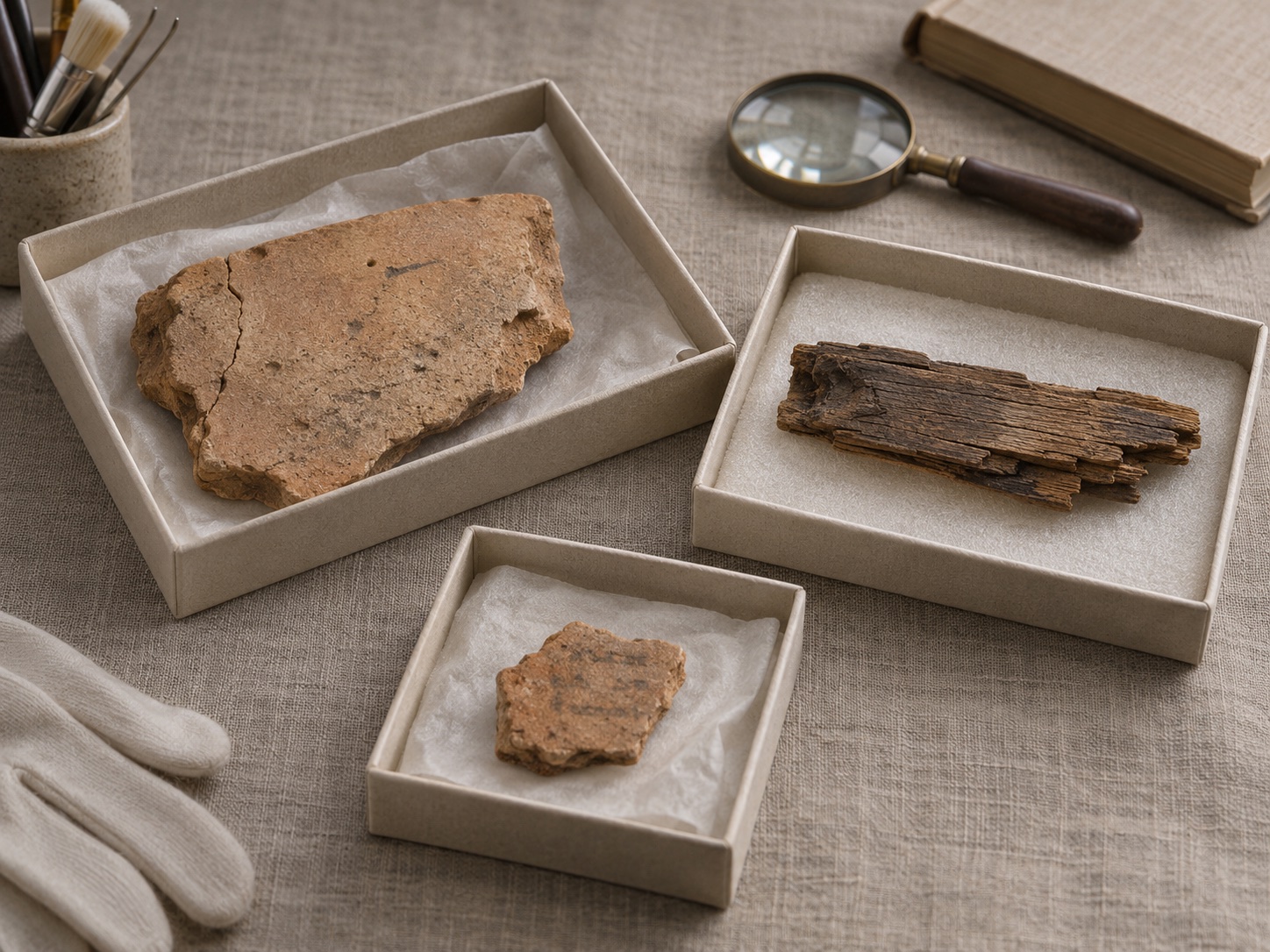
Sometimes the best result has to do with the object itself. With rongorongo, radiocarbon tests date the growth of wood from the tablets. A scan can help establish which lines belong to a sign. Each improvement gives scholars more to work with, while the date of the carving and the words remain separate questions.
What a useful comparison looks like
The Rosetta Stone offers the clearest contrast. Its Greek version of the decree supplied names and a subject that scholars could compare with the Egyptian versions. Other inscriptions gave them a place to see whether proposed readings still worked. A damaged or loosely translated parallel text may give only a handful of reliable points of comparison.
When you encounter a claimed decipherment, look for a specific inscription, the proposed sign values and a second passage those values can explain. Ask whether the identification also fits any independent evidence, such as a number, royal name or repeated formula. A claim that works only when the rules change from line to line is hard to verify.
A partial reading can be worth keeping for centuries. The ability to spot a total, group related signs or correct a transcription leaves the next researcher a result they can check and build on. That is often the first thing a script gives back.