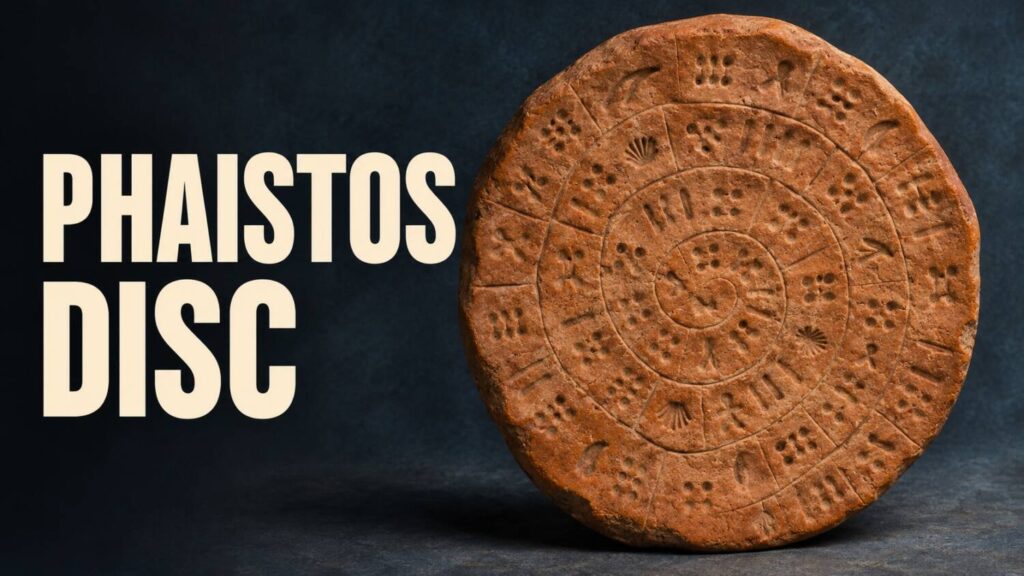
The maker of the Phaistos Disc pressed signs into both faces of a piece of clay. A sequence can be followed around one side, then the other, past small cuts that divide the impressions into groups. More than a century after the disc was found, the order of the marks is easier to study than what they say.
The disc and its findspot
The Heraklion Archaeological Museum records the discovery on 3 July 1908 by the Italian excavator Luigi Pernier in a room at the palace of Phaistos, in southern Crete. The room gives the disc an archaeological setting. It cannot tell us on its own who made the object, where it was made or what it was used for.
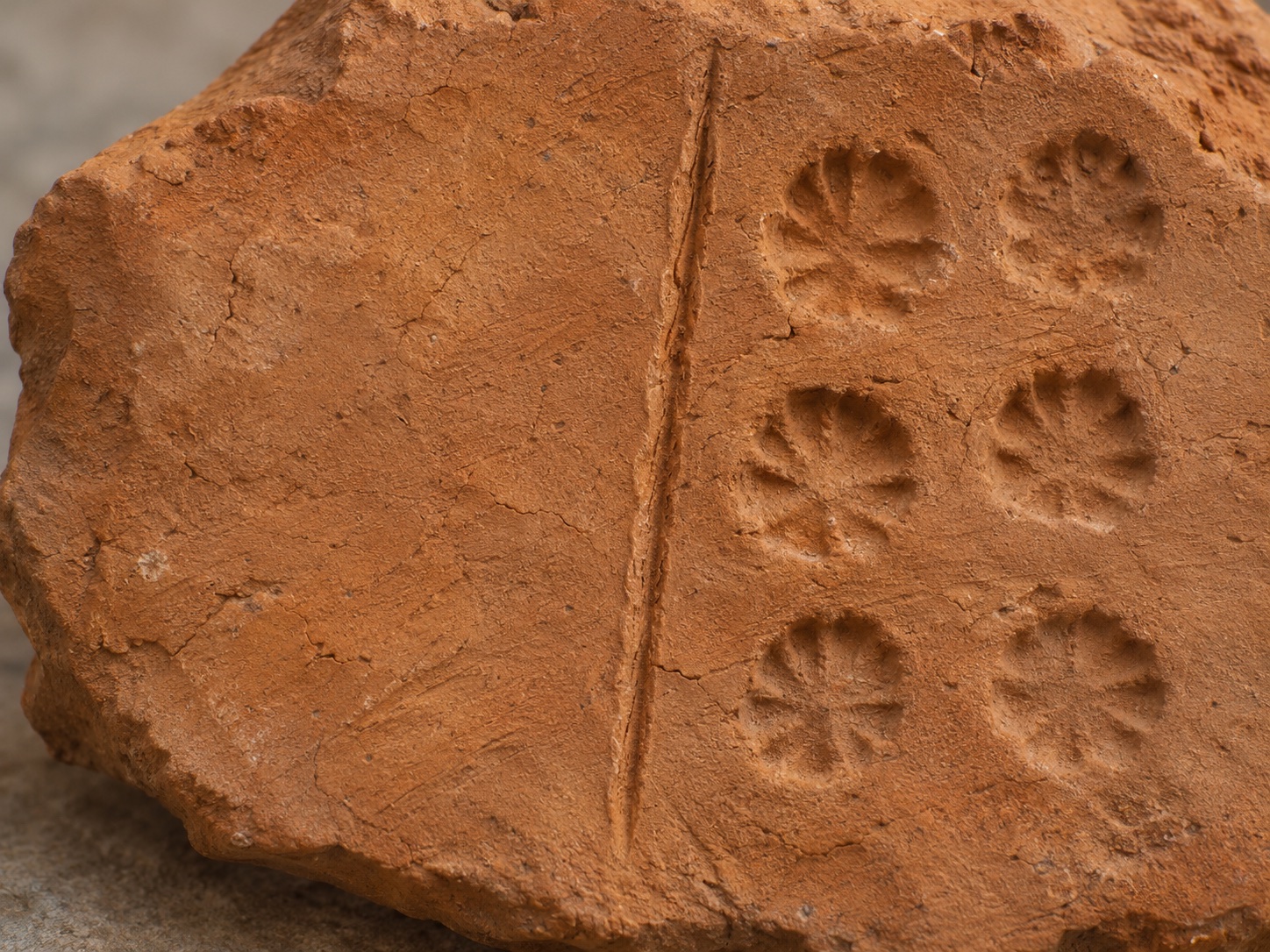
The museum counts 241 impressions. The Mnamon catalogue of ancient writing systems distinguishes 45 sign types. That difference is visible on the clay. A figure can appear more than once, its outline repeated each time a stamp was pressed into the surface. The group dividers were cut into the clay separately.
What the stamps can tell us
Repeated impressions make it possible to compare signs even where an individual example is imperfect. One impression may be shallow on one edge, while another made with the same shape preserves the detail. A comparison across the disc can also show where groups repeat and how their lengths vary.
Those groups leave room for several interpretations. The little divider cuts may separate units of the text, but deciding those units are words is a further step. An image that looks like a head might represent a sound, an idea or something specific to the object’s use. The shape alone gives little grounds for choosing between them.
What a second inscription could tell us
A decipherment would have to assign values consistently and explain why the same groups recur where they do. With essentially one substantial example of the sign system, a reader has few opportunities to check whether proposed values work away from the passage that suggested them.
Another securely excavated inscription with the same repertoire would give researchers that chance. Even a modest find could show the same signs in a different order, or the same group in a setting that makes its purpose clearer. Until then, the disc’s most dependable details are the ones its maker left physically in the clay.