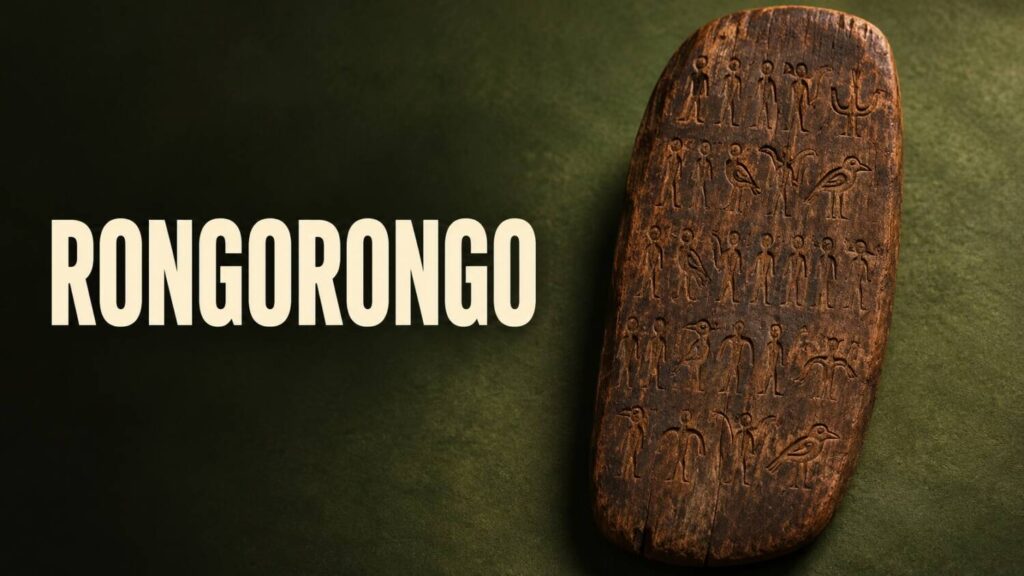
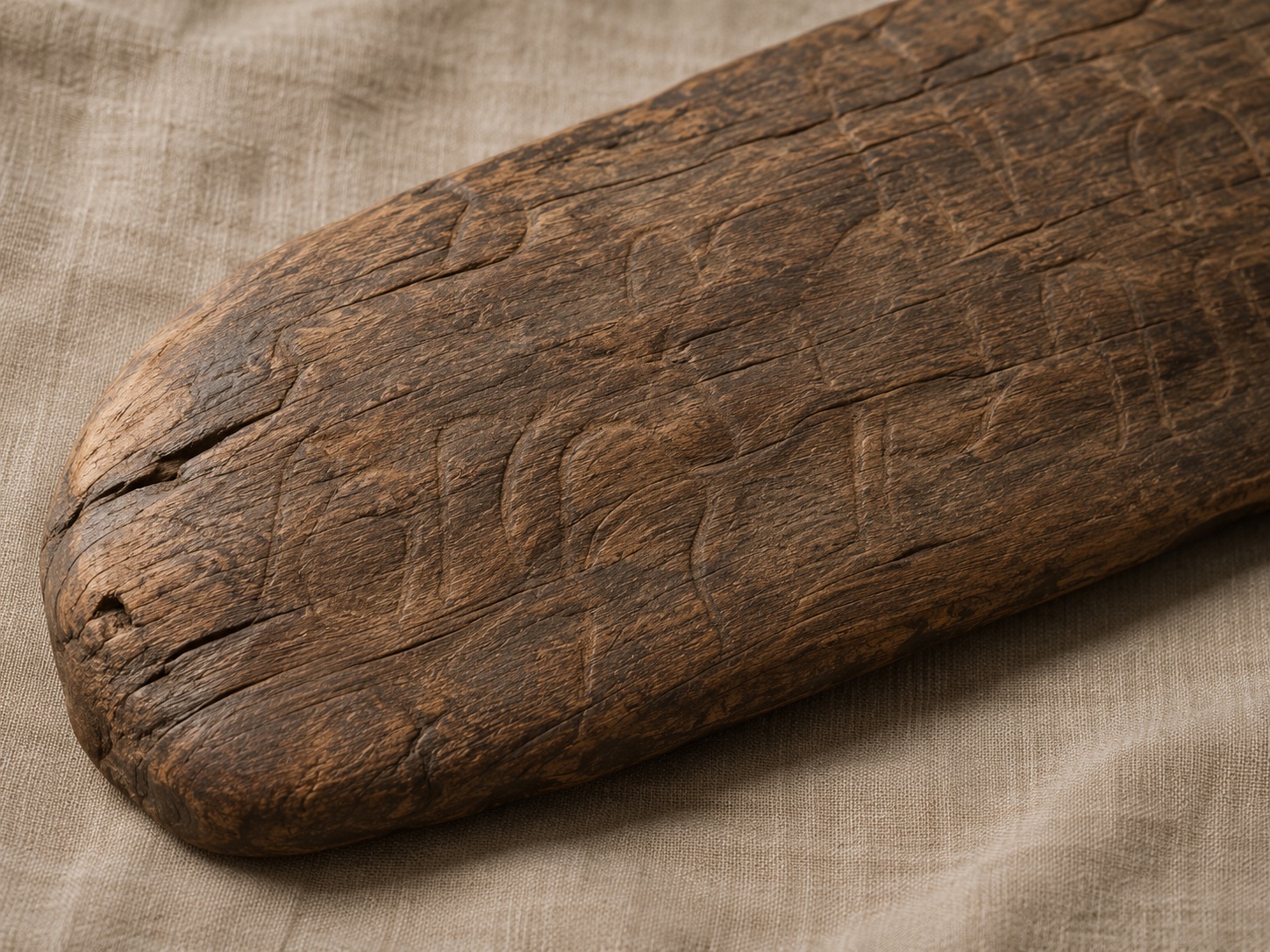
One of the wooden tablets from Rapa Nui is old enough to change the question researchers ask about rongorongo. The wood of the Échancrée tablet dates to before the first recorded European arrival in 1722. The question is when someone carved the rows of figures that run across it.
Four tablets and two different dates
The surviving corpus consists of roughly two dozen inscribed objects, now held in collections around the world. Several bear rows of figures that resemble people, animals or plants. An apparent resemblance can help researchers describe a sign and find it elsewhere. Its meaning in a line is much harder to establish.
In 2024, Silvia Ferrara and colleagues published radiocarbon results for four tablets held in Rome. One sample, from Échancrée, came from wood that grew in the fifteenth century. The authors’ allowance for missing outer rings put the estimated felling date around the turn of the sixteenth century. The other three tablets yielded later results.
Radiocarbon dating here measures when the sampled wood grew. An engraver could have picked up an older piece of wood or reused a worked object long afterward. The wood of Échancrée makes an early origin for the script possible. Establishing a pre-contact carving would require evidence that connects the act of cutting the signs to that earlier date.
What a digital model can show
The Mamari tablet illustrates a separate problem. A worn groove can look like part of a figure in one photograph and disappear when lit from the other side. A research team that digitized Mamari used scanning to capture the tablet’s surface and photographs to record its texture. A three-dimensional model lets a scholar inspect a disputed line from several angles without handling the wood.
Once researchers agree on a transcription, they can use a computer to compare repeated groups, count sign positions and see whether two passages share a sequence. That agreement matters. If one researcher counts a joined figure as one sign and another counts it as two, the same tablet can yield different patterns. The proposed lunar sequence on Mamari gives researchers a specific passage to compare, but a calendar-like pattern leaves the words themselves unresolved.
There are two separate discoveries worth looking for. One would tie the carving of an object to a date. The other would tie the signs to meanings or sounds that still work elsewhere in the corpus. A date on the wood and a pattern on Mamari are useful evidence because each can be checked on its own terms.