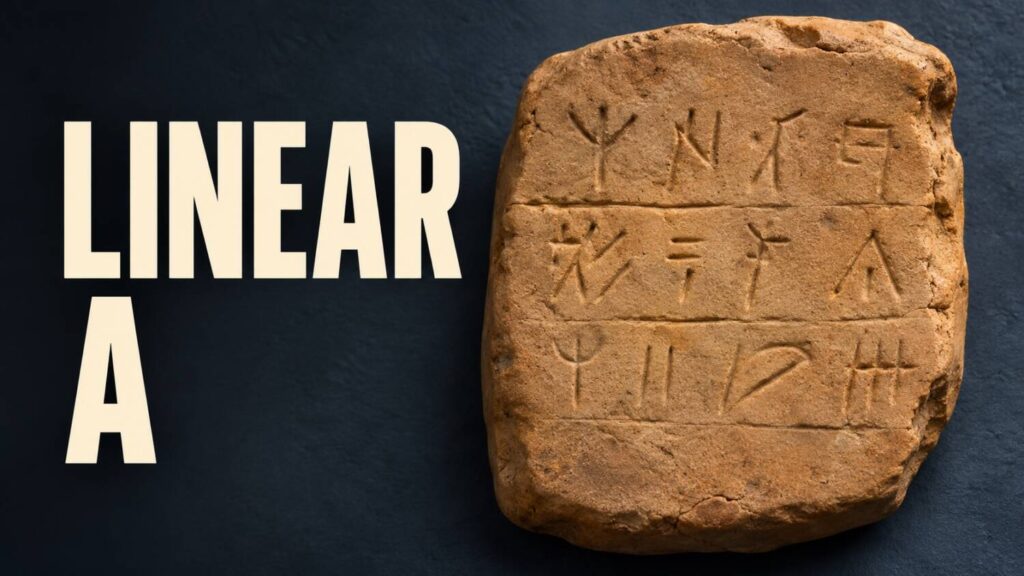
A clay tablet from Bronze Age Crete can tell you that a scribe added up a list, even if you could never have asked that scribe what was on it. On some Linear A tablets, a recurring pair of signs sits where a total should go. The position of the signs and the arithmetic make that line one of the clearest places to see how far a reading can go.
How scholars name the signs
Linear A was used primarily on Crete around 1800–1450 BCE. The surviving inscriptions include clay records as well as writing on objects such as stone vessels. Ester Salgarella’s overview of Linear A sets out the range of objects and the script’s relationship to Linear B, a later script used to write an early form of Greek.
Some Linear A signs resemble ones in Linear B closely enough that researchers use the known Linear B values as a starting point. Writing a sequence as ku-ro gives researchers a shared way to refer to it. The labels are provisional when applied to Linear A, since a borrowed sign can take on a different sound in another language. The SigLA database lets readers compare the forms that survive on different objects.
A total without a dictionary
On tablet HT 13 from Hagia Triada, the signs written as ku-ro appear just before a large quantity near the end of a list. The transcription gives 130 plus a fraction sign. The exact arithmetic on this tablet is open to interpretation, but the position of ku-ro before a large quantity recurs in other accounts. That pattern is the basis for interpreting it as a total.
The arithmetic gives a scholar something outside the proposed reading to check. The signs around the figures pose a harder problem. A repeated group could be a person, place or category. Its place on an account may narrow the possibilities, but a neat column of figures cannot tell us how a Minoan speaker would have said any of those words.
Where the reading stops
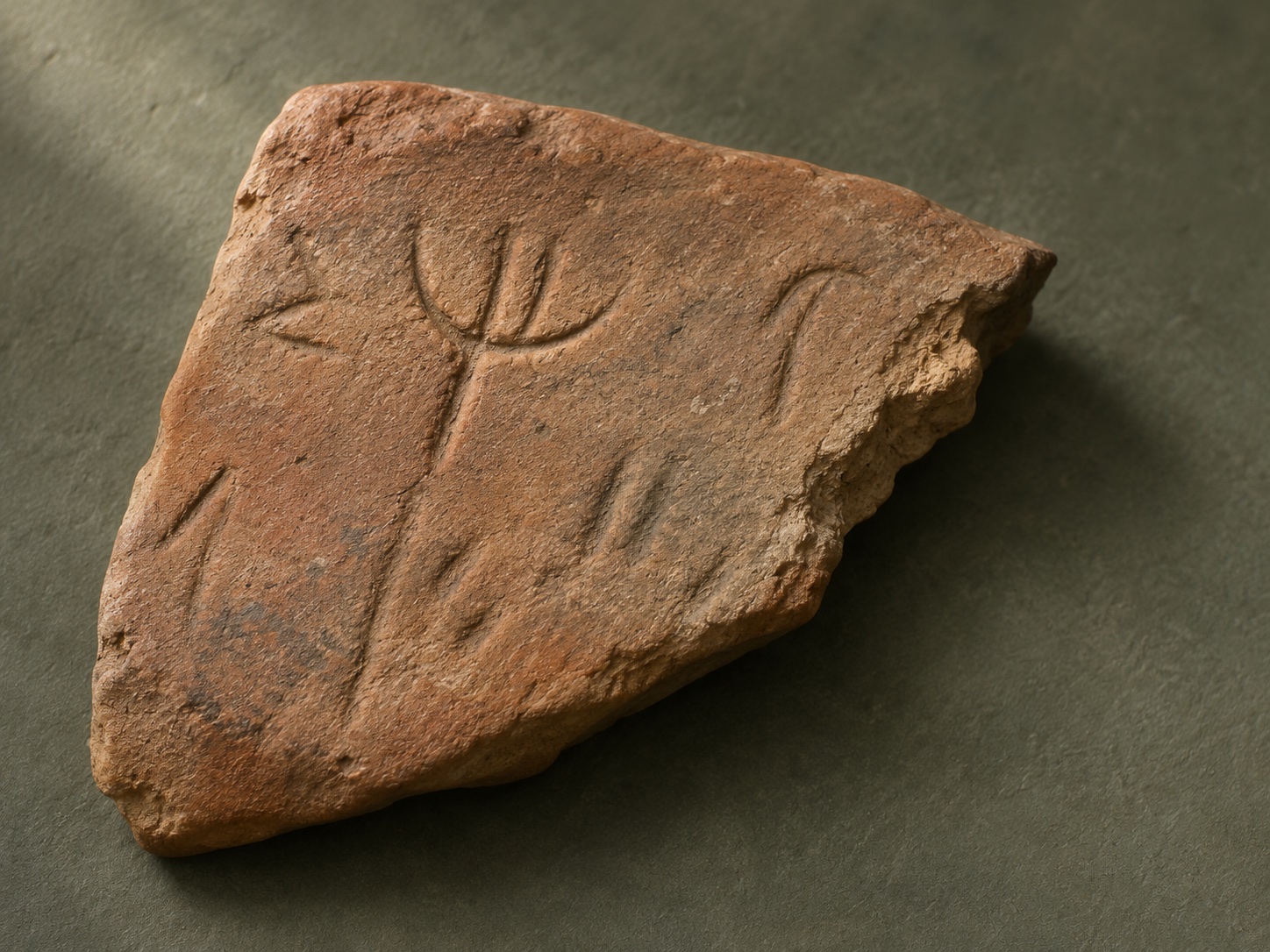
A proposed language has to explain how the signs behave across texts written for different purposes. The evidence gets stronger when the same sound values and word forms carry over to inscriptions the researcher did not use to devise the reading. A single plausible word, especially one built from values borrowed from another script, can be a coincidence.
The Cretan tablets already preserve traces of how people recorded and checked quantities. What remains out of reach is the language they used to write those records. On HT 13, you can see exactly where the argument comes from by comparing the signs with the entries above them.