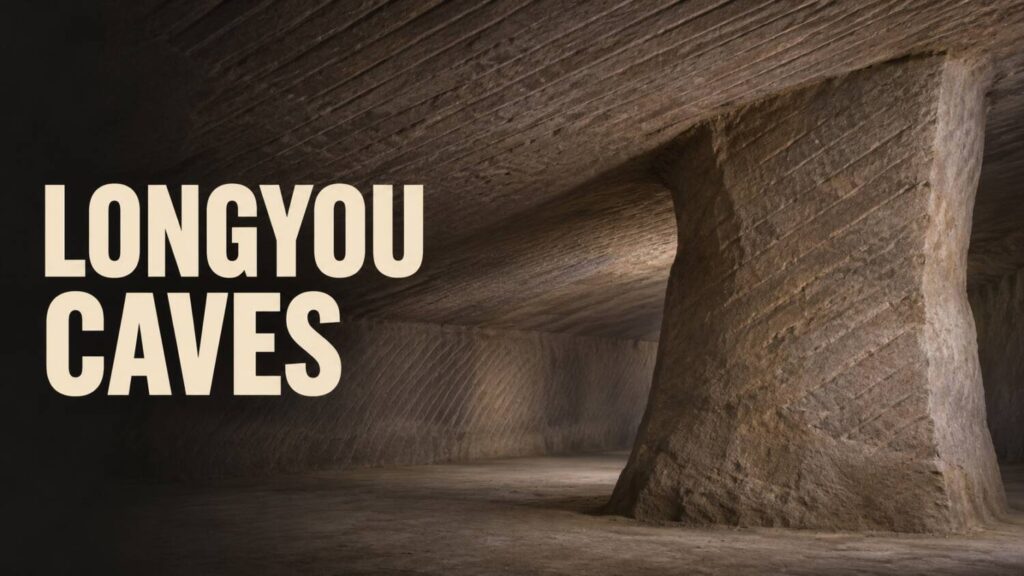
When residents pumped water from ponds at Fenghuang Hill in 1992, they uncovered entrances to large underground rooms. Inside were sloping ceilings, thick pillars and rows of marks on the rock. The discovery has a year attached to it. The work that made the chambers is harder to date.
What came out of the ponds
The Zhejiang provincial account describes a complex of 24 artificial caves, including five large caverns. The opening through which water was removed gives little sense of the space below. Once exposed, the chambers could be measured as a set of rooms cut into the hill.
What the surveys measure
An engineering survey identifies the material as clay-rich siltstone. Later engineering work considered the roofs, surviving pillars and the behaviour of the surrounding rock. The pillars are part of the same rock as the walls. Their positions record places where material was left in place as the room around them was excavated.
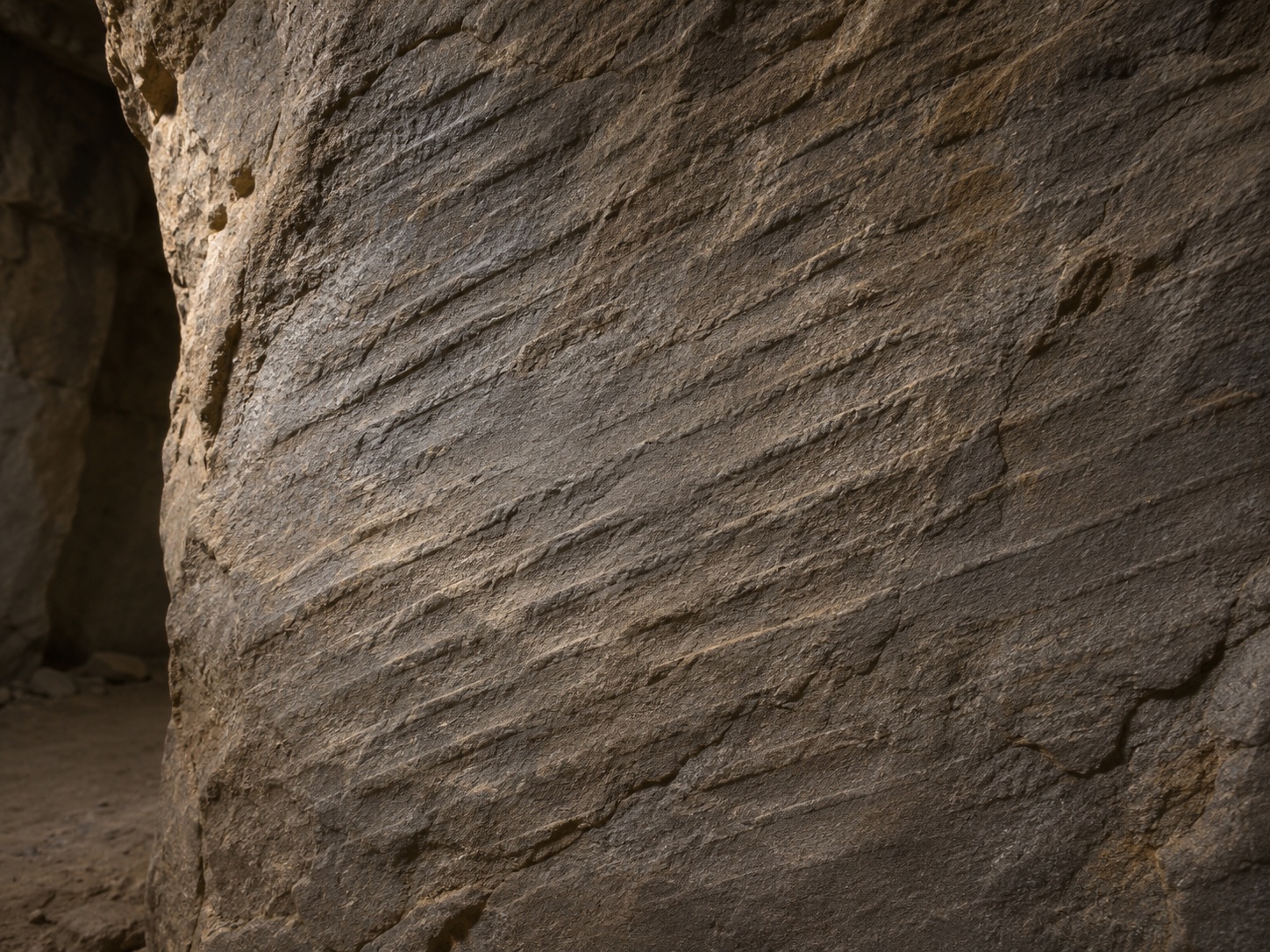
The regular grooves visible across parts of the chambers are marks on the worked surfaces. The direction and spacing of those grooves can be compared from wall to ceiling and room to room. To reconstruct the order of work, a survey would look for places where one set of marks cuts across another or disappears under a later surface.
A date from the floor
The provincial account describes glazed pottery from floor silt attributed to the Western Han period. Its value for dating the caverns depends on how the silt formed and how securely the pottery is associated with it. Pottery can date activity or deposition in a space. A date for cutting the original room requires a deposit or mark that can be tied to that work.
Modern surveys can describe the chambers in considerable detail. The same measurements can help identify where rock is cracking or where water affects it today. The questions of when the chambers were first excavated and what people used them for still depend on archaeological evidence from the floor, entrances and worked surfaces.
How to Read an Ancient Monument follows the evidence at other sites in this series.