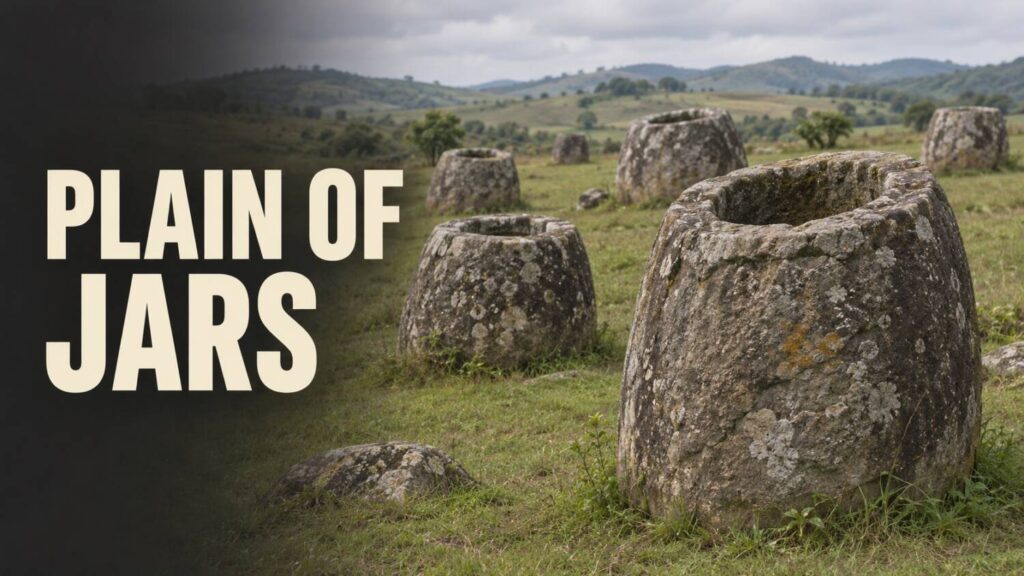
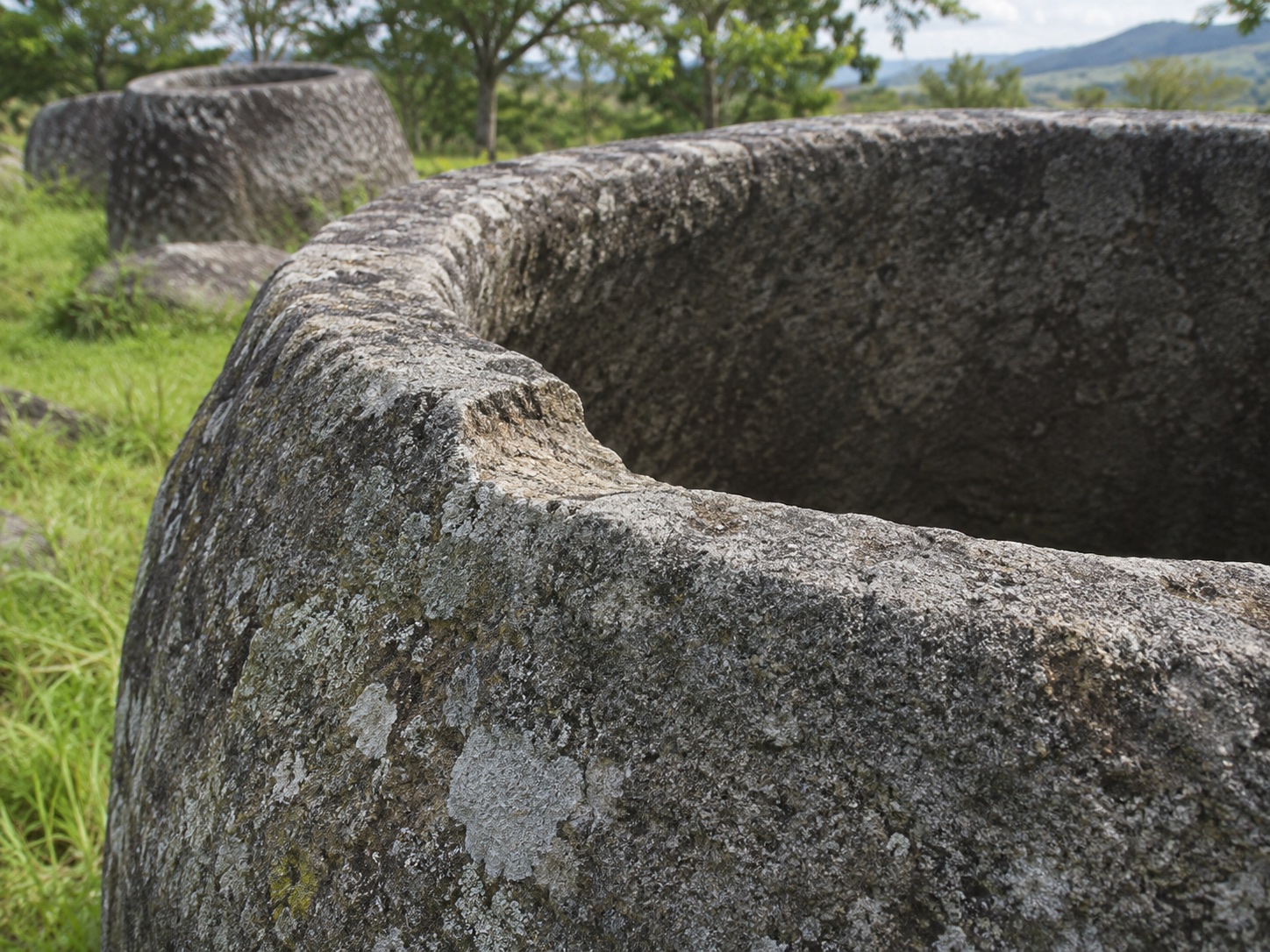
At a site northeast of Phonsavan, archaeologists worked through the contents of a stone jar wider than it was tall. The vessel stood about 1.3 metres high and measured more than two metres across. Inside were the remains of at least 37 people, according to the team that excavated it.
There is more than one date to find
The Plain of Jars World Heritage property brings together sites on the Xieng Khuang Plateau in Laos. Stone vessels stand in clusters across the landscape. The dates of cutting a vessel, setting it down and placing human remains in or near it may differ by centuries.
In a 2021 study, Louise Shewan and colleagues used optically stimulated luminescence to estimate when sampled sediments were last exposed to light. Samples beneath jars at one site suggested placement could have begun in the late second millennium BCE. Radiocarbon dates from remains and charcoal indicated mortuary activity around jars between the ninth and thirteenth centuries CE. Those measurements concern different materials and events.
One vessel and many people
The 2026 report on Jar 1 at Site 75 describes a collective deposit within a vessel excavated between 2022 and 2024. Direct radiocarbon dates place mortuary activity in the jar around 890–1160 CE. The remains were disarticulated, meaning the bones were no longer in their original anatomical positions. The team interpreted the deposit as one stage in a longer sequence of funerary practices. For the methods behind those dates, see how archaeologists date monuments.
The find answers a question about what happened in that particular jar. The studies of burials around other jars show that activity could take place outside the vessels as well. Comparing the finds requires care about where the bones came from and which layer they occupied.
The large vessel near Phonsavan now has an excavated history of its own. The next comparison is with another jar whose interior and surroundings can be studied with the same care. That is how researchers can find out how widely this practice was shared.
How to Read an Ancient Monument follows the evidence at other sites in this series.