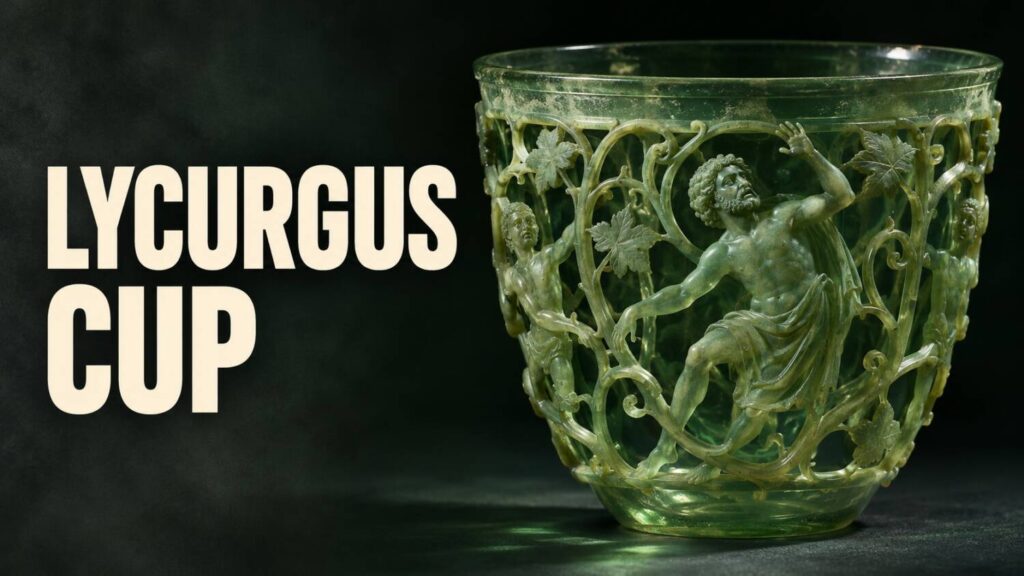
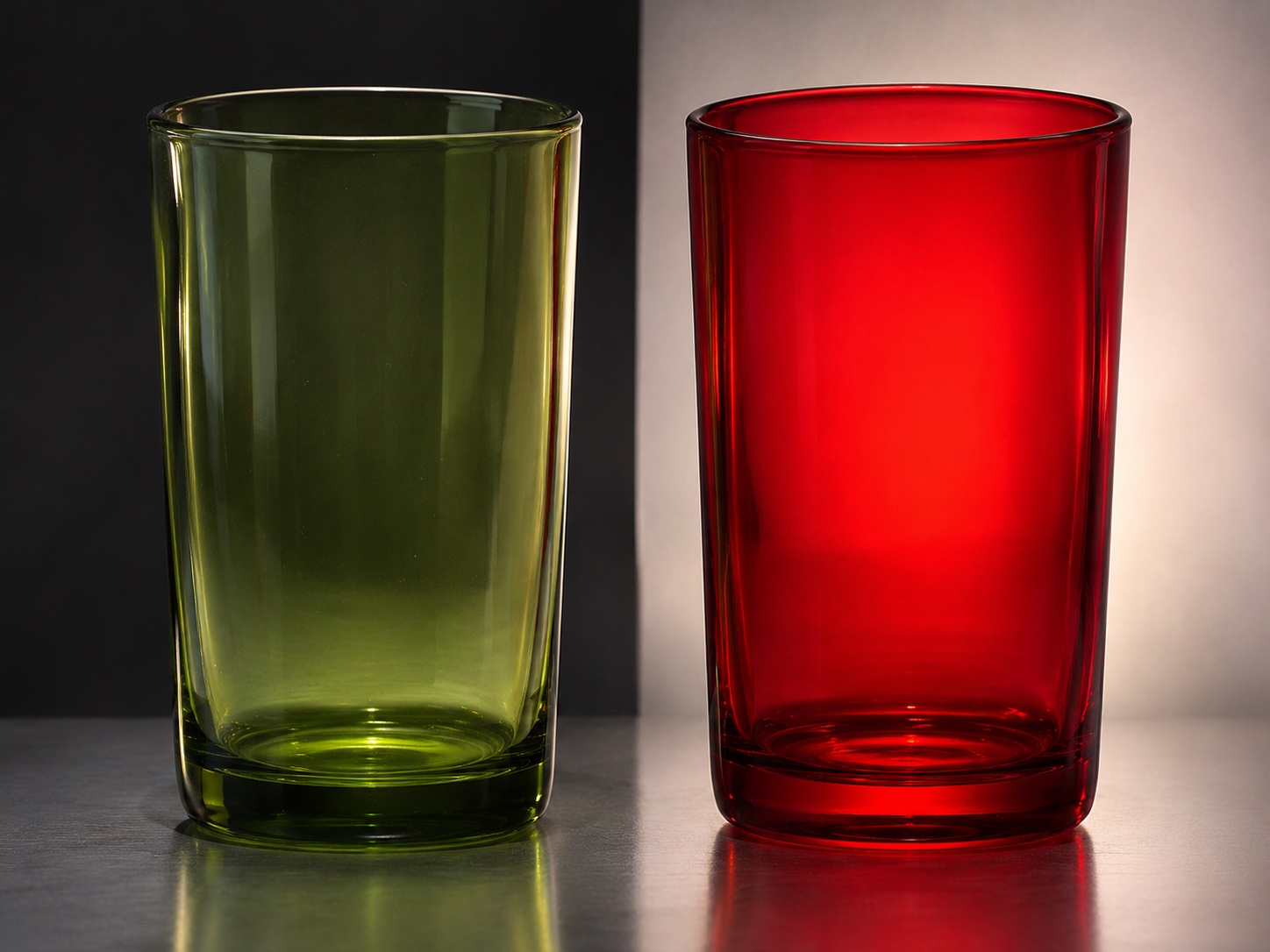
Light the Lycurgus Cup from the front and its carved vines look green. Shine light through the glass and the bowl takes on a deep red. The scene remains the same. A vine holds the Thracian king Lycurgus fast, and changing the light reveals a second colour in the glass around him.
The scene carved around the bowl
The fourth-century vessel is a Roman cage cup. Its figures stand clear of the bowl in places, leaving open gaps between the carved decoration and the vessel wall. The British Museum’s gallery guide describes the story as an episode involving Dionysus and the transformation of Ambrosia into a vine. The British Museum acquired the cup in 1958.
The shift between reflected and transmitted light is called dichroism. In a 1990 microscopy study, David Barber and Ian Freestone examined material from the cup and identified tiny particles containing silver and gold. The particles affect which wavelengths the glass scatters and which pass through. The colour therefore depends on the route the light takes to the eye.
Making the effect again
The particles explain why the cup changes colour. Making them form in a batch of glass is a different problem. The ingredients, the temperature and the treatment of the melt all affect what takes shape as the glass cools. A separate study of replica glass compared its optical behaviour with the cup using a composition close to the ancient material.
On 26 October 2026, the University of Sheffield reported a new reproduction. Its team started with a base glass made from modern materials to approximate Roman glass, then worked on getting the silver and gold into the right form. Glass artist Elliot Walker used the resulting material in a contemporary sculpture.
The glass and the workshop
Sheffield’s result shows that glass prepared this way can produce the effect and be worked into an object. The ancient cup still leaves questions about the workshop. The carver’s work and the origin of the glass may belong to different stages of production. The remaining vessel preserves the colour change and the carving in the same object, with no surviving instructions connecting the two.