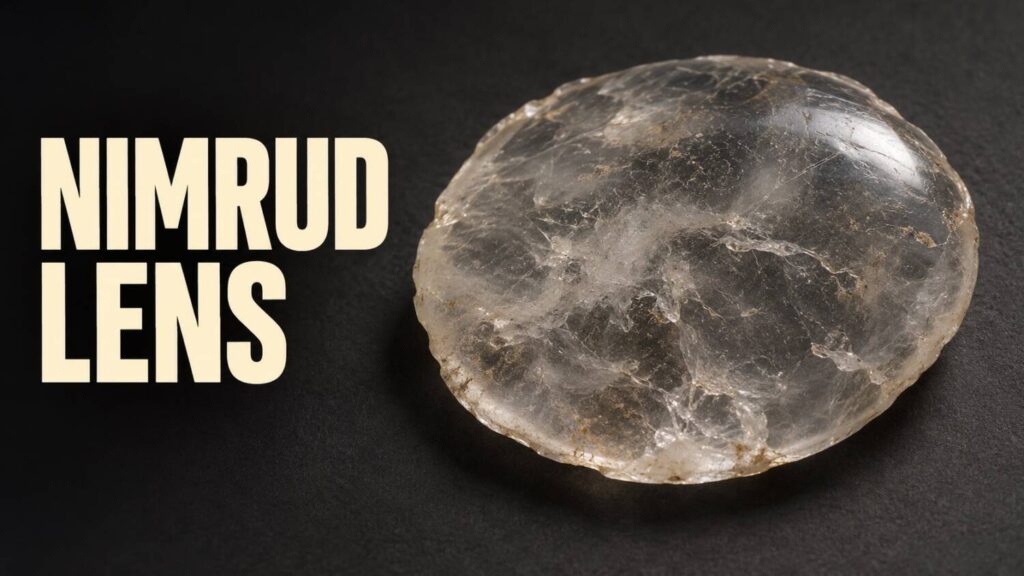
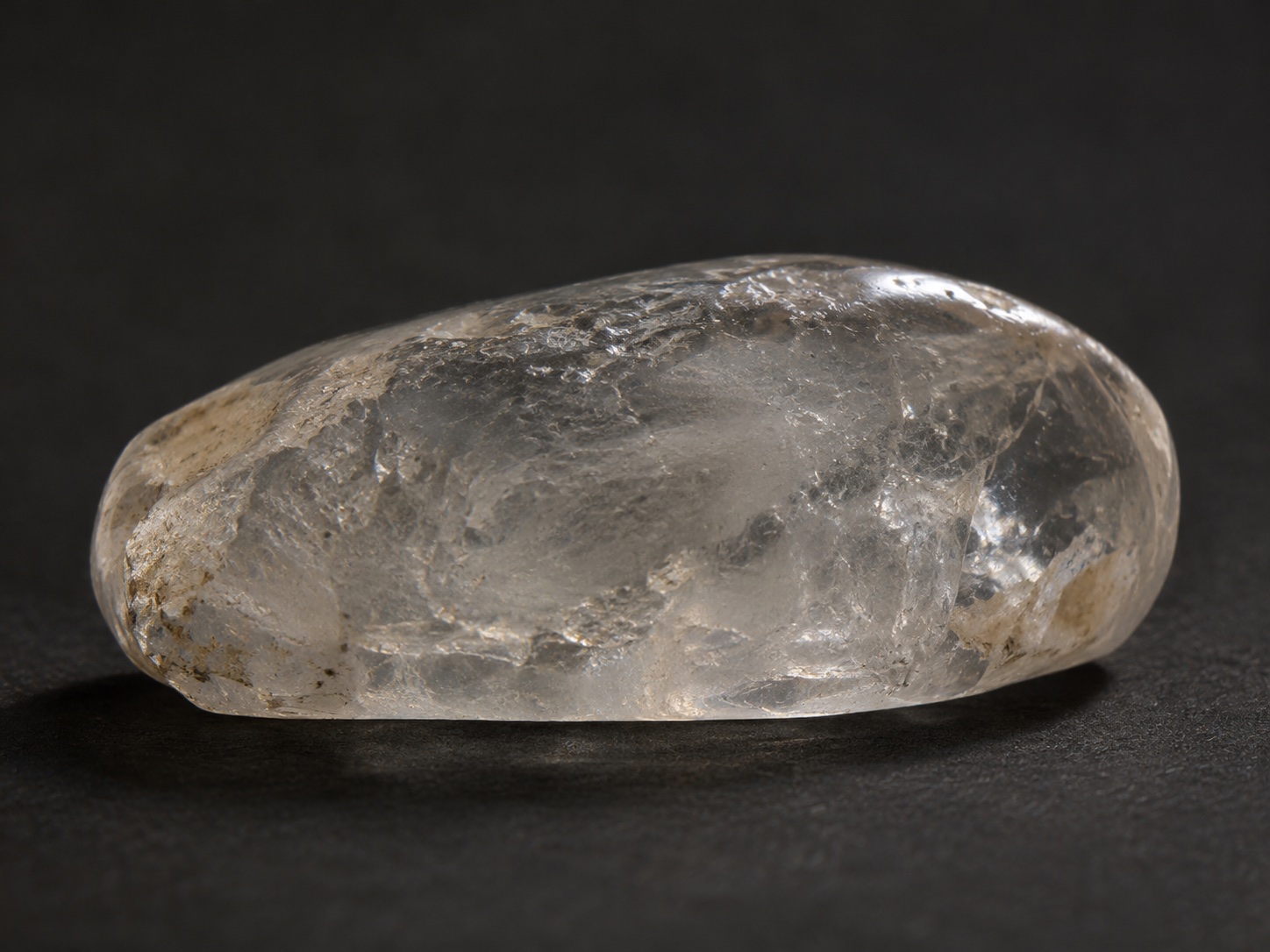
The piece of rock crystal from Nimrud is small enough to sit in a hand. One face is flat. The other curves outward, and the edge is slightly oval. That combination lets the crystal bend light, which is how it came to be called a lens. The British Museum’s object record keeps open another possibility. The crystal may have been a decorative inlay.
Where Layard found it
Austen Henry Layard recovered the object in the nineteenth century at Nimrud, the ancient Assyrian city of Kalhu in what is now Iraq. In his published account of the excavations, he describes finding it with glass vessels and other material. He also records the interest it drew from the physicist David Brewster, who examined the piece as a lens. Its excavation and optical examination were two different events, each answering a different question.
The museum dates the object to the late eighth century BCE. The polished crystal could have been valued for its appearance and set into a larger object, as the curators suggest. A setting has not survived with it. The objects described nearby do not provide a complete picture of how the crystal was held or used.
What the curve can do
When light passes through a transparent material with a suitable curve, the light changes direction. Held near a small object, such a piece can make details look larger. In sunlight it can bring light to a much smaller area. Its rough shape and the imperfections in the crystal affect how clearly it can form an image. Those properties can be examined in the present.
In their study of ancient lenses, George Sines and Yannis Sakellarakis consider shaped crystals alongside the larger question of ancient magnification. Working from a curved surface to a proposed use calls for evidence about the object’s setting and how it might have been handled. A shaped crystal may have properties that its maker never needed.
What an optical tool would leave behind
Evidence of a fitted holder, a pattern of wear from repeated handling, or comparable pieces found with tools would help make a case for magnification. The suggestion that it was part of a telescope would require more, including evidence that another optical element was aligned with it. The surviving piece gives researchers only one element to examine.
How to Read an Ancient Artefact follows the difference between an object’s properties and its past use. At Nimrud, the two surfaces give the optical reading a place to start. The missing setting is where the next piece of evidence would have to fit.