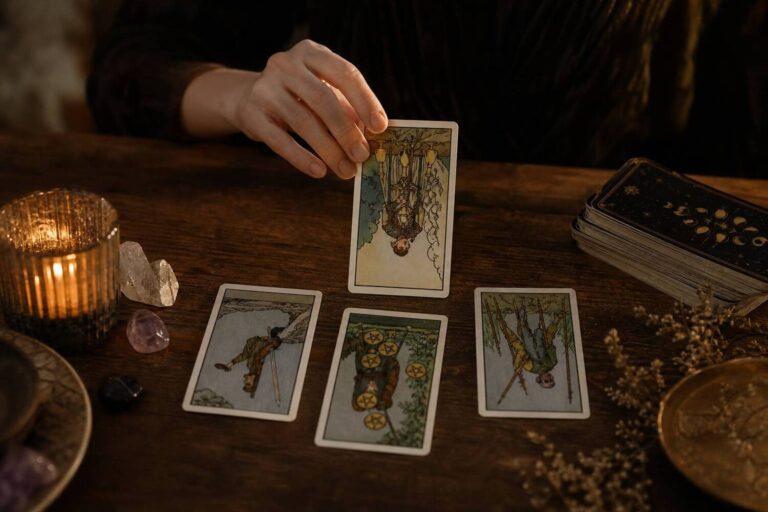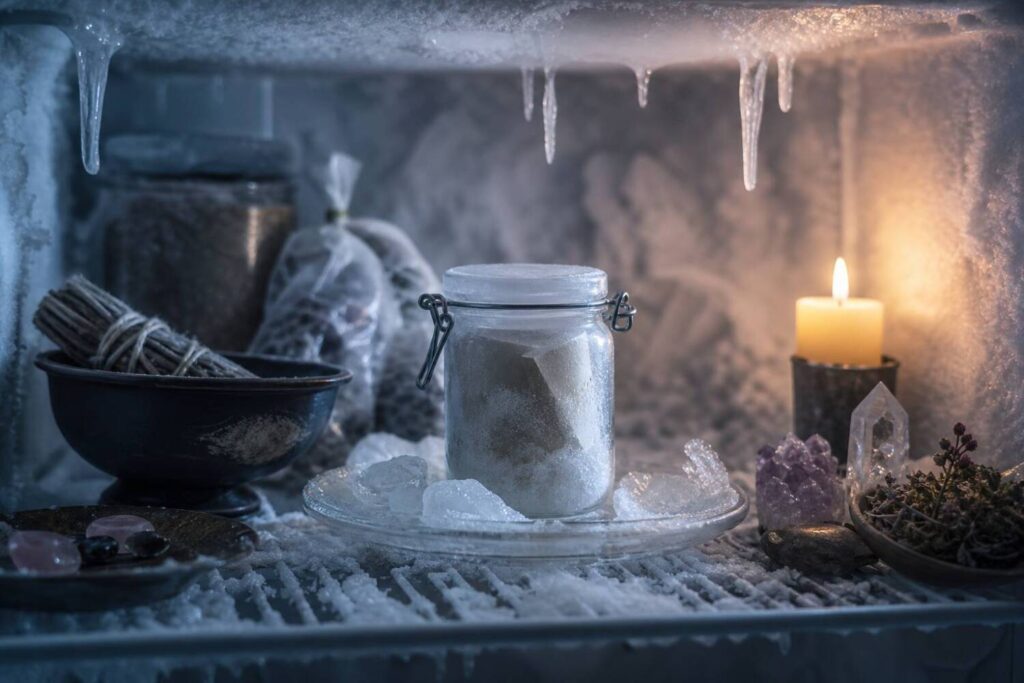
Write a name on a piece of paper and place it in the freezer: for some contemporary witches, that small act represents a wish to put harmful behavior on ice. The person stays where they are; it is the paper, and the intention attached to it, that goes into the cold.
Freezer spells appear in online discussions about everything from household conflict to harassment and divorce. Their appeal is easy to understand. They use a familiar appliance and can be as spare as a name in a jar. But practitioners disagree about what freezing symbolizes, which ingredients belong in the spell and whether it is the right response to a situation at all.
Why the freezer?
The image is direct: cold slows or holds things still. In spellwork, some practitioners use that image to express a desire for a pause in someone’s actions or in the negative energy they associate with a conflict. The practice is often discussed alongside binding, a term for spellwork intended to restrain a person or their behavior, though practitioners may use the terms differently.
One commenter in a discussion about the practice’s popularity compared a freezer to “the block button of witchcraft.” Others pointed to convenience: there is little to set up, and the basic materials may already be at home. For someone who feels overwhelmed, the act can provide a tangible way to mark an intention. Any sense of relief or reported result remains a personal experience, not evidence that the spell has changed another person’s behavior.
How did freezer spells become so visible?
In one online discussion, a practitioner returning to witchcraft after a long absence asked why freezer spells seemed to be everywhere. Commenters offered different explanations rather than a documented history. Some said they had encountered the practice decades earlier, including in the 1990s. Others suggested that TikTok and Instagram help simple techniques circulate in repeated waves.
Those observations point to a possible reason for visibility, not a firm account of when the practice began or how it spread. A commenter also mentioned having read that the spells had roots in Hoodoo, but the discussion does not establish their origin or trace a lineage. What it does show is a community noticing a familiar technique in a new online setting, and debating why it appears so often there.
Names, water and other variations
A simple version described in the discussion uses a name written on paper, placed in a jar and put in the freezer without water. Another commenter recommended freezing a name in water. In both versions, the paper identifies the person connected to the practitioner’s intention; the cold is the central image.
Other versions are more elaborate. One person described putting a name inside an onion with chili flakes, pepper and vinegar, sealing it with black wax, wrapping it and placing it in the freezer. They wanted harassment of their family to stop, but later reported that it had continued.
Responses to that account reveal how much interpretations vary. Some commenters questioned whether chili, an ingredient they associated with heat or intensifying a situation, fit a spell meant to cool conflict. Another considered pepper and onion suitable choices. These are practitioners’ readings of materials, not established rules or proof that an ingredient causes an outcome.
There are also different views about ending a spell. One commenter described removing a name from a jar and burning the paper, having read that this signified the spell’s end. The discussion does not establish that as a universal custom.
Pause, bind or let go?
The intended effect matters to practitioners when they choose a form. In discussions of both divorce and harassment, some warned that freezing might symbolically hold a situation in place rather than end it. Others distinguished it from banishing, which they described as an effort to remove a person or influence from one’s life.
Not everyone interprets the image in the same way. For one practitioner, freezing may mean stopping a harmful action; for another, it may suggest preserving the whole difficult situation. In a discussion about conflict with a husband, a commenter worried that freezing could also hold emotional distance in place. Others suggested a sweetening jar, a different kind of spell intended to encourage a more positive relationship, rather than a freezer spell.
Consent is another point of difference. One commenter said they would not generally cast spells on a partner without that partner’s permission, and would treat an inability to discuss the matter as a relationship concern in itself.
What a spell cannot settle
A ritual cannot establish whether another person will stop harassing, threatening or hurting someone. The account of harassment continuing after a freezer spell is a reminder that a practitioner’s intention does not guarantee a result. It is not proof that the spell made matters worse, either; the person who posted later said they did not think it had fueled the conflict.
Many people in the discussions stressed “mundane before magical”: attend to the practical situation rather than relying on a spell to resolve it. Depending on the circumstances, that may mean setting boundaries, seeking legal advice or talking with a counselor. For ordinary relationship conflict, communication or couples counseling may be worth considering when both people can participate safely. Where abuse or intimidation is present, safety and support take priority; a spell is not a substitute for either.
If a freezer spell holds meaning for you, decide what you want the act to mark: a pause, a boundary or a wish to let go. Then choose the practical action the situation calls for, whether or not the paper goes into the freezer.