In 1890, workers at the Shigir peat bog in the Middle Urals recovered pieces of a wooden figure. The surviving sculpture has a carved head, geometric lines and faces along the plank. It was cut from a larch trunk. The growth rings in that trunk preserved a record that could be sampled long after the figure was removed from the peat.
From bog to museum
Wet peat can slow the decay of wood. Once excavated, that same wood can crack or deform as it dries, and treatments used to repair or stabilise it can affect what later researchers find. Parts of the Shigir figure were assembled and treated over its museum history. For dating, it matters whether a sample came from a treated surface, a filled cavity or wood deep inside.
Conventional radiocarbon tests in 1997 put the wood in the Mesolithic. Later sampling took smaller pieces and recorded their positions in the trunk’s growth rings. The 2018 report in Antiquity placed the figure near the beginning of the Holocene, around 9600 BCE. The team identified 159 surviving rings, of which 137 were well preserved enough to measure.
Why the surface matters
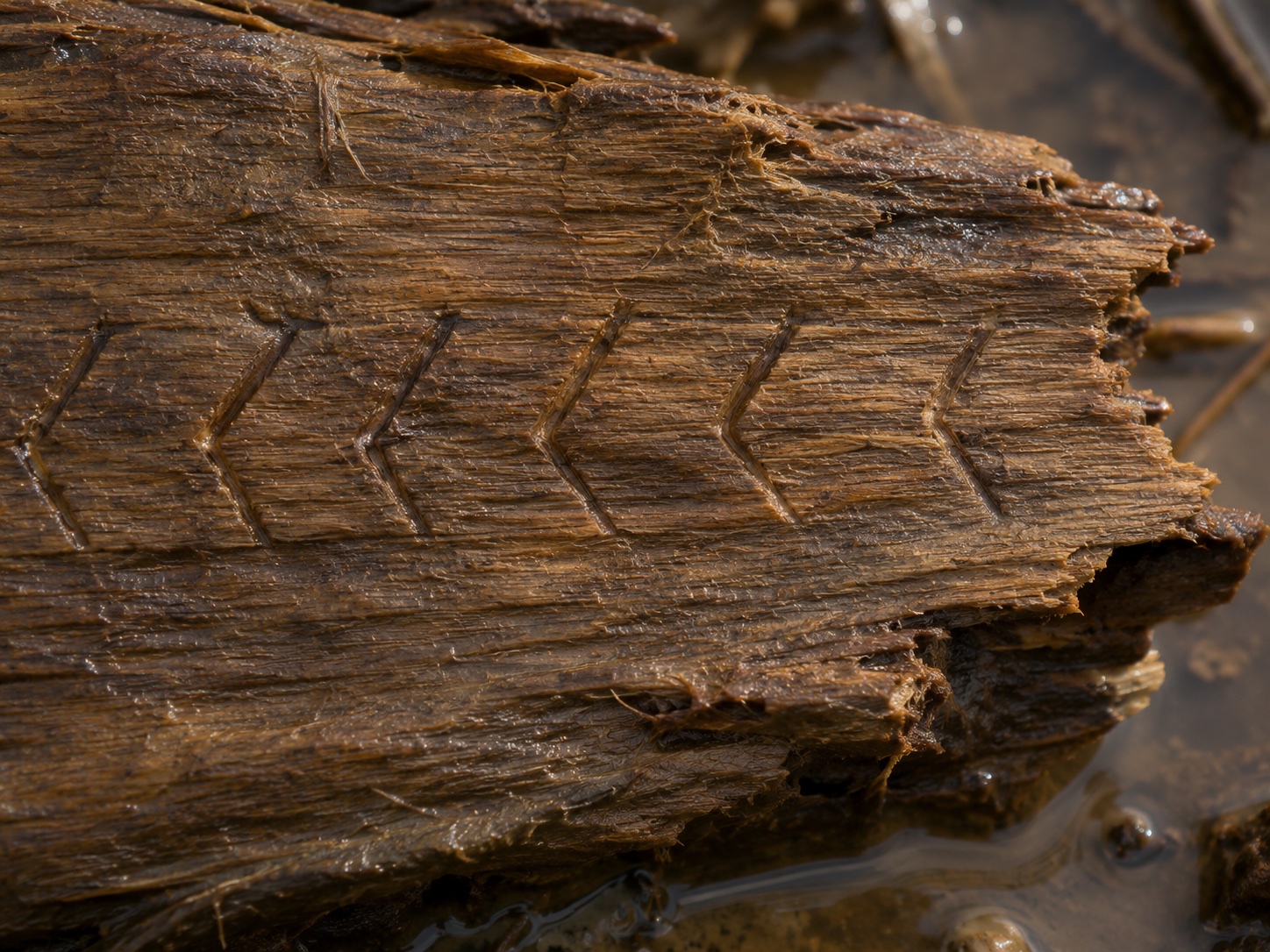
A 2021 reassessment gave more weight to samples from deep inside the figure. Those samples gave older results. The authors argued that waxes and other conservation materials could have introduced younger carbon near the surface. They proposed a date around 10,250 BCE, in the closing part of the last cold phase before the Holocene.
That proposal did not settle the matter. A separate 2021 analysis stressed how widely the results varied and argued that the region’s archaeological and environmental evidence better fitted a later date. In a 2024 review, museum researcher Svetlana Savchenko returned to the sampling history and favoured an Early Mesolithic date. The papers are weighing different parts of the same difficult record.
From a ring to the carving
A radiocarbon measurement dates the carbon in the sampled wood. An inner ring formed before the tree stopped growing, and the outermost surviving ring may not be the last one the tree produced. To estimate when the figure was carved, researchers have to connect the sample to the tree’s final growth and consider how soon people worked the timber.
How to Read an Ancient Artefact explains why the condition and history of a sample belong alongside its date. At Shigir, the next improvement may depend on knowing exactly which part of the tree a clean sample represents and how many rings were lost before it reached the lab.