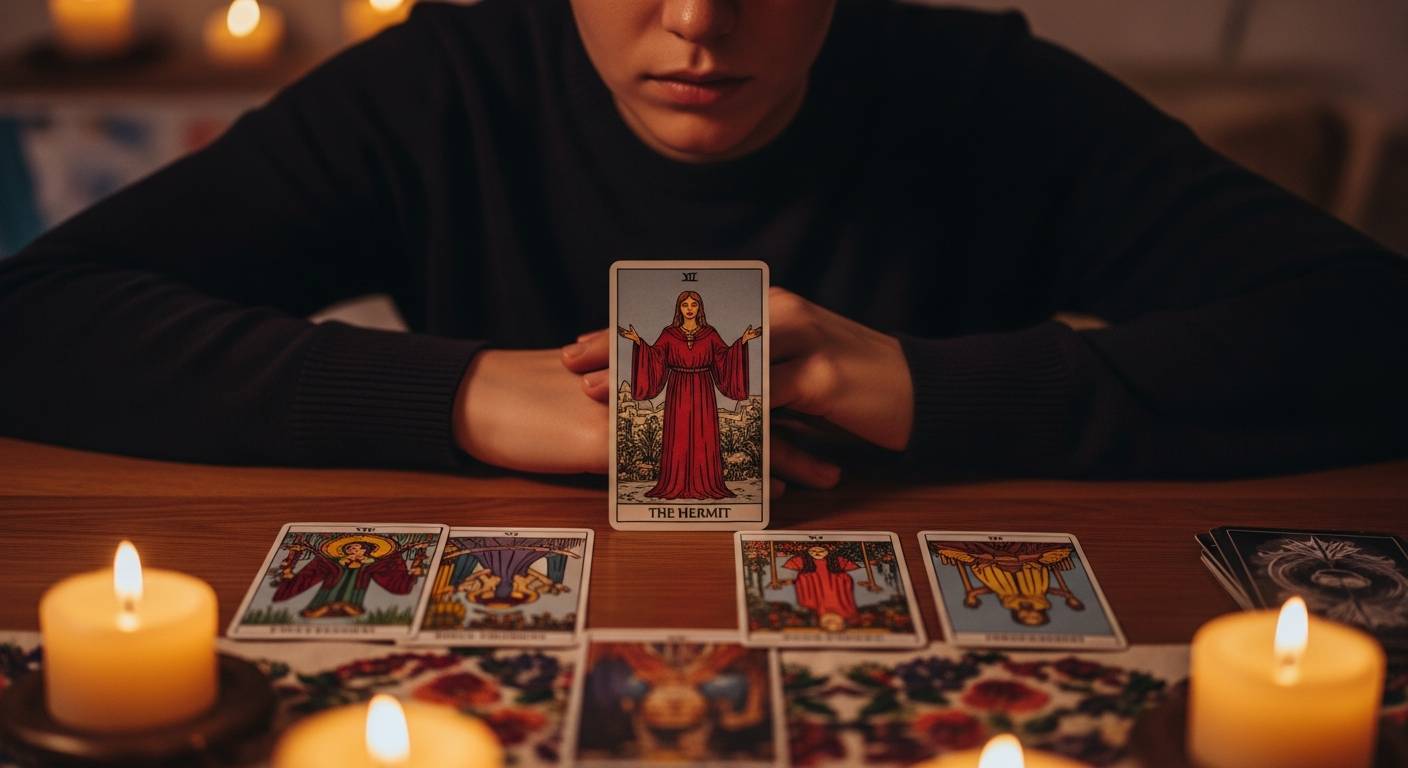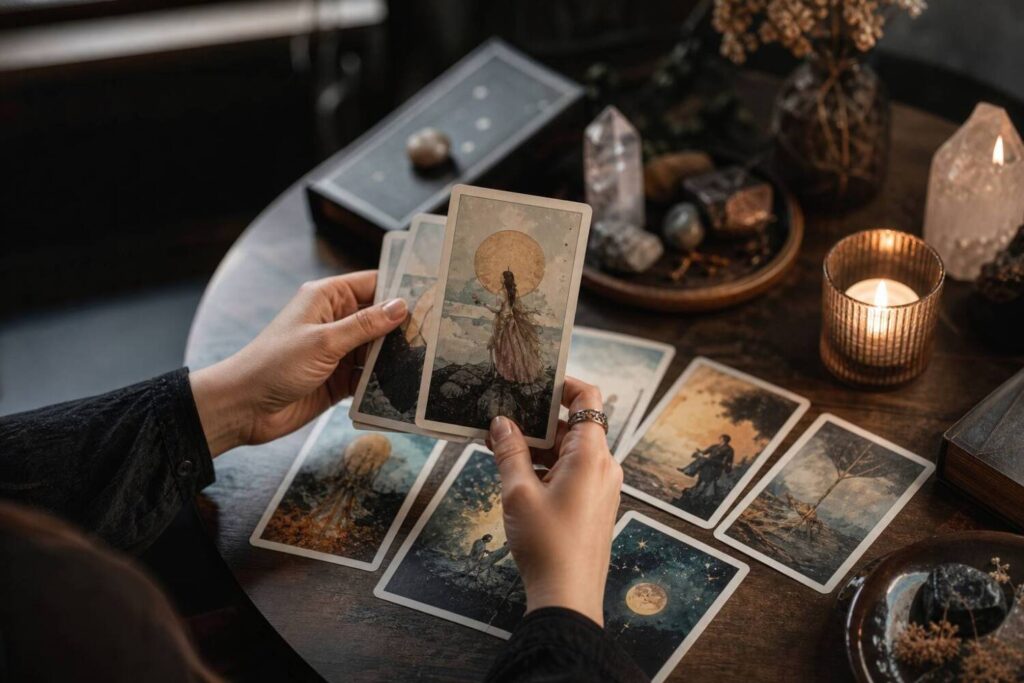
With a nontraditional tarot deck, readers do not have to choose between memorized meanings and the pictures on the cards. A practical approach is to treat familiar meanings as a starting point, then use the deck’s imagery, guidebook and the question at hand to shape the interpretation. The balance depends on how the deck is built and how the reader works.
That distinction matters because “traditional” is not one fixed system. Some readers use Rider-Waite-Smith meanings as their baseline; others work from different traditions or read more intuitively. Card names and symbols have changed across decks, too. As readers point out, Waite is not the sole authority on tarot, and renamed court cards or major arcana may reflect a deck’s own influences rather than a bid for novelty.
Start by identifying the deck’s framework
Before reading, check whether the deck follows a familiar structure and what its creator says about its choices. Does it keep the usual suits and card sequence? Are familiar cards renamed, or are their images and meanings reworked as well? A guidebook may explain the deck’s specific symbolism or offer definitions to use alongside a reader’s usual approach.
Names can carry different associations. One discussion, for example, noted that “Princess” and “Prince” appear in some tarot systems in place of “Page” and “Knight.” Other readers prefer different titles for reasons tied to history, culture or personal taste. A changed name is a prompt to investigate the deck’s framework, including how tarot reversals are handled, not proof that its cards have no relationship to earlier meanings.
Use familiar meanings as a foundation, not a script
If a deck preserves a familiar system, a reader can begin with the card’s established role: its suit, number, court position or place among the major arcana. Readers in the discussions described this as keeping the core intact while allowing the characters, colors and composition to add something new.
That foundation need not become a textbook answer. Readers also described interpreting a card in relation to the question and the surrounding spread, rather than trying to recall a single definition for each of 78 cards. Personal associations may enter the reading, but they are not necessarily community-wide meanings; one reader’s “secret” association is best treated as that reader’s own interpretive practice.
Let the imagery add context
Look closely at what the deck actually shows. Notice the figures, their actions and orientation, the setting, and any symbols that stand out. Ask what those details suggest in relation to the card’s familiar meaning and the question being asked.
Sometimes the image will reinforce the starting meaning; sometimes it will complicate or redirect it. Readers described both possibilities: beginning with a traditional interpretation and adding the deck’s symbolism, or finding that a particular image carries the message more clearly than a memorized definition. If the image seems at odds with the expected meaning, pause before forcing the two to agree. The tension may be useful, or it may signal that the deck follows its own approach.
A practical sequence for reading
- Check the deck’s guidebook and structure. Note any renamed cards, altered symbols or deck-specific definitions.
- Begin with the system you know. If the deck follows that system, use the familiar card meaning as a provisional baseline.
- Read the image. Describe the details that catch your attention before deciding what they mean.
- Bring in the question and spread. Consider how the card’s position and the surrounding cards affect its role.
- Combine, revise or set aside the baseline. Keep the traditional meaning if it fits; let the imagery add nuance or lead elsewhere when the deck supports that reading.
Build familiarity instead of testing yourself
Readers vary in how much they rely on memory, guidebooks and intuition. Some use a journal to record card images and interpretations; others develop a relationship with a deck through repeated readings. If a new deck feels unfamiliar, working with it over time can make its visual language easier to recognize. Looking through a full deck before buying or committing to it can also help reveal whether its imagery and structure suit the reader.
The most workable balance is therefore flexible: know which tradition or system you are drawing from, but do not mistake one set of meanings for the only possible reading. Familiar meanings provide continuity; a nontraditional deck’s imagery can supply the detail that makes an interpretation specific to that deck and that reading.