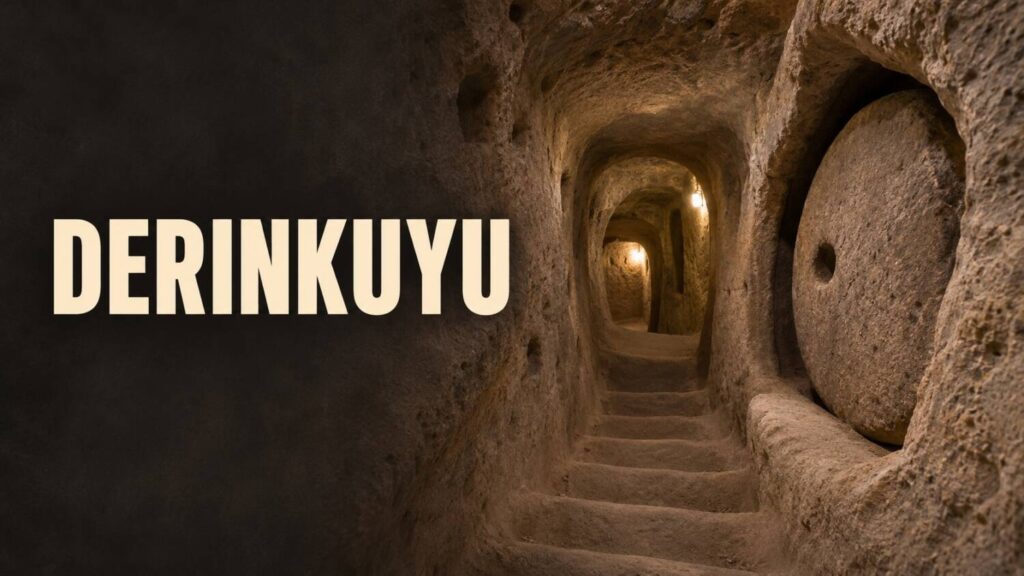
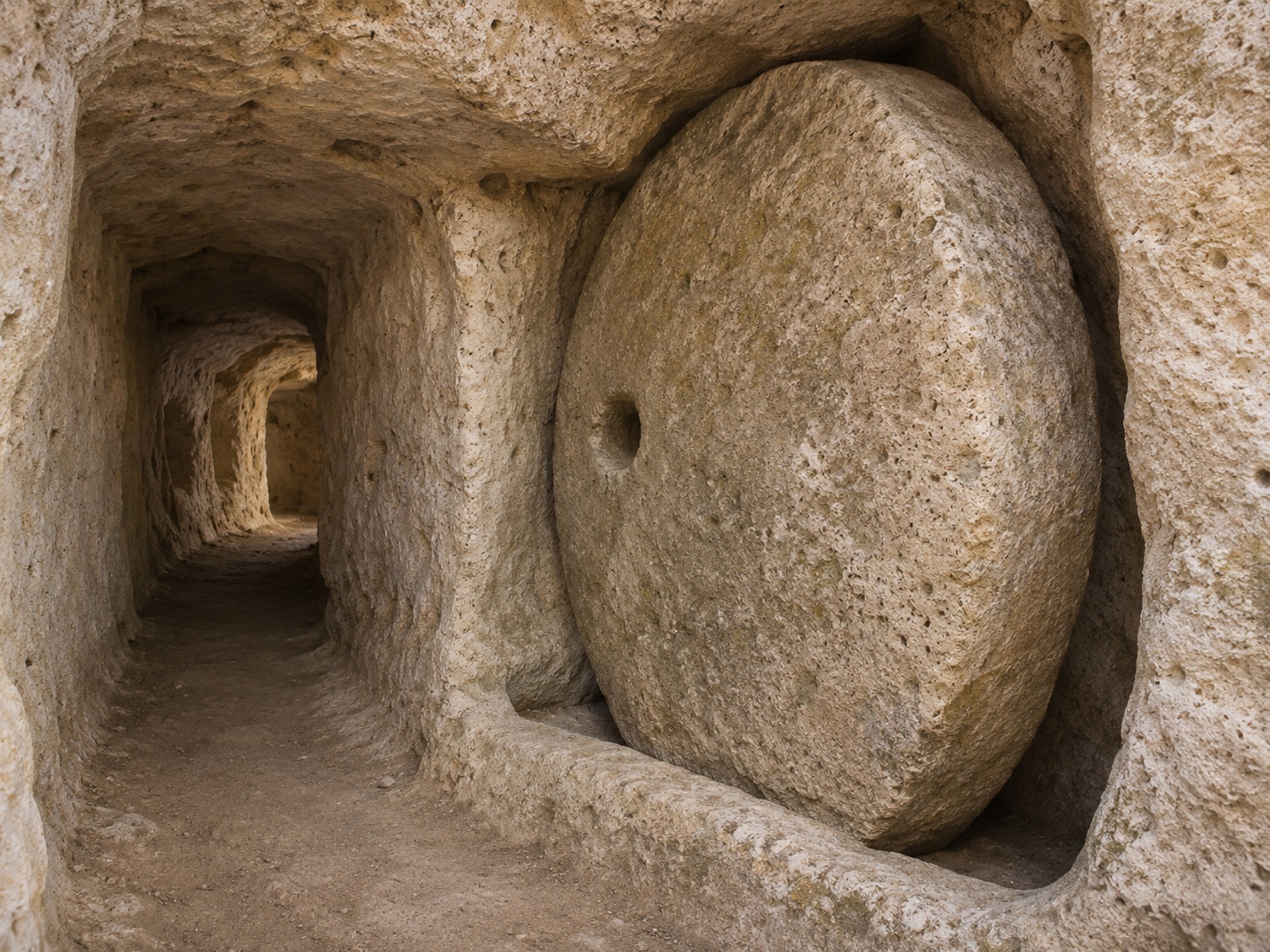
At Derinkuyu, a narrow passage can be closed by rolling a round stone into the opening. Its position matters as much as its shape. The passage forces people through a point that can be blocked, while shafts elsewhere carry air between the underground rooms and the surface.
Rooms cut into the rock
The Turkish Ministry of Culture and Tourism’s description lists rooms off narrow passages, ventilation shafts, a chapel and a well. These features give the complex the means to shelter people below ground. Their locations help explain how that use could work in practice. The official museum record describes eight levels.
A geomechanical study examined the rock and the stability of the underground openings. The volcanic material could be excavated into rooms and passages. How well an opening holds up depends on the material around it and the size and shape of the span.
How the levels connect
Ventilation shafts let air reach spaces away from an entrance. Passages and stairs make separate chambers accessible, while stone doors can isolate parts of the network. An engineering survey of Derinkuyu documents the relationship between the excavated spaces and the rock around them. Those measurements describe the layout researchers can observe today.
The age of a room and the age of its use
The ministry associates the complex with shelter during the Christian period and gives a ninth- to tenth-century estimate. The chapel and defensive fittings help explain uses of the rooms. Assigning every passage to the same century would require dated evidence that ties each part to a phase of excavation or alteration.
A doorway can be widened, a room repurposed and two passages joined after their first use. The best evidence for the order of work would come from those junctions, from surfaces cut through by later work or from a deposit sealed when a passage was changed. A stone door tells us where people could close the route. The edges around it may help establish when that part of the route took its present form.
Explore the evidence at other sites in How to Read an Ancient Monument.