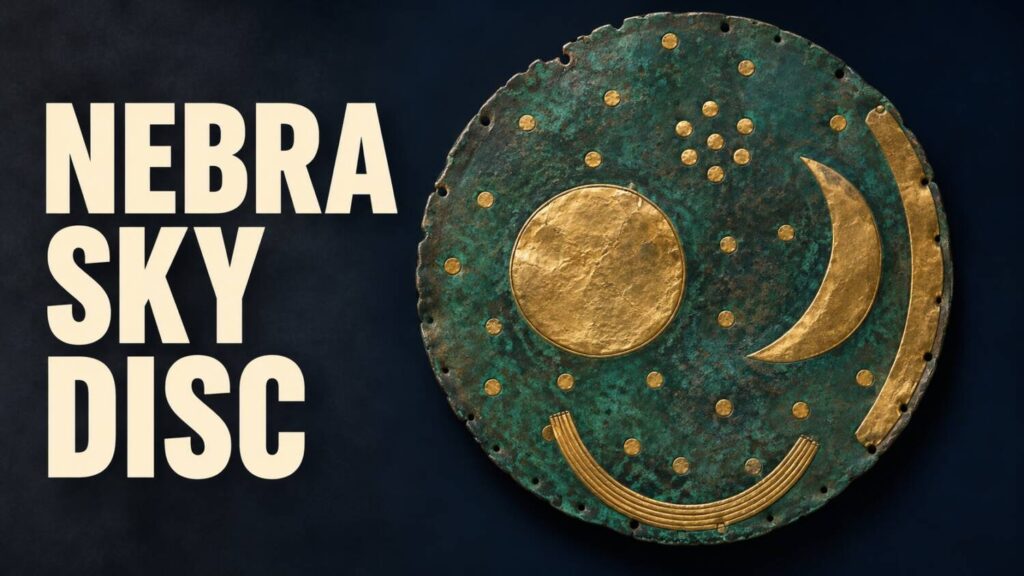
In February 2002, police in Basel recovered a bronze disc with a gold crescent, a round plate and a scattering of stars. It had passed through several hands since two detectorists dug it up in Germany in 1999. Archaeologists had the object in front of them at last. Its original position in the ground had to be reconstructed.
From Basel back to the Mittelberg
The State Museum of Prehistory in Halle records the recovery and traces the reported find to the Mittelberg hill near Nebra. The disc was associated with a group of bronze objects including swords, axes and arm spirals. Taken together, the objects underpin the museum’s placement of the deposit near 1600 BCE.
In 2020, Rupert Gebhard and Rüdiger Krause challenged the association. They argued that the evidence was insufficient to treat the objects as a single hoard and proposed an Iron Age date for the disc based on other comparisons. The difference in date turns on what can be recovered about the findspot and its contents.
An interdisciplinary team responding to that argument cited follow-up excavation, sediment on the disc and associated objects, and analyses linking their copper to the same eastern Alpine source region. The team also drew on the known forms of the accompanying objects. Together, those lines of evidence support the Early Bronze Age date adopted by the museum.
What forging tells us
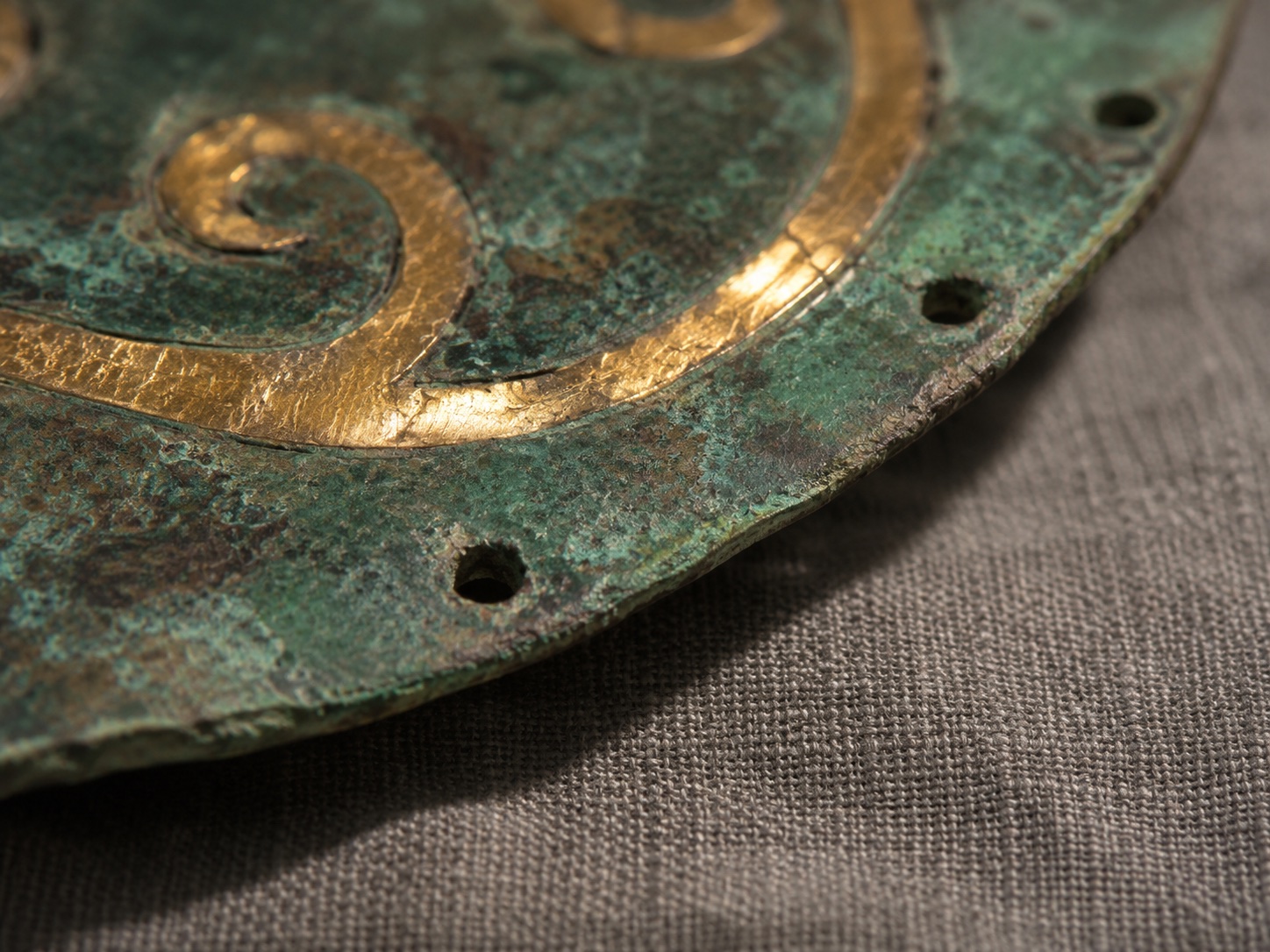
A 2024 materials study asked how a maker could turn a cast piece of bronze into the thin disc. The team examined the structure of the original metal and worked with a coppersmith to hammer a replica. In the experiment, repeated heating and forging spread the metal while limiting the risk of cracking.
The result helps explain the disc’s physical shape and the changes preserved in its bronze. Its dating still comes from the evidence for the hoard and the archaeological comparisons. The distinction matters here because the object’s route through the modern market made each part of the case depend on a different set of records.