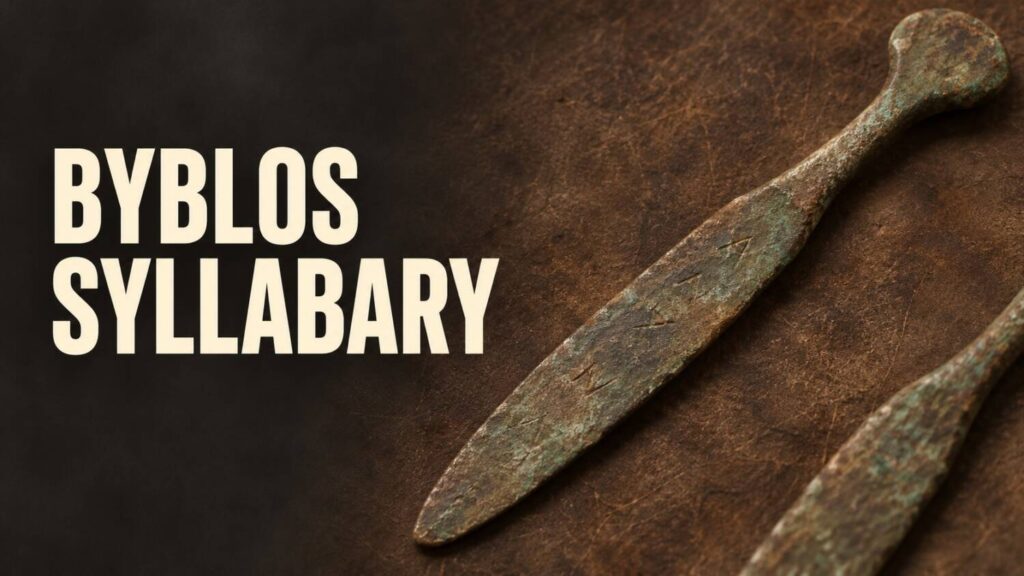
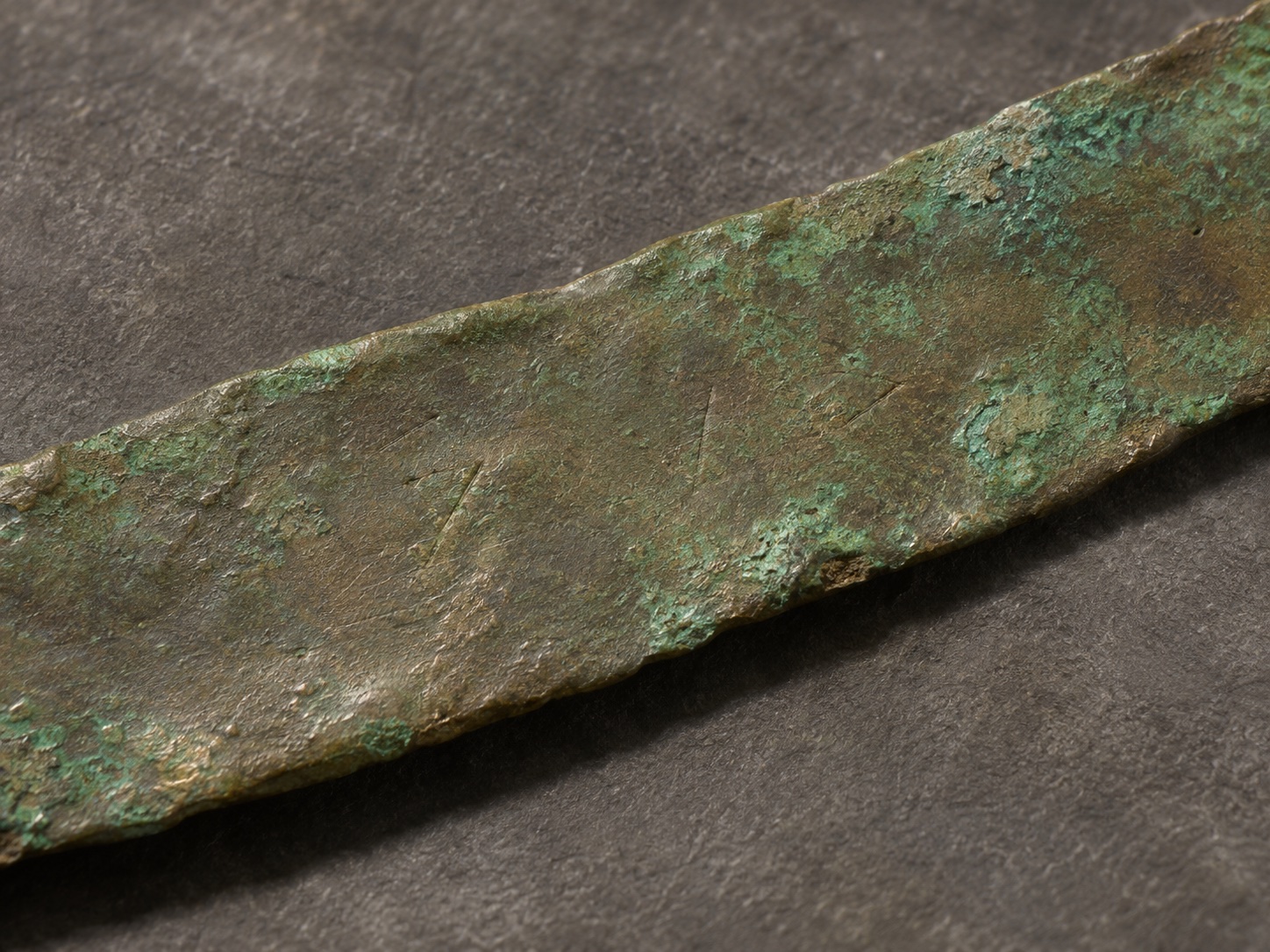
One bronze tablet from Byblos has been read as a marriage contract, a dedication and a remedy for vomiting. The proposals begin with the same object. They diverge when researchers decide which marks count as signs, what sounds to give them and where to divide the text.
The corpus on bronze and stone
Excavations at Byblos, on the coast of present-day Lebanon, uncovered inscriptions in an unfamiliar script between 1928 and 1932. Maurice Dunand published the main collection in 1945 and added fragments later. The pieces include bronze tablets, bronze spatulas and stone inscriptions. The resemblance of some marks to Egyptian hieroglyphs gave the script the label pseudo-hieroglyphic. Mnamon corpus overview
The longer bronze tablets give researchers more sign sequences to compare than most of the fragments. A catalogue entry allows a reader to begin with a particular object and see how its material, transcription and bibliographic history are recorded. Digital edition of KAI 003
Different readings of the same tablet
Édouard Dhorme published an early decipherment proposal in the 1940s. In 1985, George Mendenhall used visual comparisons with Egyptian and early alphabetic signs to assign syllabic values and proposed a Northwest Semitic language. Other scholars disputed the assignments and the resulting translations. Dhorme’s paper and Mnamon’s review of the proposals
What repetition can establish
A computational study explored whether recurring sequences could reveal possible boundaries between words before their sound values were known. Such patterns can help define units for comparison. A model still needs an independent way to check that a boundary corresponds to a word rather than a repeated ending or another feature. Sequence analysis
A readable parallel text or a securely identified name could give the competing readings a common test. For now, the small corpus makes consistency across the bronze and stone pieces especially important. A proposed value is most useful when another researcher can see it working beyond the passage that suggested it.
The guide to why ancient scripts stay unread compares the evidence available for other inscriptions and manuscripts in this series.