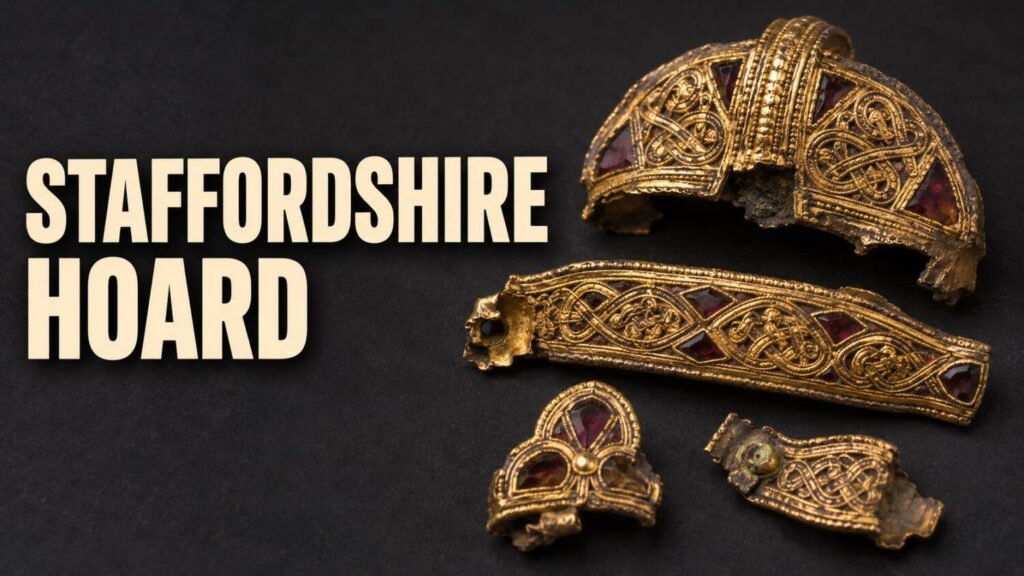
A Staffordshire Hoard sword fitting can be small enough to sit on a fingertip. The surviving gold and garnet still show where the fitting once covered part of a hilt. The iron blades are largely absent. That pattern runs through the hoard and gives archaeologists a question to work on. Why did so many pieces of weapon decoration end up in the same field?
A find with a recorded location
The hoard was discovered by metal detecting in 2009 near Hammerwich. Archaeologists examined the find area and recovered further material. The Historic Environment Record describes those investigations, including lumps of soil that were X-rayed before being excavated in the laboratory. Removing those lumps intact helped researchers see how small fragments had been packed together.
Reading the objects as a group
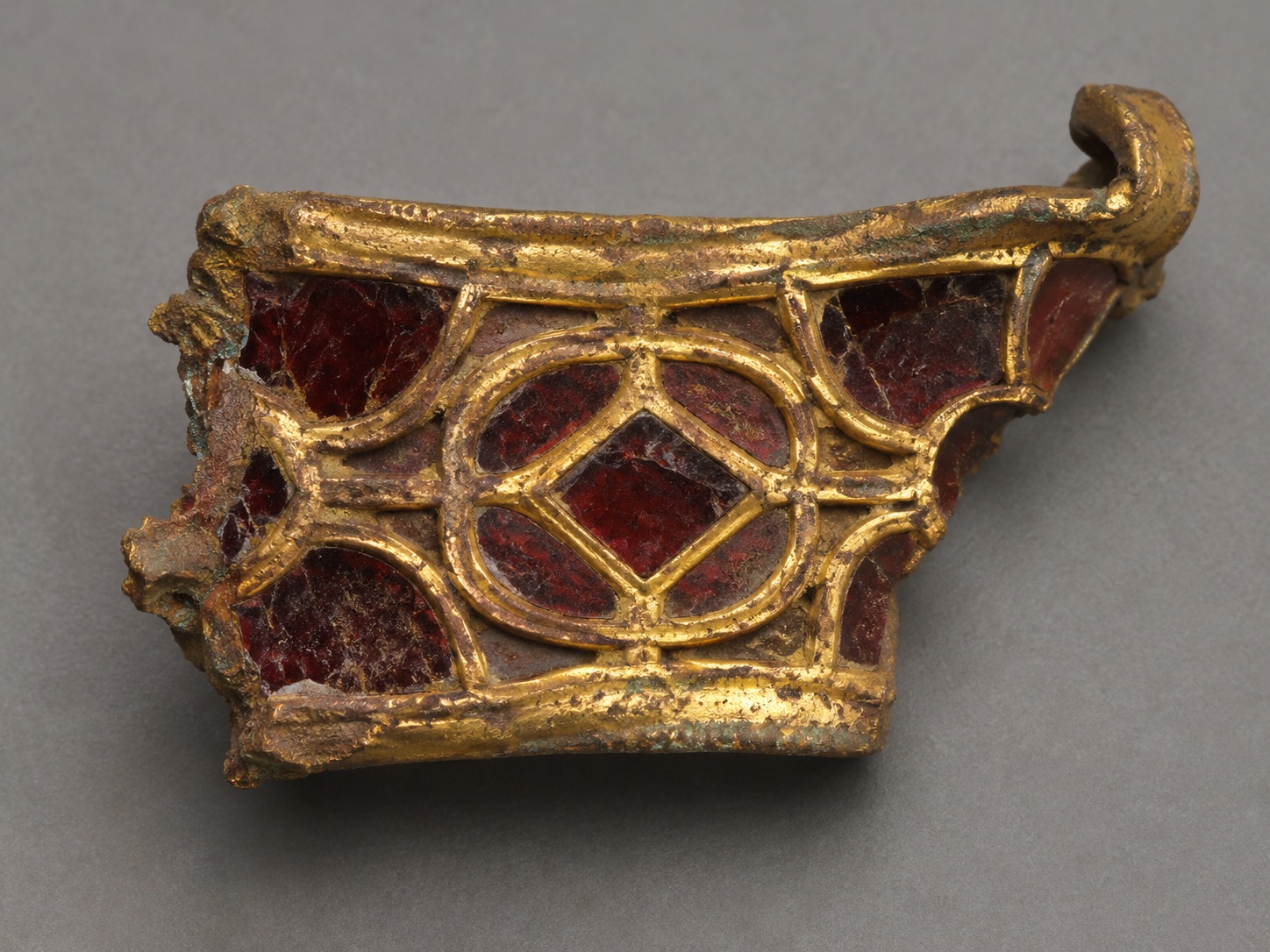
Many of the objects were sword fittings. Other fragments have been identified as parts of a helmet or as pieces of Christian objects. The published catalogue and research archive record fragments individually and propose joins where pieces fit. Those joins matter because a group of small fragments may be all that survives of one object.
Conservation let researchers examine broken edges and attachments. Some fittings appear to have been deliberately taken off weapons. The Birmingham Museums conservation account shows how study of the gold, garnets and other materials helped clarify their manufacture and condition. The pieces could have been made and used at different times before they entered the same deposit.
What the field can tell us
The study places the burial in the seventh century. Researchers have considered whether the hoard represents material gathered through conflict, valuables stripped for reuse, or objects put aside for another reason. A findspot can help establish which pieces were deposited together. Breaks and missing components can show what happened before deposition. Neither gives the name or intention of the person who put the pieces in the ground.
The excavated context and the object’s earlier life are separate parts of its provenance. How to Check a Lost Treasure Claim follows both. At Hammerwich, the fragments establish what kinds of objects were brought to one place. The missing blades leave open what happened before those fittings reached the field.