In Pennsylvania, haunted-place stories endure because they are rarely just about ghosts. They are also stories about homes, workplaces, family memory, rural caution, grief, and the uneasy feeling that familiar places can hold more than one version of the past.
A discussion inviting Pennsylvania residents and visitors to share paranormal or unusual experiences illustrates how private encounters become shared folklore. The stories range from apparitions and unexplained sounds to encounters described as glimpses of another time or realm. What gives them cultural staying power is not proof of the supernatural, but the way people attach meaning to places and then pass that meaning to others.
Haunted stories begin with ordinary places
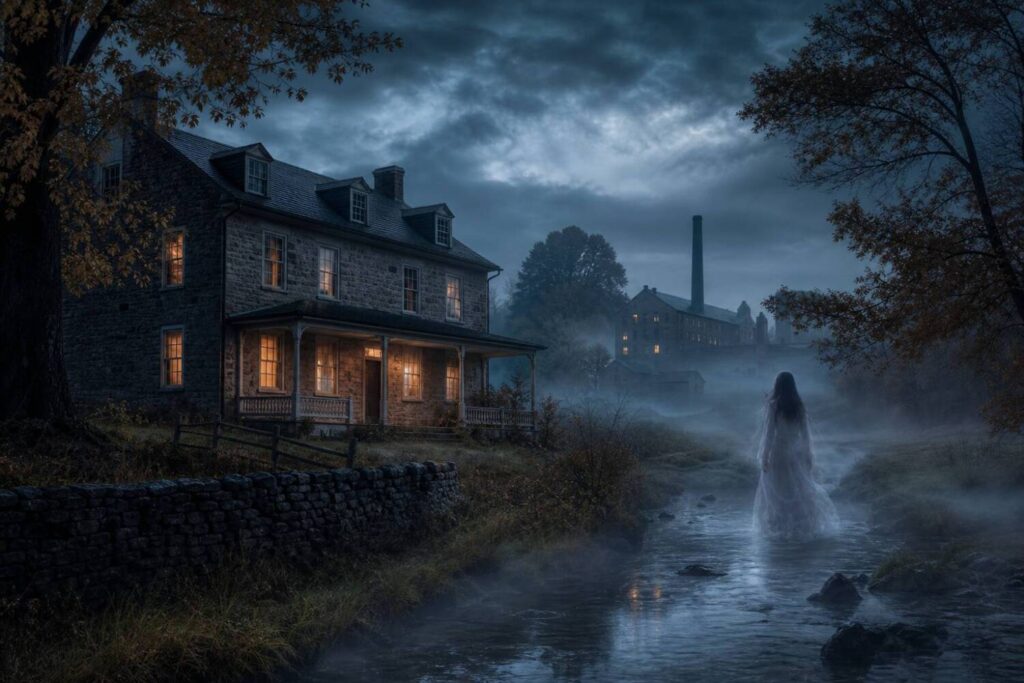
Many of the accounts are rooted in settings people know intimately: a family home, an apartment, a college, a farm, a road, or a remote stretch of countryside. That familiarity makes an unexplained event feel especially powerful. A house is not simply a structure once someone has spent years there. It becomes a record of daily life, family relationships, departures, and changes.
One widely discussed story describes a family living in the same house for almost a decade. The narrator gradually became convinced that a female presence was attached to the property, while also feeling safe around it. The emotional center of the account was not fear but companionship. Leaving the house raised the question of what would happen to the presence after the family moved.
Responses to the story extended that idea. Other commenters described entities associated with childhood homes, a girl felt in a bedroom, or spirits believed to have followed families from one residence to another. Whether interpreted literally, psychologically, or spiritually, these accounts share a clear pattern: the supernatural figure becomes part of the household’s remembered identity.
Memory turns experience into inheritance
Personal paranormal stories often gain authority through family testimony. In one account, a narrator described a mother who believed she could see into “another plane.” Her reported visions included a stagecoach and horses passing over her car on a highway, and an old woman washing clothes in a yard. The story is presented not as an isolated frightening moment but as part of what the family knew about the mother.
Other comments similarly connect unusual experiences across generations or among relatives. One person said a cousin who identified as a medium had experienced a vivid historical scene at a school. Another account described a father who also saw apparitions in a house, reinforcing the narrator’s belief that the experience was not imagined.
This kind of shared witnessing matters culturally. A strange event remembered by one person can remain ambiguous. When parents, children, siblings, spouses, or friends report related experiences, the story becomes part of a family’s collective memory. It can be retold, debated, softened, or expanded without losing its emotional force.
Pennsylvania’s landscapes supply a language for unease
The Pennsylvania discussion shows how geography shapes the way people describe the unknown. Accounts refer to wooded areas, farms, cornfields, hills, valleys, remote work sites, and rural roads. In these settings, silence itself can become evidence of danger or mystery.
One commenter recalled growing up in rural Appalachia in Pennsylvania and learning that a sudden absence of wildlife sounds was a warning to go back inside. The advice was described as both practical and superstitious. That combination is central to regional folklore: observations about animals, weather, darkness, and isolation can coexist with stories about spirits, strange lights, or unknown creatures.
Another account located multiple unusual events in Washington County, describing a remote area associated with work involving water-transfer pipelines. A separate story involved a farm, full-grown corn, an unusually quiet night, and a shrill whistle. The details do not establish what happened, but they show how a landscape can become memorable through a single disturbance in its normal pattern.
Workplaces create new haunted traditions
Haunted-place stories are not limited to old houses or abandoned sites. Modern institutions can acquire their own legends. One account came from a professor at an old college, where a colleague reported seeing a woman near an isolated staff washroom. The narrator described a sudden heavy or suffocating atmosphere and later said that both she and her friend had difficulty discussing what happened.
Commenters connected the experience to the building’s age, its history, and the possibility that the area had once served another purpose. Some speculated about a former employee based on the woman’s clothing, while the narrator cautiously resisted investigating further because of concerns about work.
This exchange shows how institutional folklore develops. A building’s corridors, renovations, restricted spaces, and incomplete history provide openings for speculation. Once a place is associated with an encounter, ordinary features, an isolated staircase, an unused room, or a poorly explained renovation, can become part of its story.
The unexplained becomes meaningful through interpretation
The accounts do not offer one shared explanation for paranormal experiences. Commenters use different frameworks: ghosts, spirits, other planes, time slips, religious belief, unfinished business, or unusual psychological states. The same event can therefore support multiple interpretations.
In the story about the presence in a family home, commenters discussed whether the entity was unable to move on and whether leaving the house might cause distress. In the account involving visions of other times or realms, commenters described the experience as a “time slip.” In the workplace story, others focused on dread, memory loss, and the tendency of witnesses to avoid discussing what happened.
These interpretations help transform an unexplained moment into a narrative with emotional structure. A silent figure may become a lonely spirit. A strange glimpse may become evidence of another era. A warning from a rural setting may become inherited local wisdom. The explanation is less important to the story’s survival than the meaning it gives to the experience.
Why people keep telling the stories
Several features help Pennsylvania’s haunted-place stories endure:
- Place: A house, farm, college, road, or remote work site gives the account a concrete setting.
- Witnesses: Family members, friends, or colleagues can validate, challenge, or preserve the memory.
- Emotion: Fear, grief, affection, loneliness, and curiosity make the story worth retelling.
- Ambiguity: The absence of a definitive explanation allows different generations to reinterpret the event.
- Community: Online responses connect an individual experience to similar stories from other places.
The discussion also shows that paranormal storytelling is often a form of social recognition. People respond with sympathy, personal parallels, religious interpretations, jokes, questions, and attempts to identify a location or historical explanation. Even skeptical or practical responses contribute to the folklore by testing the story against shared experience.
Local legend is built from personal memory
A haunted-place legend does not always begin with a famous building or an established historical account. It can begin with one person noticing a presence in a bedroom, hearing an unexplained sound beside a cornfield, or seeing something that seemed out of place at an old institution. When that experience is repeated to relatives, neighbors, visitors, or an online community, it enters a larger cultural conversation.
Pennsylvania’s stories endure because they remain connected to lived places and relationships. They preserve how people felt in a particular home, what a family believed about a relative, how a rural community understood silence, or why an ordinary hallway became impossible to forget. The supernatural claim may remain unverified, but the memory is real as a piece of local culture, and that is often what keeps the legend alive.