

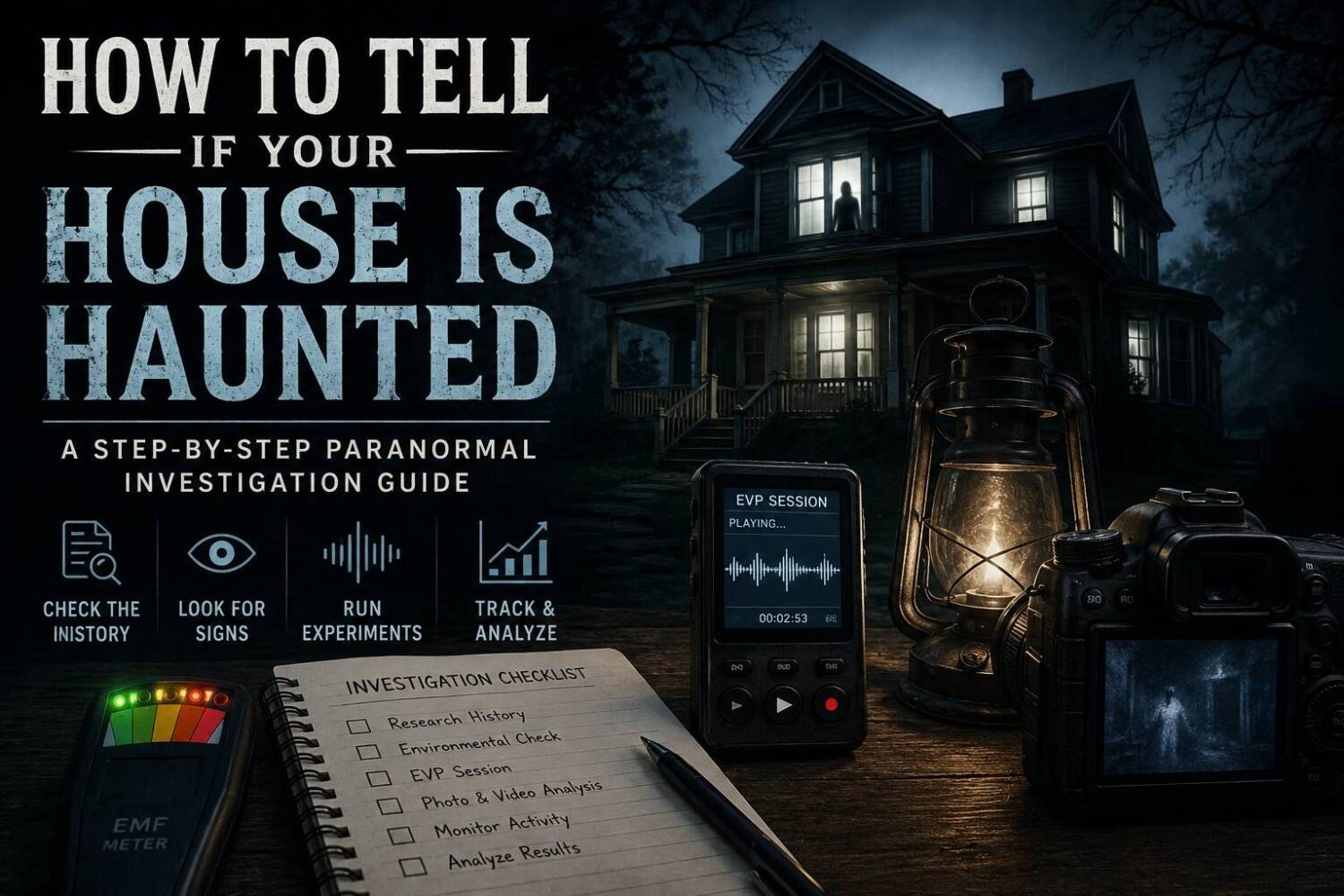

Not every strange noise or cold draft points to paranormal activity. Old homes settle, pipes knock, electrical systems fail, and the human brain is remarkably good at turning uncertainty into patterns. At the same time, some locations develop persistent reputations for unusual experiences that witnesses struggle to explain. The key to investigating a potentially haunted home is to approach the process methodically instead of jumping immediately to supernatural conclusions.
This guide walks through a structured paranormal investigation process using historical research, environmental testing, observation techniques, and digital ghost hunting tools.
Step 1: Document the Experiences Carefully
Before assuming your home is haunted, begin by documenting every unusual event in detail.
- What happened?
- What time did it occur?
- Who witnessed it?
- Were electronics active nearby?
- Did weather conditions change?
- Was anyone stressed, exhausted, or half asleep?
Look for recurring patterns. Paranormal investigators often find that reports cluster around specific rooms, times of day, or emotional situations.
Commonly reported signs include:
- Footsteps in empty rooms
- Unexplained whispers or voices
- Cold spots
- Objects moving or disappearing
- Pets reacting to unseen stimuli
- Sleep paralysis or feelings of being watched
- Shadows seen in peripheral vision
Step 2: Investigate the History of the Property
Many alleged hauntings become associated with emotionally charged historical events. Researching your property’s history can reveal whether major trauma, deaths, fires, crimes, or long periods of abandonment occurred there.
Check:
- Old newspaper archives
- Property ownership records
- Local folklore and urban legends
- Historical maps and photographs
- Police reports and public records
- Conversations with longtime neighbors
Do not assume a tragic event automatically creates a haunting. Millions of people die in homes without paranormal reports. Instead, investigators look for patterns involving repeated witness accounts, unusual environmental conditions, and persistent folklore attached to the property.
Step 3: Rule Out Environmental Causes
Before conducting paranormal experiments, eliminate ordinary explanations first. Some environmental conditions can create experiences commonly mistaken for hauntings.
- Carbon monoxide leaks can cause hallucinations and paranoia.
- Mold exposure may trigger anxiety, headaches, and strange perceptions.
- Infrasound from machinery or ventilation systems can create feelings of dread.
- Electromagnetic interference may affect electronics and human perception.
- Poor sleep and stress can intensify feelings of presence.
A responsible investigation always begins with safety and skepticism.
Step 4: Photograph and Analyze Unusual Areas
If certain rooms consistently produce strange experiences, photograph them under different lighting conditions. Dust, reflections, compression artifacts, and lens flare can create false positives, but careful image analysis can sometimes reveal details missed during the original observation.
Use the Haunted Image Analyzer to enhance low-light paranormal photographs, apply infrared-style filters, and examine potential shadow anomalies.
You can also experiment with the Spirit Outline Detector, which uses edge detection techniques inspired by SLS camera mapping systems commonly used in modern ghost hunting.
Step 5: Conduct an EVP Session
Electronic Voice Phenomena, commonly called EVP, refers to faint voices or sounds captured on audio recordings that were not clearly heard during the original session.
To run a basic EVP session:
- Choose a quiet room.
- Turn off televisions, fans, and unnecessary electronics.
- Place your recorder on a stable surface.
- Ask short, direct questions.
- Leave several seconds of silence between questions.
- Record for at least 10 to 20 minutes.
- Review the audio carefully using headphones.
Many EVP recordings turn out to be radio interference, background noise, or auditory pareidolia. However, careful analysis can help separate random sound from potentially meaningful patterns.
The EVP Audio Lab allows investigators to reduce noise, isolate whispers, reverse audio, and examine spectral patterns in recordings.
For real-time experiments, the Live EVP Dashboard provides a live spectrogram and recording environment for monitoring unusual audio activity during an investigation.
Step 6: Test Patterns Over Time
One isolated experience rarely proves anything. The strongest investigations focus on repeated patterns over weeks or months.
Track:
- Times when activity occurs
- Weather conditions
- Lunar cycles if relevant to your beliefs
- Electrical fluctuations
- Specific rooms or objects associated with activity
- Whether multiple witnesses experienced the same event independently
Pattern consistency is often more important than dramatic isolated experiences.
Step 7: Watch for Psychological Reinforcement
Expectation can strongly influence paranormal experiences. Once a location develops a haunted reputation, people become more likely to notice ambiguous sounds, shadows, or coincidences.
This does not necessarily mean all experiences are imaginary, but investigators should remain aware of confirmation bias and suggestion. Good paranormal research balances openness with critical thinking.
When a House May Truly Feel Haunted
Across folklore and paranormal case studies, certain conditions appear repeatedly in alleged hauntings:
- Strong emotional trauma connected to the property
- Repeated witness experiences across multiple years
- Persistent environmental anomalies
- Consistent reports centered around specific locations
- Objects moving without clear explanation
- Electronic interference occurring alongside witness reports
- Audio or visual anomalies captured repeatedly under controlled conditions
Even then, paranormal evidence remains controversial and difficult to verify scientifically.
Approach the Unknown Carefully
Most haunting experiences eventually receive ordinary explanations. Others remain unresolved, sitting in the strange territory between psychology, environment, folklore, and the genuinely unexplained.
The best investigators avoid blind belief and automatic dismissal. They document carefully, test repeatedly, remain skeptical of easy conclusions, and stay open to the possibility that some mysteries may not yet be fully understood.
If you decide to investigate your own home, treat the process as a structured experiment rather than a horror movie. The goal is not to scare yourself, but to separate rumor, perception, environment, and potentially unusual phenomena with as much clarity as possible.