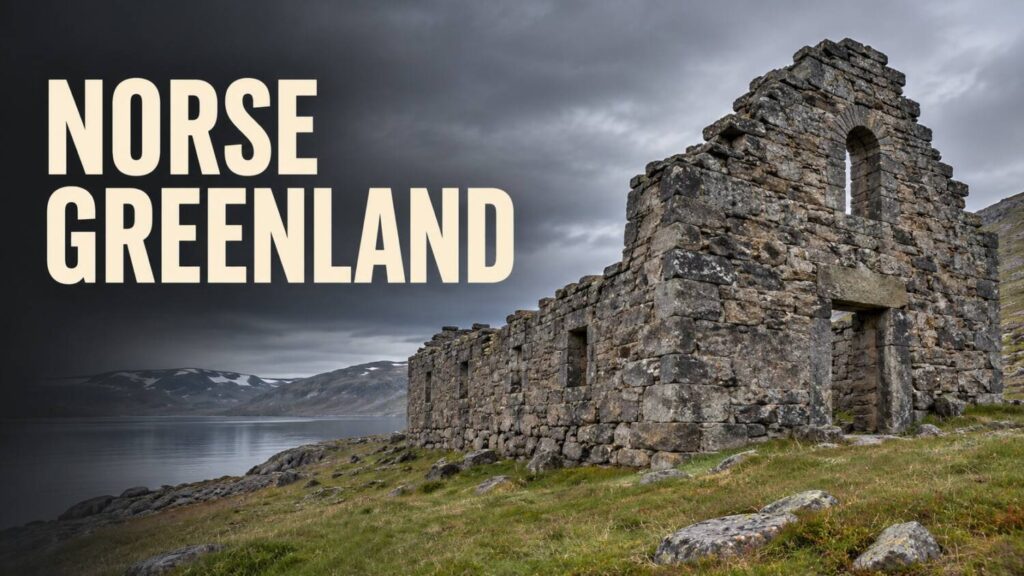
A wedding took place at Hvalsey church in 1408. The stone walls still stand above the fjord in southern Greenland, and the marriage survives in a written record. Together they offer a rare point on the calendar near the end of Norse settlement. The date when the last household left is much harder to pin down.
Two settlements, different timelines
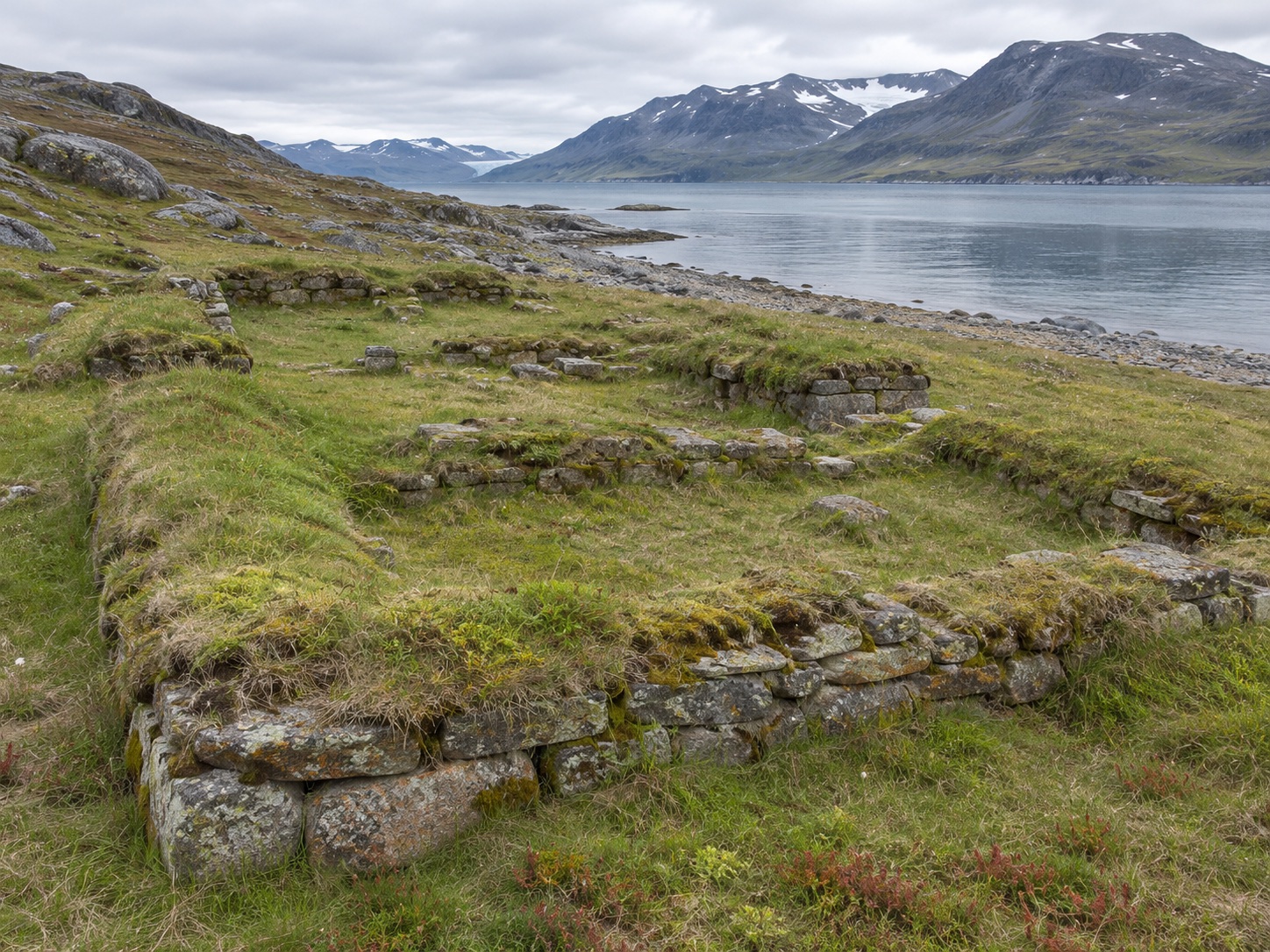
The Eastern Settlement lay around the fjords of southern Greenland. The Western Settlement lay farther north, in the region of present-day Nuuk. Despite the names, both occupied the island’s southwest. The Western Settlement disappears from the record earlier, in the fourteenth century. At Hvalsey, the Eastern Settlement’s church was still in use early in the fifteenth.
The Kujataa World Heritage record describes a landscape of farms, churches and grazing grounds. It also documents Inuit farming in the same region in later centuries. The disappearance of the Norse settlements marks the end of one set of communities. Greenland’s Indigenous history continued.
Pressure on the farms
A lake sediment study near a former Eastern Settlement farm found a long drying trend during the Norse occupation. Less reliable summer moisture would have made it harder to grow the grass needed to feed livestock through winter. That evidence is strongest for the landscape near the sampled lake.
A separate study of relative sea level modelled rising water in southwest Greenland during the settlement period. The model identifies areas where coastal land could have been lost. Drying and rising water can both matter to a farm. One affects what the fields produce, while the other affects how much usable ground remains.
Trade stretched far beyond the fjords
A 2024 DNA study of walrus remains traced some of the ivory that passed through Norse trade networks to High Arctic populations. This shows how far the supply network reached. The DNA leaves open who hunted each animal and how the ivory changed hands.
The wedding at Hvalsey puts people in one building on one occasion. The lake, coast and ivory studies trace changes over decades or centuries. The question they leave is which pressures mattered most to individual farms as households made decisions about staying, moving or giving up livestock.