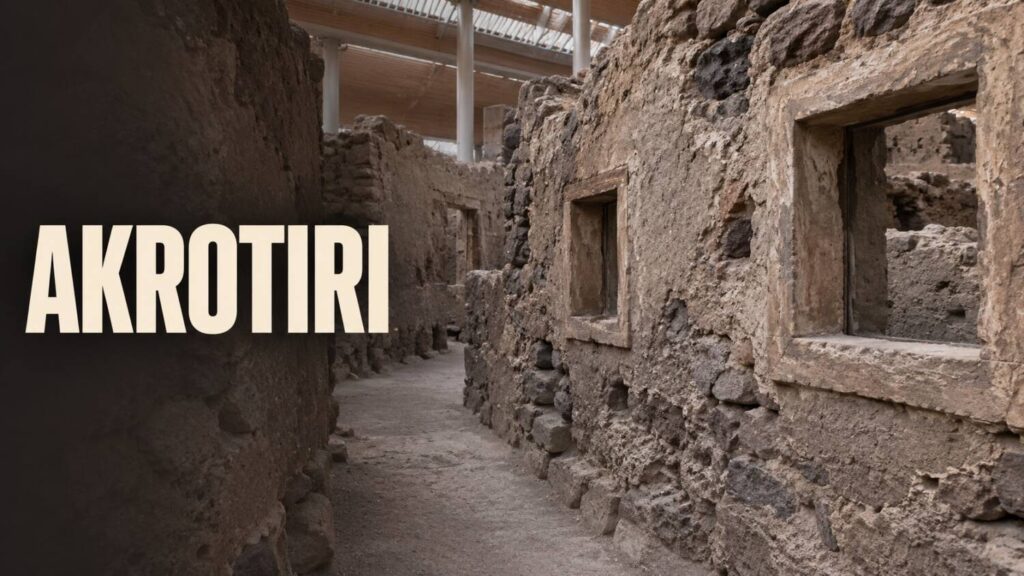
At Akrotiri, on the southern end of Santorini, stone stairways survive inside houses whose upper floors have partly collapsed. Along the lanes are doorways and window openings that once faced other buildings. The Ephorate of Antiquities of the Cyclades records a built-up Bronze Age settlement here, preserved beneath material from the eruption of Thera. The stairs give a sense of how much of the town’s life took place above street level.
Inside the houses
The surviving buildings had more than one storey. A stone base, timber elements and plastered surfaces formed parts of the same structure. Wall paintings occupied particular rooms, and vessels were found in spaces where people stored goods or used them. Together the finds let archaeologists work from a room’s position and contents to an account of what happened there.
The lanes and drainage show another scale of planning. Water and people moved between buildings along routes shared by more than one household. Excavation reveals those relationships unevenly. A surviving stair can establish access to an upper floor, while the layout or use of that floor may be recoverable only in part.
What the burial preserved
Spyridon Marinatos began excavating at Akrotiri in 1967. His papers at the American School of Classical Studies at Athens preserve records of the work. The volcanic deposits made it possible to recover walls, paintings and objects in their original settings across parts of the town. Buildings also had histories before burial, including damage and repair. Material found in a room has to be read in relation to that history.
Dating the layer that sealed the town
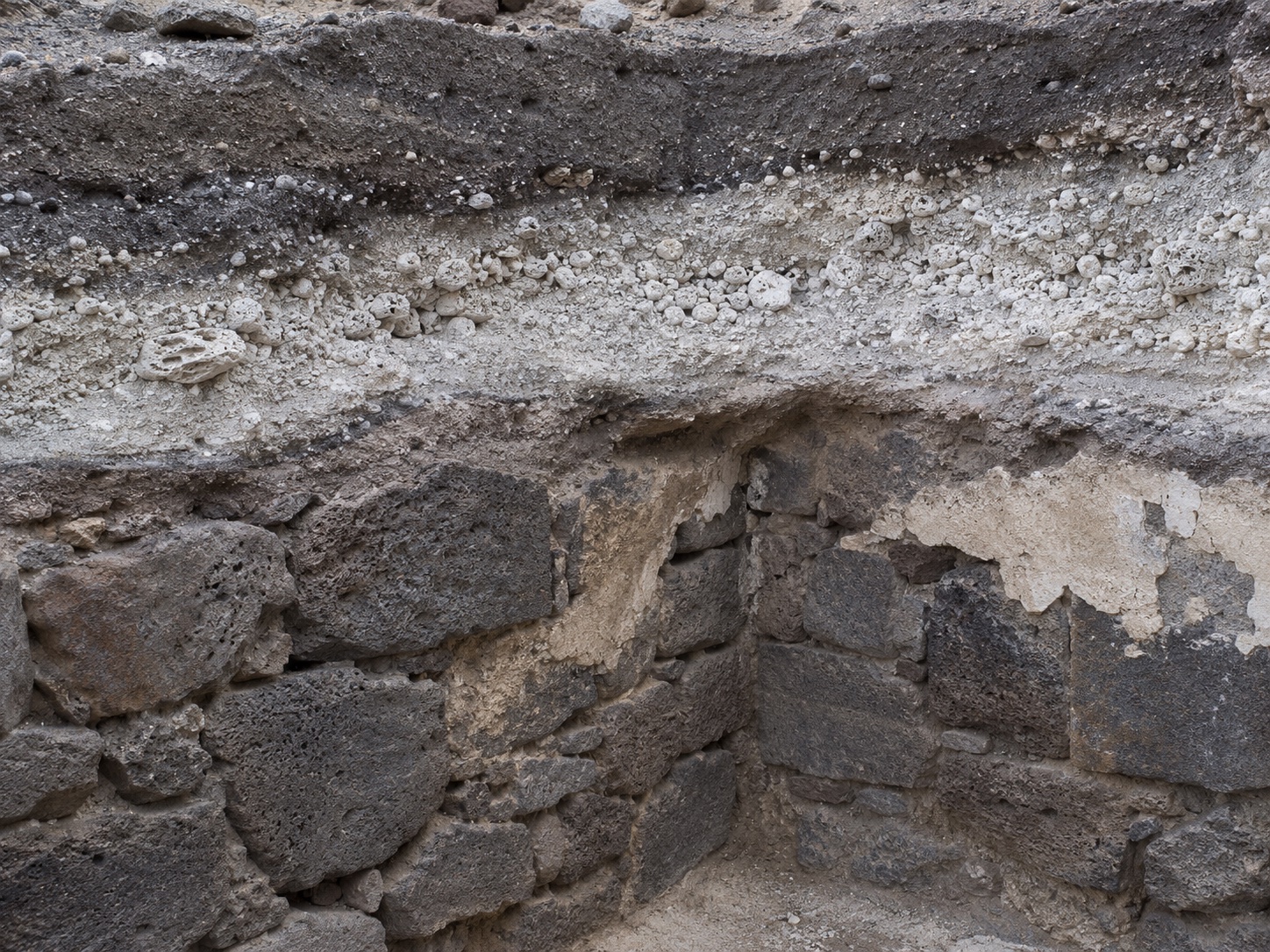
Dating the eruption involves matching the volcanic deposits to evidence in other places. In a 2022 study, Sturt Manning modelled radiocarbon dates from the eruption and related archaeological contexts, favouring a date in the late seventeenth or early sixteenth century BCE. A 2025 study of Egyptian museum objects compared the timing with the reign of Ahmose and argued that the eruption preceded it. Those comparisons depend on how researchers date the samples and align the different sequences.
A new high-resolution tree-ring study looked for features in the radiocarbon record that could settle specific proposed years. It found no distinct signal to fix the eruption to those years. The calendar date remains a research question even where the order of events at Akrotiri can be read clearly in the ground.
The association with Plato’s Atlantis is a much later interpretation. Akrotiri’s buildings and objects belong to a named, excavated place, and the evidence for how that place was built and buried can be studied directly. How to Find a Lost Settlement follows the same distinction between accounts and traces. At Akrotiri it starts at street level, with a stair disappearing into the space where the next floor once stood.