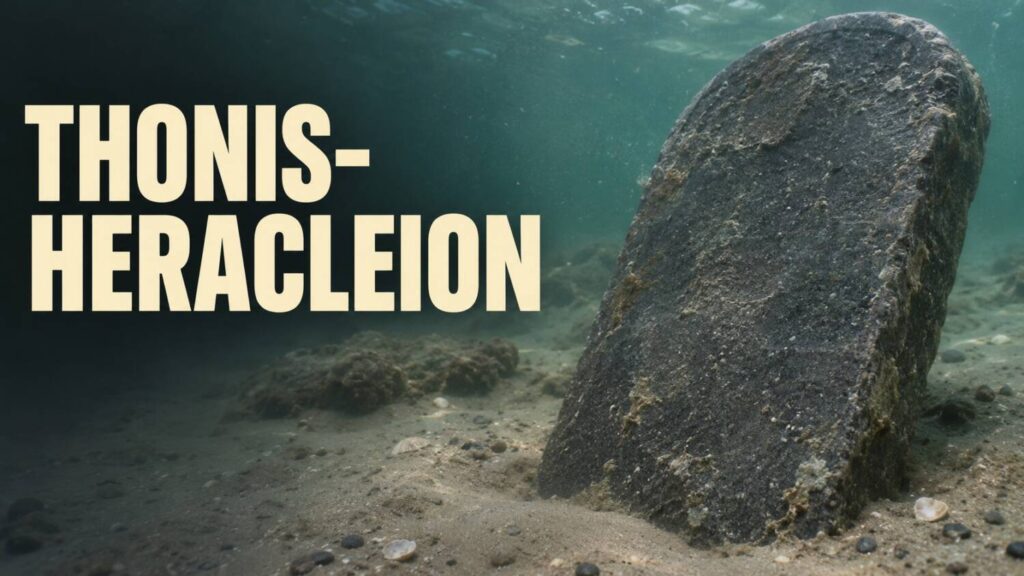
In 2001, excavators in Egypt’s Aboukir Bay found a stone decree lying face down among the remains of a temple wall. Sediment covered the back. The inscription gave the team something a scatter of walls, statues and anchors could only suggest. It recorded the Egyptian name Thonis at the site long associated with the Greek name Heracleion.
Finding a port under the bay
The European Institute for Underwater Archaeology began surveying the bay in 1996. Franck Goddio’s team, working with Egypt’s antiquities authorities, located the site in 2000, around 6.5 kilometres off the present coast. Surveying helped the divers work from a map of the seabed and investigate features in relation to one another. The temple and harbour lay within a landscape of channels and basins near an ancient mouth of the Nile.
A gold foundation plaque found in the temple area carries a reference to Heracleion or Herakles. The name fits the Greek tradition, in which the hero’s name was attached to the place. The decree offered a different kind of evidence. It spoke in the language of the officials who administered the port.
The name on the decree
The decree dates to the reign of Nectanebo I in the fourth century BCE. It allocated a share of revenue from specified trade and production to the temple of Neith at Saïs. A version had already been found at Naukratis. Egyptologist Anne-Sophie von Bomhard’s edition for the Oxford Centre for Maritime Archaeology compares the two stelae, or upright inscribed stones, and their instructions for display. The copy recovered in the bay belongs to Thonis. Its location and the other temple finds put the Egyptian and Greek names in the same port.
The harbour beyond the temple
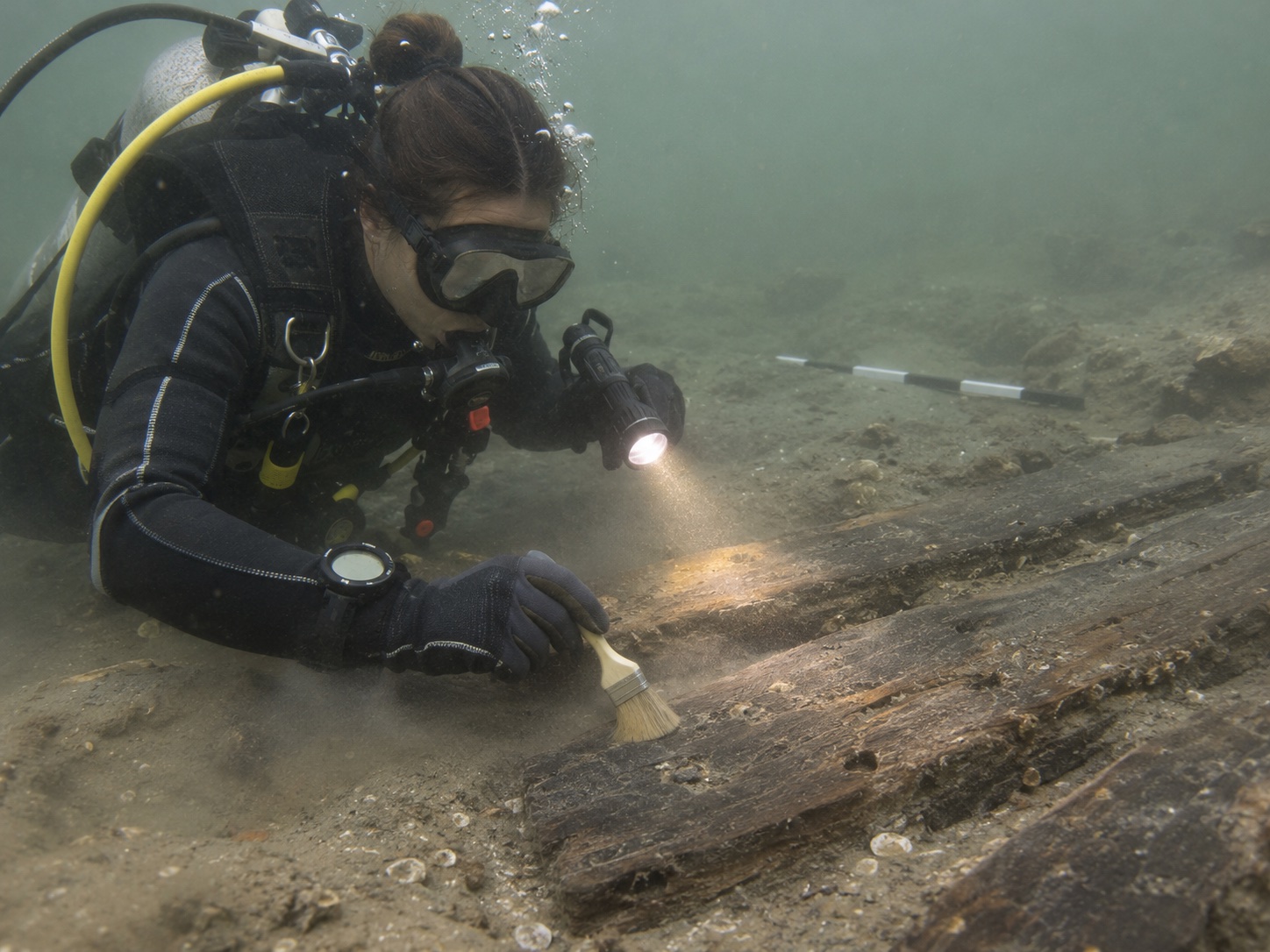
The archaeological map also includes wrecks and concentrations of anchors. Researchers have studied the settings in which the ships came to rest, since a hull in a harbour can have a history of use, abandonment or deliberate placement before burial in sediment. One vessel, Ship 17, preserved an unusual timber arrangement that Alexander Belov compared with Herodotus’ description of an Egyptian cargo boat.
The excavators have continued to find material around the sanctuary. Their 2023 field report describes further work at the temple of Amun and an adjacent sanctuary of Aphrodite. The identification of the city gave those finds an address. It also made finer questions possible about where ships waited and what stood along the waterways.
As in How to Find a Lost Settlement, the strength of the case comes from the relationship between the object and the place where it was found. A decree had been set up for people doing business at the port. Its inscription could still place the port after the shoreline moved.