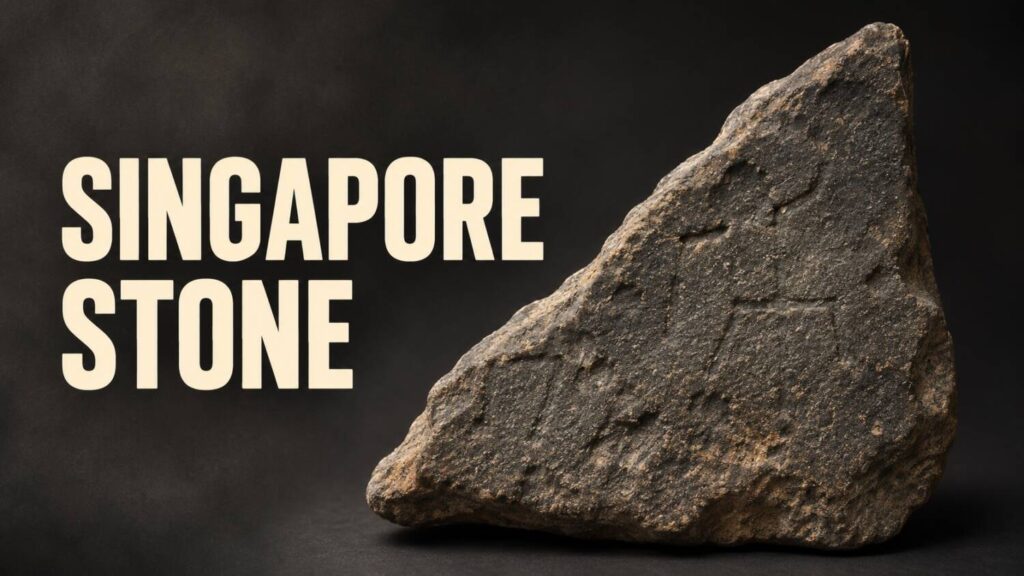
A fragment of sandstone in the National Museum of Singapore preserves part of an inscription once visible at the mouth of the Singapore River. The stone was already worn when people tried to copy it. After the original was blasted apart, those copies became part of the evidence for lines that could no longer be inspected.
From the river mouth to the museum
Singapore’s National Heritage Board places the original stone at Rocky Point and records its destruction in 1843 during colonial works. Fragments were recovered. The one on display returned to Singapore from Calcutta in 1919. National Heritage Board account
Researchers tracing the fragments through nineteenth-century records identified four pieces received in Calcutta by John Watson Laidlay in 1848. Only one is known to have returned. That distinction matters when comparing a drawing of three fragments with the physical piece in the museum. Archival study of the fragments
The drawings preserve more lines
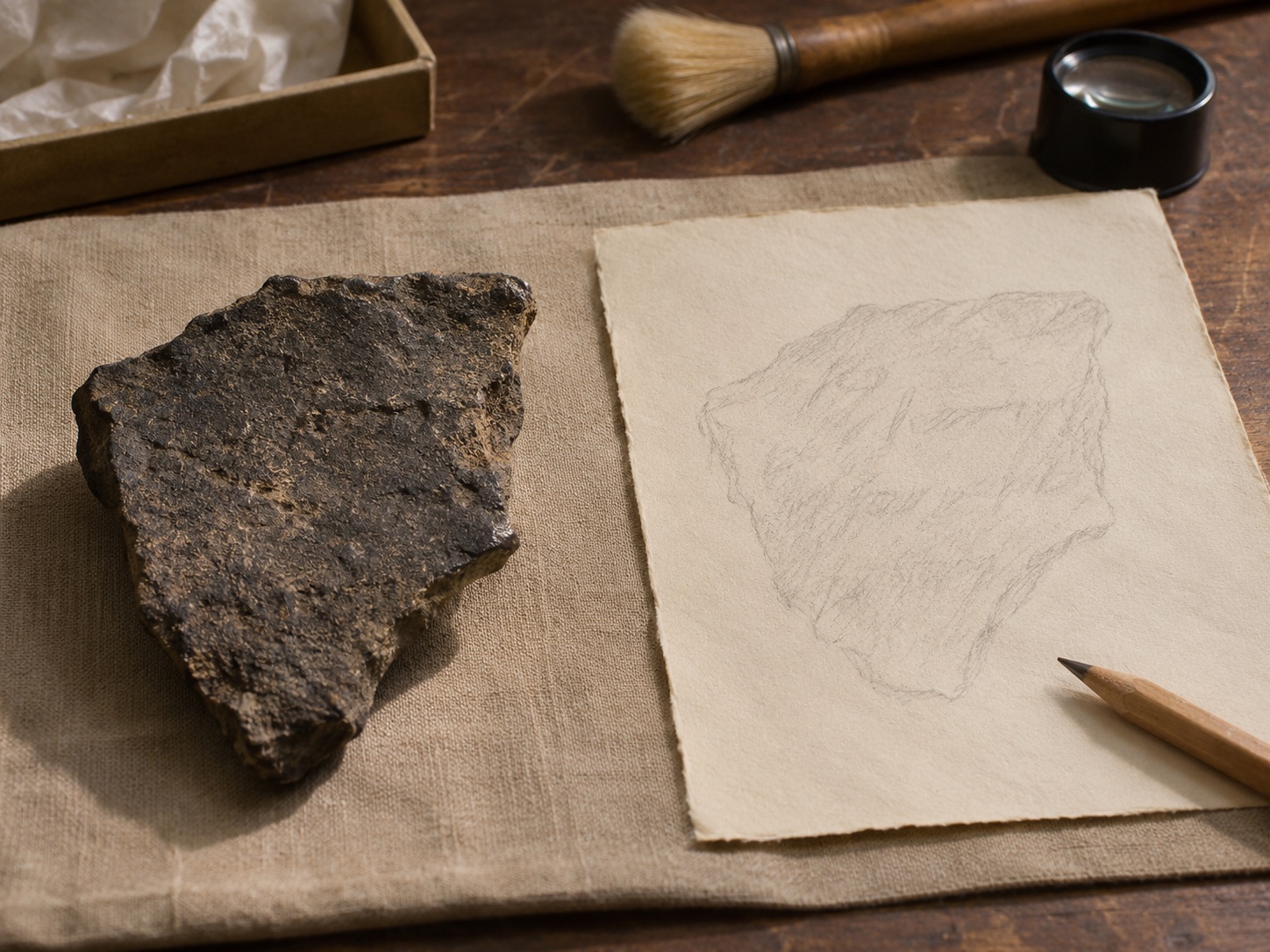
Laidlay used charcoal to make faint indentations easier to see under strong light. He drew marks from three fragments. His drawings preserve lines from pieces that are now missing, but they also reflect decisions about which traces belonged to each character. An early facsimile is both a record of the surface and a record of one reader’s judgement.
A modern scan can document the surviving fragment and may let researchers compare some of its marks with Laidlay’s drawing. The scan covers the stone that remains. Lines on the missing pieces still depend on the historical copies.
From a character to a sentence
Several marks have been compared with forms in Kawi, a script used in parts of maritime Southeast Asia. Damage makes small strokes difficult to identify, and a stroke can change the reading of a character. Recognising a likely script gives researchers an alphabet to compare. Translating the text requires enough secure characters in sequence to recover words and grammar. The study’s character comparisons
A 2026 preprint proposes a reading tied to the Chola world. It offers a claim to test against the marks on the stone and the early drawings. The test starts with identifying the exact strokes needed for the proposed words and showing which are visible, which come from a copy and which are supplied by the reader. The 2026 proposal
The guide to why ancient scripts stay unread compares the evidence available for other inscriptions and manuscripts in this series.