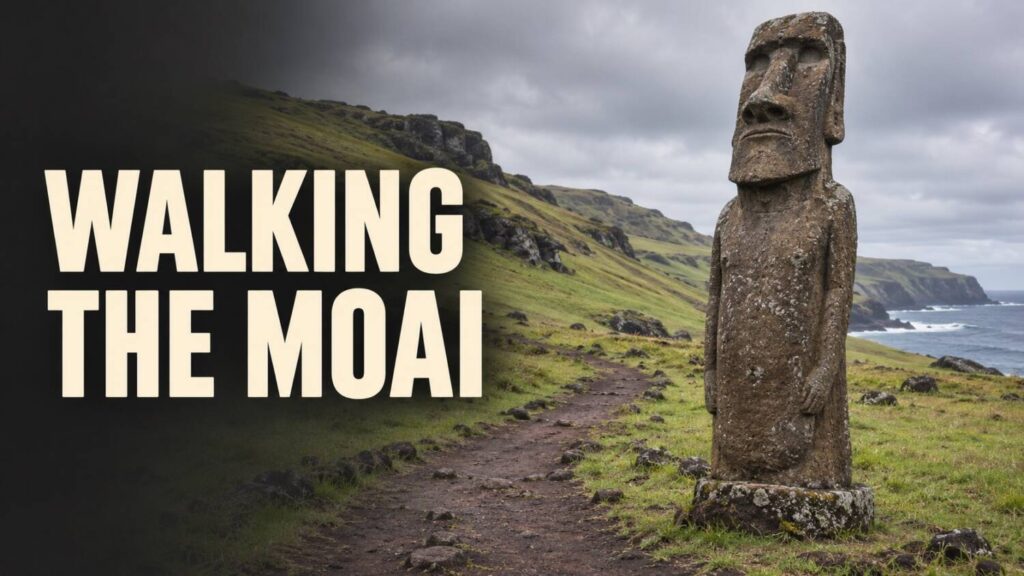
The base of a moai found along a road can have a different shape from the base of one standing on a platform. Some road statues lean forward and have a wide, curved base. If those features helped the stone move, the statue itself preserves part of the transport method.
From the quarry to the roads
The people of Rapa Nui carved many moai at Rano Raraku. Statues left along routes away from the quarry provide evidence from between the work of carving and the work of raising them on platforms. Rapa Nui oral histories include accounts of the statues walking. Terry Hunt’s discussion of those accounts explains how they informed an archaeological question about movement.
Rocking a replica
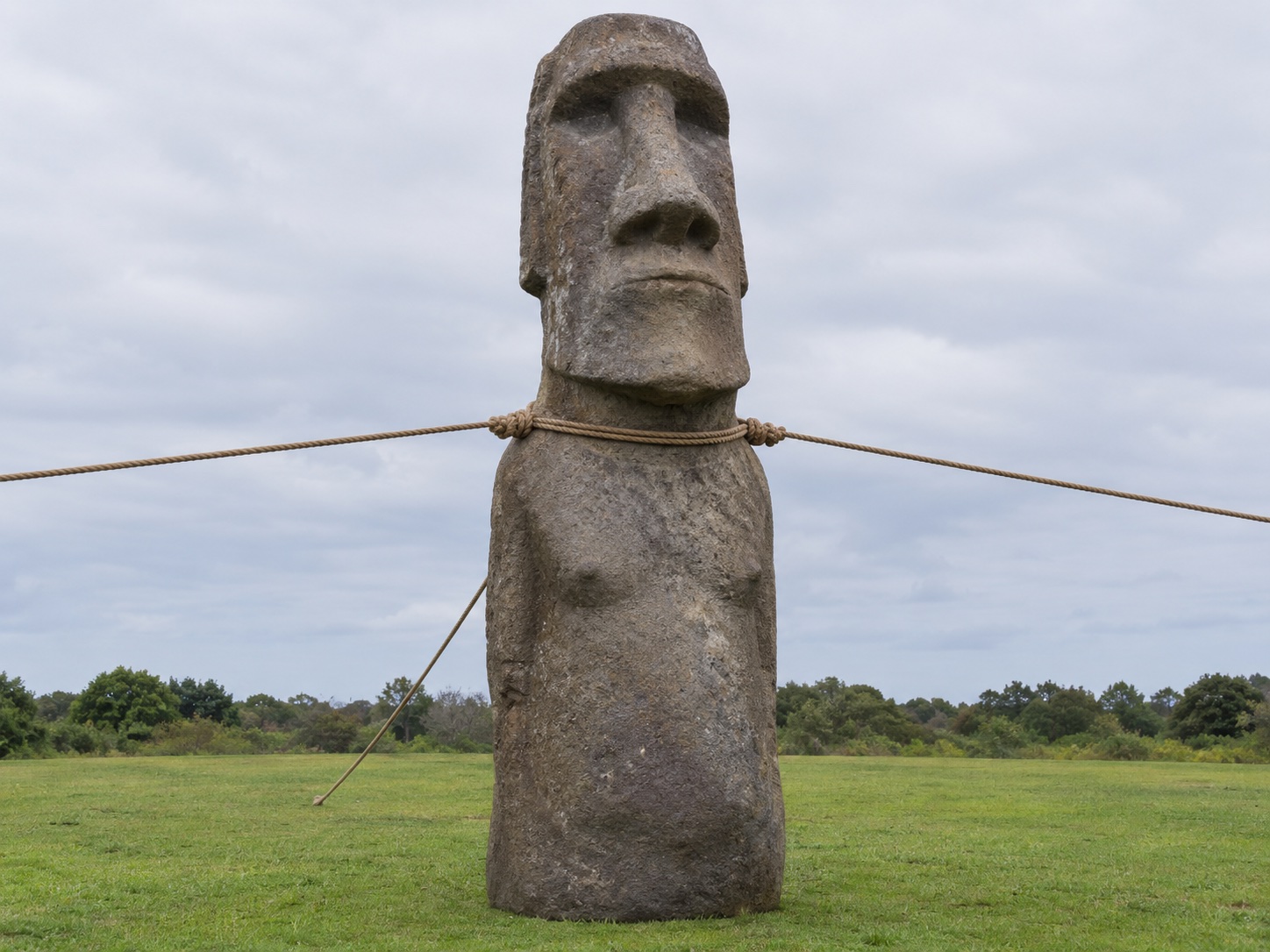
Carl Lipo, Terry Hunt and colleagues tested an upright replica weighing 4.35 tonnes. Teams pulled from either side to rock it from edge to edge, while a rear line helped control the forward lean. As the sides alternated, the base advanced in short steps. The experiment shows what a statue shaped like the test piece can do with ropes and coordinated pulling.
In their 2025 analysis, Lipo and Hunt compared 962 moai, including 62 road statues. They cited the shape of the road statues, the width and cross-section of routes and patterns of breakage as evidence for upright movement. The experiment gains archaeological relevance from the fit between those details and the replica. The replica shows what this kind of experiment can establish.
What the sledge experiment tested
Jo Anne Van Tilburg and Ted Ralston’s experimental account describes trials with a replica carried horizontally on a wooden transport rig. That approach depends on different things, including timber, a way to fasten the statue and a surface suited to the rig. The two experiments establish workable methods under their own conditions.
An archaeological comparison can ask which method better explains a given road, statue and break. It can also ask how the statue was put onto its platform after the journey. Moving a shaped replica across open ground is a precise result. The next evidence comes from the parts of the island where a statue had to turn, climb or stop.
How to Read an Ancient Monument follows the evidence at other sites in this series.