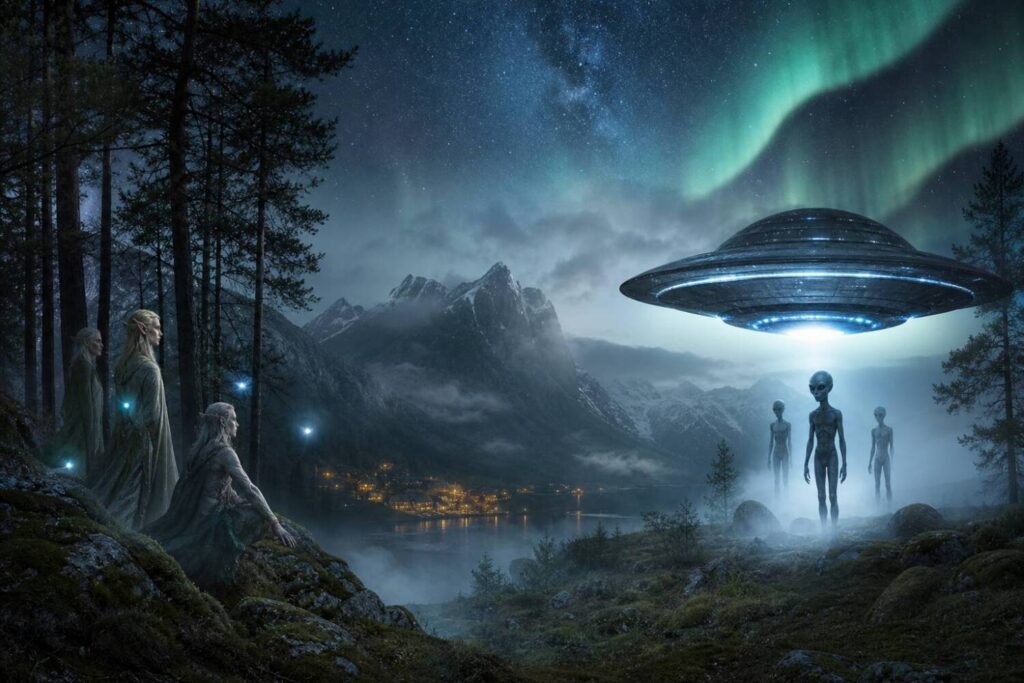
Modern descriptions of “Nordic aliens” often sound less like images of radically unfamiliar life and more like idealized human figures: tall, fair-haired or light-eyed, attractive, composed, and recognizably human. That resemblance invites comparisons with elves, supernatural visitors, and other beings from folklore. The comparison can be culturally revealing, but it does not establish that ancient stories described extraterrestrials, or that modern UFO accounts confirm the existence of such beings.
What “Nordic alien” means in modern UFO lore
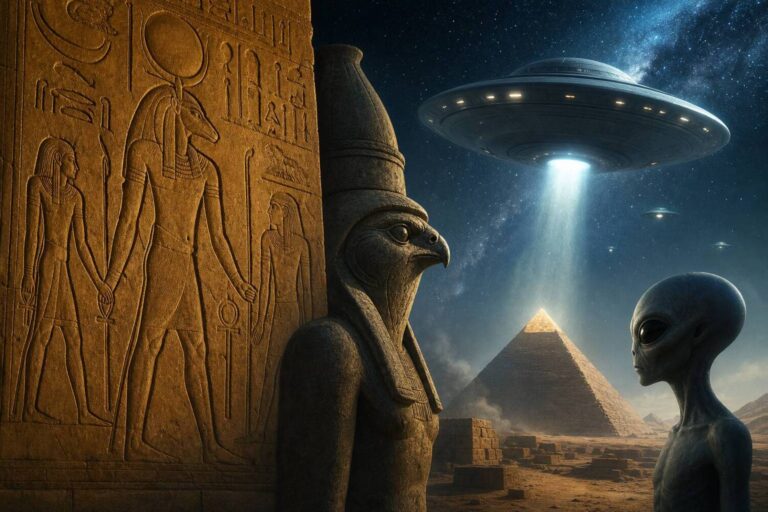
In contemporary UFO stories, “Nordics” are usually presented as human-looking visitors, in contrast with the small, large-eyed figures commonly called “Greys.” The source material shows how easily this category can be blended with broader speculative claims: some accounts portray Nordics as ancient cosmic visitors, while others connect them to Norse gods, genetic intervention, or hidden organizations. These are claims circulating in discussion, not verified historical or scientific findings.
One prominent name in the history described by commenters is George Adamski. They say that in the 1950s he claimed to have been taken aboard a spacecraft and to have visited planets in the solar system with beings he later called “Nords.” The same comments note his claims about inhabited worlds and multiple alien races. In the dossier, these statements are presented as part of UFO lore, not as evidence that such journeys took place. Other participants call Adamski and Billy Meier hoaxsters, while skeptics emphasize the lack of scientific proof for claims about Nordic aliens.
Why the figures recall folklore
The resemblance between Nordic aliens and supernatural figures is a matter of interpretation. In the discussion, one Swedish commenter points to northern traditions about gnomes and trolls grouped under the name “Gråfolket,” or “grey people.” Others compare elves and dwarfs with modern alien types, or suggest that folklore and UFO stories share recurring images of powerful, unusual visitors. These comparisons can help explain why alien narratives feel familiar: people often understand new mysteries through stories and figures already available in their culture.
But resemblance is not proof of a common source. A story about an elf, troll, or divine visitor belongs to its own cultural and historical setting. A twentieth-century report about a spacecraft belongs to a different one. Jacques Vallée’s Passport to Magonia is mentioned in the discussion as an example of an approach that reexamines folkloric beings through the lens of alien narratives. That is an interpretive framework, not a demonstration that folkloric creatures were extraterrestrials.
The Eddas and the limits of historical claims
The Norse-mythology comparison also needs historical care. Discussion participants point out that the Eddas were written down in medieval Iceland, including by a Christian poet centuries after the Viking Age. They are important sources for studying myth and medieval Icelandic culture, but they are not a direct recording of every belief held by people during the Viking Age. Their historical distance and literary context matter when people use them to make claims about ancient encounters.
That caution does not make the Eddas worthless. A commenter describes them as among the closest sources available alongside Viking artifacts, while acknowledging that they may not perfectly represent earlier worldviews. The useful distinction is between studying what a medieval text says and treating it as a literal report of alien contact. The first is historical inquiry; the second goes beyond what the dossier establishes.
Ordinary human traits and the risk of projection
The “Nordic” label also overlaps with ordinary human variation. Traits such as light coloring, height, attractiveness, or empathy are not evidence of an extraterrestrial identity. One discussion about this cultural overlap warns against turning familiar personal qualities into signs that someone is secretly non-human. Another commenter describes such reasoning as an “ego trap,” while others point to cold reading: broad, appealing descriptions can feel uniquely accurate even when they apply to many people.
There is a further concern: the idealization of fair, conventionally attractive, human-looking beings can carry racial or eugenic implications. Several commenters object to narratives that associate whiteness with superior spirituality, intelligence, or advancement. Those associations are ideological claims, not established facts about human ability. Treating a culturally favored appearance as evidence of cosmic importance risks reinforcing prejudice while disguising it as revelation.
Folklore, UFO history, and speculation
Nordic alien imagery sits at a crossroads of modern UFO storytelling, older supernatural motifs, and contemporary ideas about human identity. Those connections are worth examining as cultural history: they show how familiar archetypes can shape the way people describe the unknown. Yet the categories should remain distinct. Folklore offers stories rooted in particular traditions; UFO history records modern claims and their reception; speculation proposes explanations that the available material does not verify.
Seen this way, the overlap is meaningful without being literal. Elves and Nordic aliens may share recognizable features because both are imagined through human expectations about beauty, power, difference, and the uncanny. That is a reason to study the stories closely, not a reason to treat myth as evidence of extraterrestrial visitors.