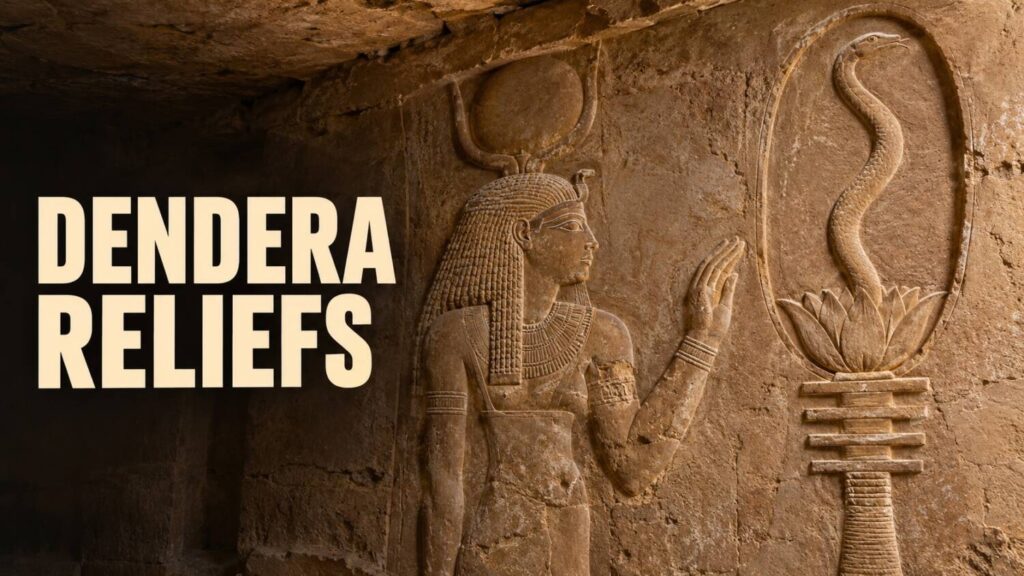
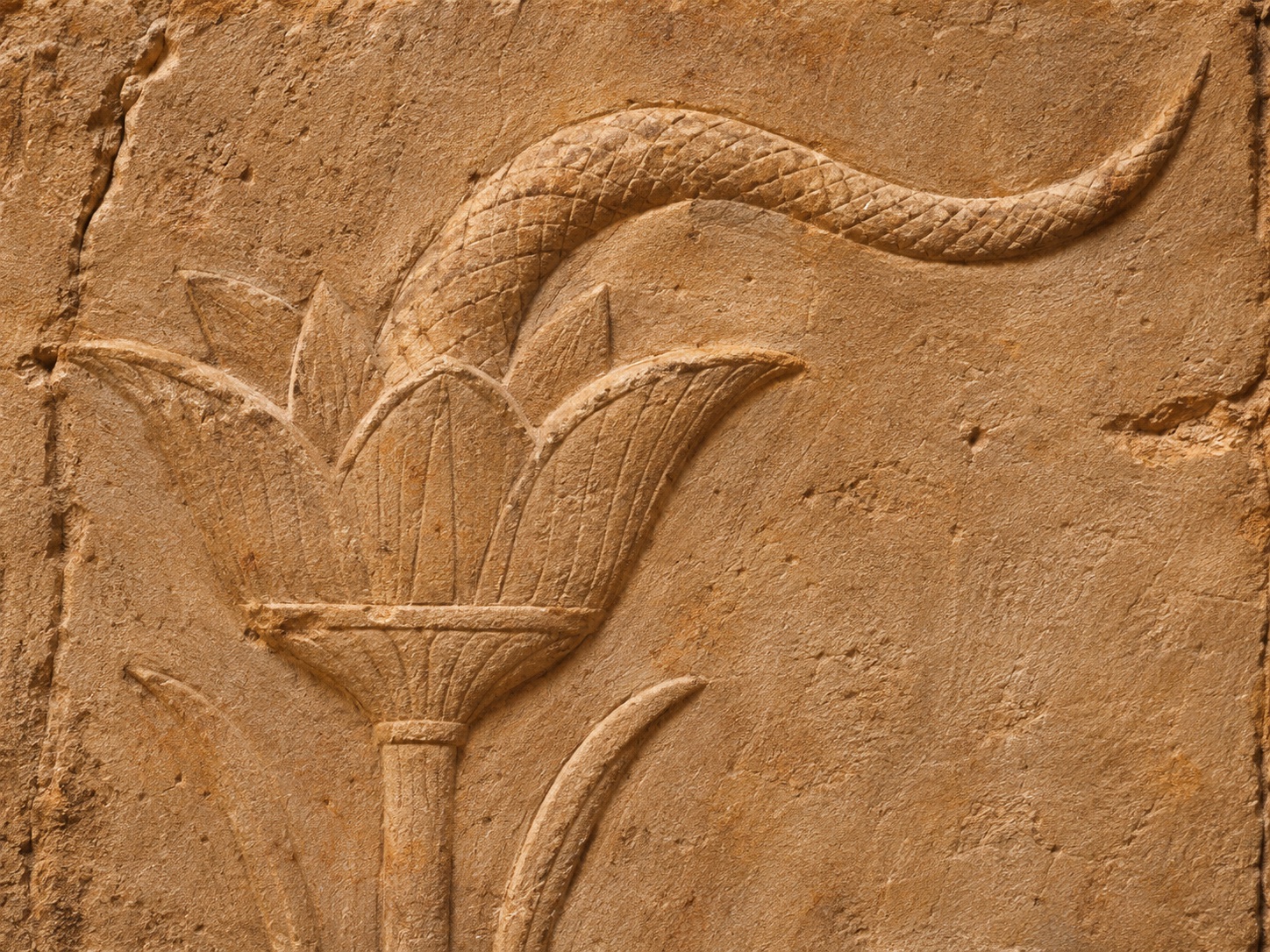
In a crypt beneath the Temple of Hathor at Dendera, a carved serpent rises from the open petals of a lotus. An elongated outline surrounds the serpent. Seen in isolation, that outline can resemble the glass of an electric lamp. Along the wall it belongs to a larger scene, with figures, supports and inscriptions. Those details give the image a setting and a name.
Read the wall around the serpent
Egypt’s Ministry of Tourism and Antiquities places the surviving Temple of Hathor in the late Ptolemaic and Roman periods. The crypts are part of that temple. The French Institute of Oriental Archaeology’s edition of the crypt inscriptions records the reliefs of the first south crypt alongside their surrounding texts. One of its published passages, on page 144, names Harsomtus and describes him in serpent form.
Egyptologist Wolfgang Waitkus studied the birth of Harsomtus from the flower in the context of cult objects at Dendera. His reading connects the flower and serpent to the god’s emergence. He compares versions of the scenes in a crypt and in an upstairs room, where related motifs can be read together. The Northern Arizona University catalogue entry shows one of the scenes with its supporting figures. In related versions, a djed pillar, a familiar Egyptian ritual emblem, supports the oval. The scene gives a role to each element through its place in the composition.
Testing the lamp comparison
The modern reading starts with the shape. The oval looks like a bulb, the serpent like something inside it and the stem like a lead. Those associations are easy to see once they have been suggested. To test the proposed function, each feature also needs to make sense as part of a device. A lamp would require a way to supply power and a structure that could actually produce light.
The carved stem joins the lotus from which the serpent emerges. The figures and pillar occupy places that make sense within a temple scene. The inscriptions identify a deity and describe his manifestation. An electrical interpretation would need independent evidence, such as a device with components in their original context or a text explaining how those components worked.
Back in the crypt
Where an image stands affects what can be learned from it. How to Read an Ancient Artefact describes how to bring setting and inscription into the same reading. At Dendera, the photograph of an oval may be the first thing a viewer sees. The words beside it lead back to the carved flower and the god emerging from it.