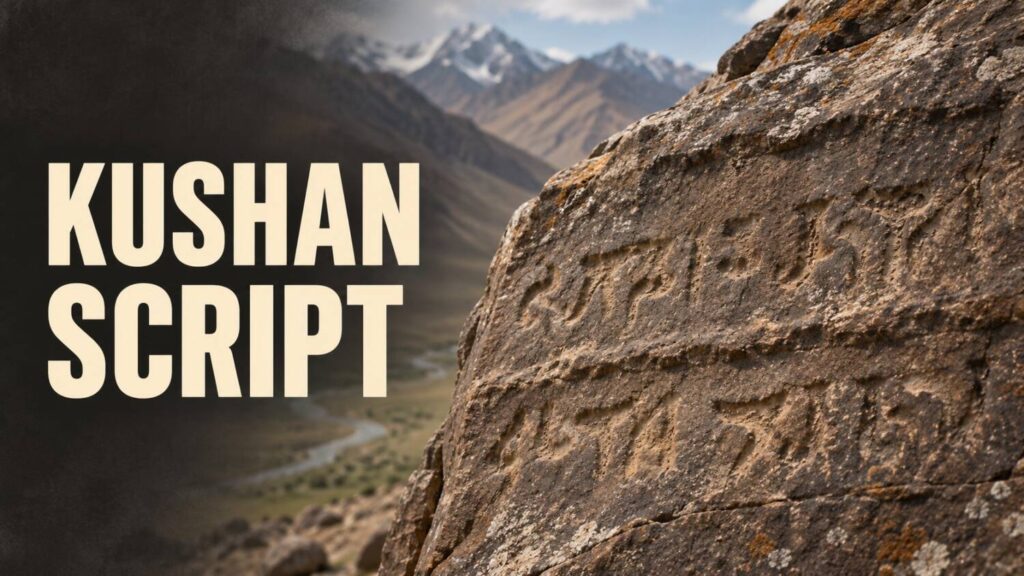
The same group of signs appeared in two places. One was on a rock face at Almosi in Tajikistan. The other appeared in a multilingual inscription at Dašt-i Nāwur in Afghanistan. The repetition gave researchers a way to check whether both passages named the same Kushan ruler.
A name and a title
In 2023, Svenja Bonmann and colleagues compared the sign groups with readable Bactrian material. They proposed that the groups included the ruler’s name, Vema Takhtu, and the title king of kings. A name and title are especially useful together. Each constrains what the signs in the other part of the sequence can mean. The 2023 partial decipherment
The proposal gave some signs provisional sound values. The royal formula is a firmer anchor than a reading based on a resemblance to another alphabet. Even so, researchers can agree on the identity of a ruler and disagree on how the individual signs record his name.
What later readings changed
Nicholas Sims-Williams’s 2025 study revised several values and argued for readings in Bactrian. The language already has a documented record in a modified Greek alphabet. A Bactrian reading in another script can therefore be checked against known words and grammatical forms. Bactrian in Two Scripts
A 2026 paper by Jakob Halfmann and colleagues built on that work. It proposed readings of further lines at Dašt-i Nāwur, added observations from Almosi and suggested values for more signs. The paper also discusses inscriptions that remain difficult to interpret under the revised system. The 2026 study
Where a value becomes dependable
A candidate value earns more weight when it can carry from the royal formula into another name, word or grammatical ending without changing the rules. The growing set of Bactrian readings makes that comparison possible. Damaged surfaces and inscriptions that remain unclear still give the next reader places to test the system. The Rosetta Stone offers another example of the way names and parallel texts can provide an initial foothold.
The guide to why ancient scripts stay unread compares the evidence available for other inscriptions and manuscripts in this series.