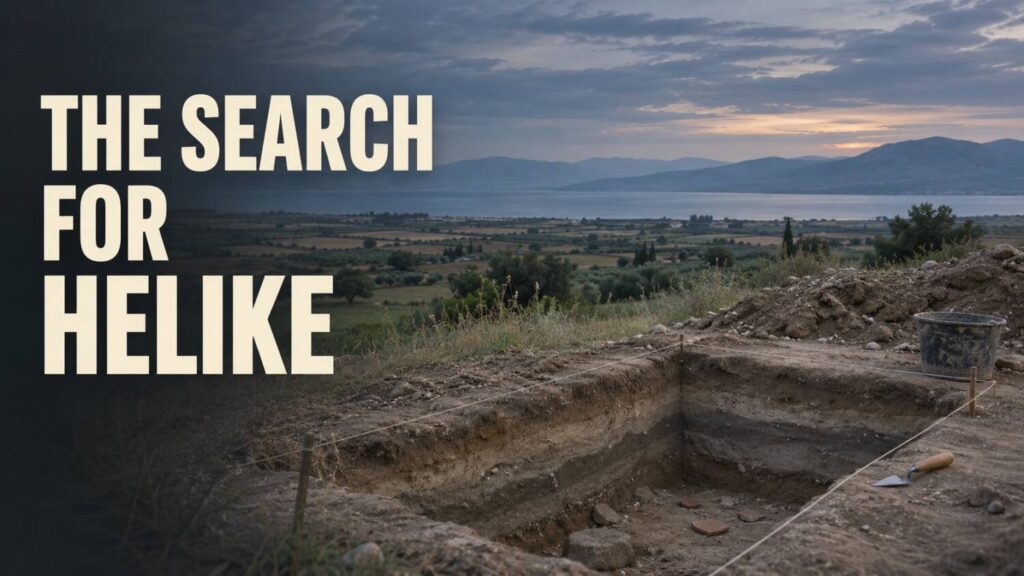
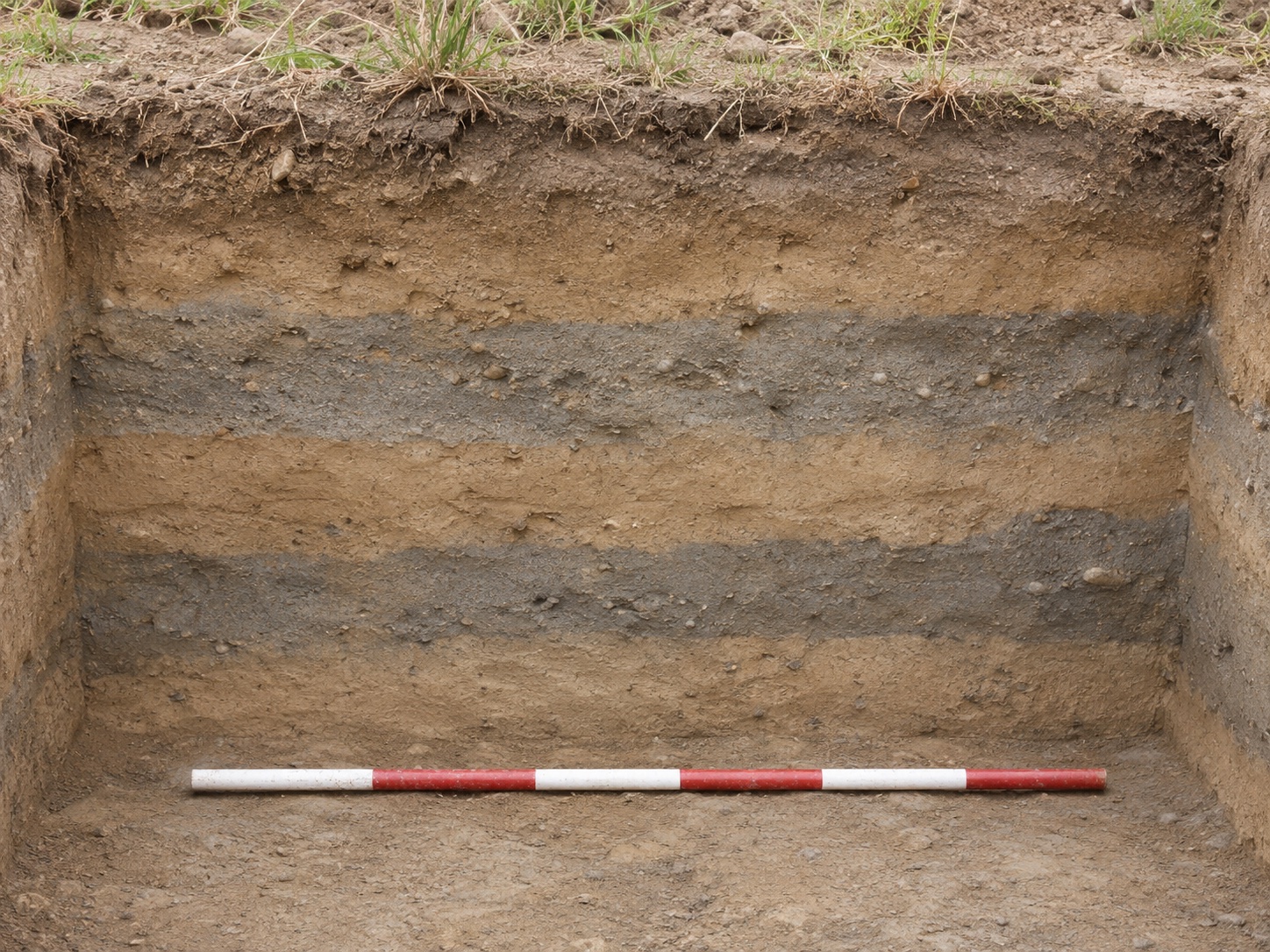
A search for a city said to have disappeared beneath the water led archaeologists to drill into farmland. The fields sit on a coastal plain beside the Gulf of Corinth. Beneath them, layers of gravel, silt and archaeological material preserve older versions of a shoreline that has shifted repeatedly.
The coast in the ancient accounts
Ancient writers associated Helike’s destruction with an earthquake and inundation in 373 BCE. The Helike Project’s collection of ancient accounts includes writers who lived centuries after the event. Their descriptions are evidence for how the disaster was remembered. Words for the water and claims about what could still be seen have to be read in the context of each account.
On a delta, a place can move from dry ground to shallow water if the land drops or water enters. Rivers can then cover that surface with sediment. That sequence gives archaeologists a reason to investigate the modern plain even when the original accounts seem to point out into the gulf.
What the cores revealed
In a study led by Max Engel, several cores shifted abruptly from coarse shoreline material to finer sediment consistent with quiet lagoon or lake water. The team identified changes at several different dates. One was consistent with subsidence around the time of the Classical disaster.
The researchers found no unequivocal sediment trace of a tsunami at the Classical level in those new cores. Earlier work had proposed possible evidence elsewhere in the delta. The two observations leave room for a flood or wave while keeping the clearest result in view. The ground and water changed abruptly in parts of the plain.
A city and the layers around it
The excavation project has reported remains from multiple periods. In a presentation on the 2021 excavations, director Dora Katsonopoulou described early sanctuary levels at Nikoleika, including an eighth-century BCE altar beneath a later temple floor. The altar is evidence of activity in the area centuries before the disaster. Its date is what lets researchers distinguish the two events.
The ancient descriptions gave the search a place to begin. The cores narrowed it to surfaces at particular depths. Excavation can then ask whether a structure belongs to the Classical settlement and whether the surrounding sediment records the same change. The modern field is the top of that record.