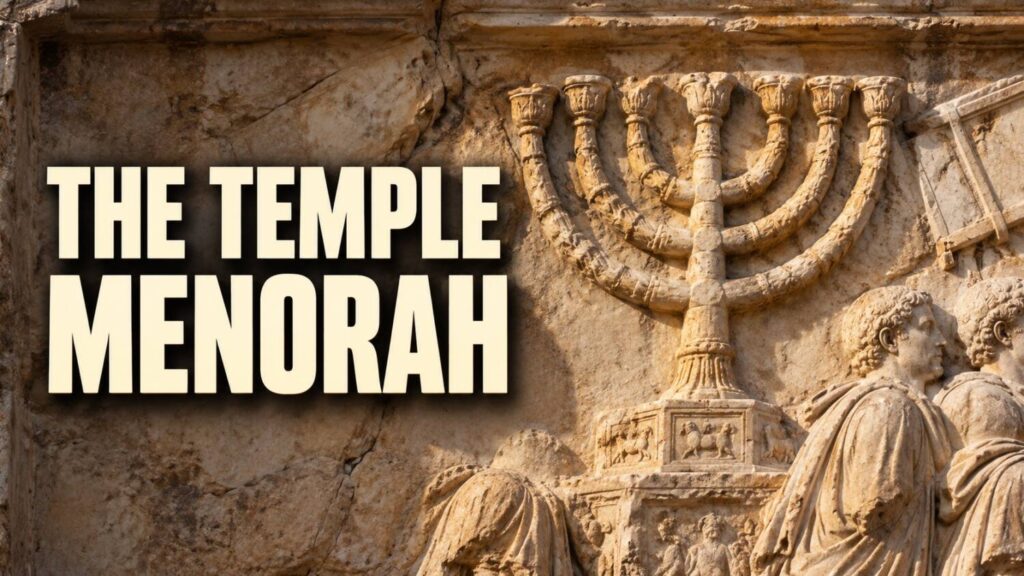
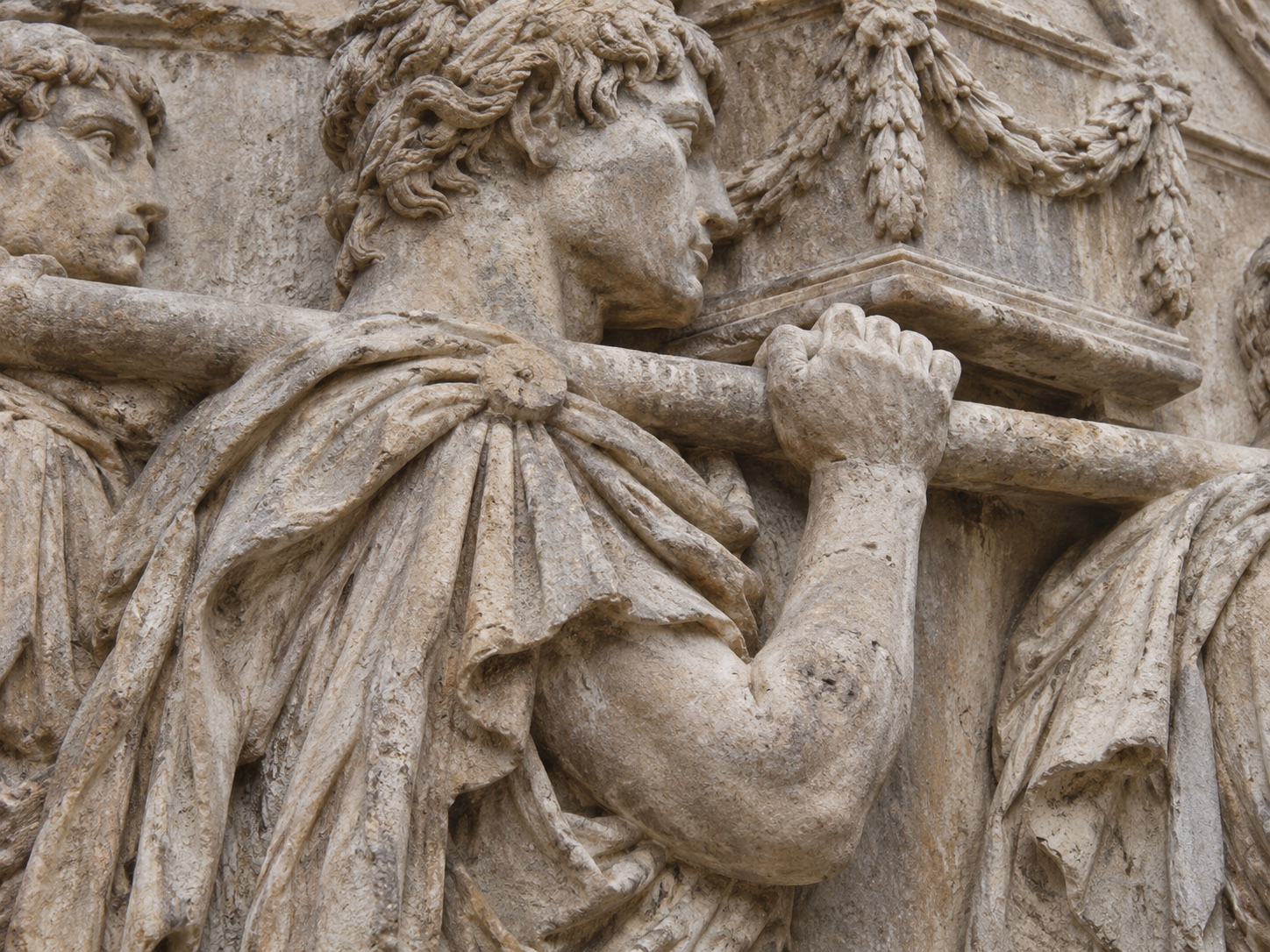
On the south interior panel of the Arch of Titus in Rome, figures carry a seven-branched menorah. The candelabrum sits above the men’s shoulders and takes up much of the procession. The arch’s archaeological site record identifies the scene with the Roman triumph after the capture of Jerusalem. The carving records what Roman authorities chose to show at a particular place and time.
What was brought to Rome
In The Jewish War, Book Seven, Josephus describes a gold lampstand with seven lamps among the spoils carried in the triumph. He says the Temple’s gold vessels were later placed in Vespasian’s Temple of Peace. The text and the relief both put a menorah among the objects displayed in Rome after the destruction of the Second Temple in 70 CE.
The marble has evidence of its own. In 2012, a team led by Yeshiva University reported traces of yellow ochre on the carved menorah. Those traces belong to the surface of the relief. They help researchers reconstruct how the Roman image once looked.
What the later account actually names
Writing in the sixth century, Procopius describes the triumph of Belisarius after the defeat of the Vandals. He says treasures taken from Jerusalem by Titus had been carried off from Rome by the Vandals and later brought to Constantinople. He also says Emperor Justinian sent those treasures to Christian sanctuaries in Jerusalem.
The passage refers to a group of treasures. It gives no itemised list identifying the seven-branched lampstand. Taking the narrative as the route of that particular object requires a link the text does not supply. Claims that the menorah remained hidden in Rome likewise need a traceable record of its later custody.
How to Check a Lost Treasure Claim explains why identifying a group and following one object are different tasks. At the Arch of Titus, the carved branches are still visible. In the later account, the lampstand disappears into a broader description of the spoils.