

After the death of someone deeply loved, many people begin noticing experiences that feel emotionally meaningful, unusual, or difficult to explain. These experiences can happen during intense grief, quiet reflection, dreams, anniversaries, or completely ordinary moments.
For some people, these moments feel spiritual. Others interpret them psychologically or emotionally. Many people remain uncertain but still find the experiences deeply comforting.
Across cultures, religions, and spiritual traditions, stories about signs from deceased loved ones have existed for centuries. Whether understood spiritually, emotionally, symbolically, or psychologically, these experiences often become part of how people process grief and maintain a sense of connection.
Common Experiences People Report After a Death
People describe many different kinds of experiences after losing someone important to them. Common examples include:
- Vivid dreams involving the deceased person
- Feeling a sudden presence nearby
- Hearing meaningful songs at emotionally significant moments
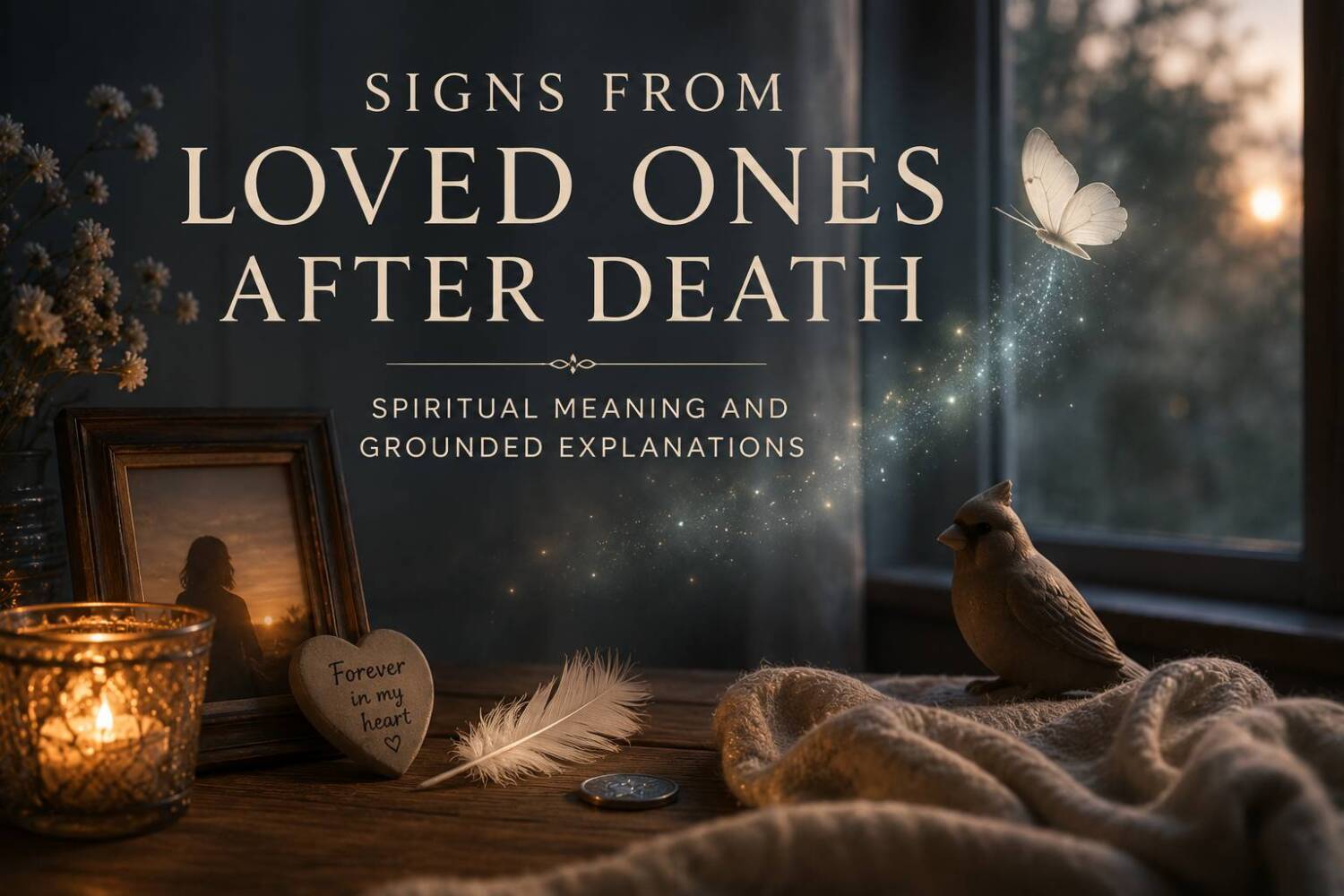
- Repeatedly noticing symbolic animals like butterflies, birds, dragonflies, or cardinals
- Finding coins, feathers, or meaningful objects unexpectedly
- Electrical disturbances or flickering lights
- Strong emotional sensations of peace or reassurance
- Feeling emotionally guided during difficult moments
Some people experience only one unusual moment. Others report ongoing patterns that feel deeply personal and emotionally significant.
Dreams and Visitation Dreams
Dreams involving deceased loved ones are extremely common during grief. Some dreams feel symbolic or emotionally reflective, while others feel unusually vivid and emotionally powerful.
People who describe visitation dreams often report:
- The dream feeling unusually clear or realistic
- The deceased person appearing calm, healthy, or peaceful
- A strong emotional sense of comfort
- Simple communication or reassurance
- Waking up feeling emotionally changed afterward
Spiritually, some people interpret these dreams as genuine contact or visitation experiences. Psychologically, grief experts often view them as part of emotional processing, continuing bonds, memory integration, and emotional healing.
Regardless of interpretation, many grieving people experience these dreams as emotionally meaningful and comforting. citeturn0search0turn0search5turn0search19
Why Synchronicities Feel So Meaningful During Grief
Grief changes emotional awareness and attention. During periods of loss, the brain naturally becomes more sensitive to emotionally relevant patterns, memories, symbols, and reminders connected to the person who died.
This can make certain experiences feel incredibly powerful, including:
- Hearing a meaningful song unexpectedly
- Seeing repeated numbers or symbols
- Encountering objects connected to memories
- Repeatedly noticing a specific animal or image
- Feeling emotionally overwhelmed by coincidence
Spiritually minded people may interpret these experiences as signs, messages, or synchronicities. Psychologically, they may reflect emotional association, memory activation, attachment bonds, and heightened emotional pattern recognition.
For many grieving people, both interpretations can coexist without needing absolute certainty.
Feeling a Presence After Someone Dies
One of the most common grief experiences is sensing the presence of someone who has died. Some people describe feeling watched over, emotionally accompanied, or suddenly comforted during difficult moments.
Others report sensing a familiar smell, hearing a voice internally, or briefly feeling as though the person is nearby.
Research on grief and bereavement suggests these experiences are surprisingly common and not automatically signs of mental illness. Modern grief theory increasingly recognizes that maintaining an emotional bond with the deceased is a normal part of grieving. citeturn0search19turn0news14
Spiritually, these moments may be understood as continuing connection, visitation, or spiritual presence. Psychologically, they may reflect attachment memory, emotional regulation, grief processing, and the mind maintaining relational bonds after loss.
Spiritual Interpretations Across Traditions
Different spiritual traditions interpret signs after death in different ways.
Some believe deceased loved ones can communicate through dreams, symbols, synchronicities, intuition, or moments of emotional connection. Others interpret these experiences as spiritual comfort rather than direct communication.
Many cultures include longstanding beliefs involving:
- Visitation dreams
- Birds or butterflies as symbolic messengers
- Spiritual presence during grief
- Meaningful coincidences
- Ancestral guidance
- Continuing spiritual bonds after death
Even among people who are not strongly religious, these experiences often become emotionally important because they help create meaning during grief.
Grounded Psychological Explanations
Psychology and grief research offer grounded explanations for many after-death experiences without dismissing their emotional significance.
Grief affects:
- Memory and attention
- Dream intensity
- Emotional processing
- Pattern recognition
- Attachment systems
- Emotional symbolism
Dreams about deceased loved ones, feelings of presence, emotionally meaningful coincidences, and symbolic experiences may all emerge naturally as part of grieving and emotional adaptation.
Importantly, understanding these experiences psychologically does not necessarily make them less meaningful. Many people find comfort in the idea that emotional bonds continue internally even after physical loss.
When Searching for Signs Becomes Emotionally Difficult
While signs and spiritual experiences can feel comforting, searching for constant reassurance after a loss can sometimes become emotionally exhausting.
Some grieving people begin intensely monitoring every coincidence, dream, or symbol while feeling distressed when signs do not appear.
Healthy grief support usually involves allowing emotional connection without becoming trapped in constant searching, fear, or emotional dependency.
If grief becomes overwhelming, persistent, or severely disruptive, support from grief counselors, therapists, support groups, spiritual communities, or trusted loved ones can help.
Healthy Ways to Stay Connected While Grieving
Many people maintain meaningful connections with deceased loved ones in healthy and grounded ways.
Examples include:
- Looking through photographs
- Writing letters or journaling
- Visiting meaningful places
- Talking about memories
- Keeping family traditions alive
- Dream journaling
- Creating rituals of remembrance
- Supporting causes important to the person who died
Continuing emotional bonds are a normal part of grieving for many people. Healing does not necessarily mean forgetting or completely letting go.
Meaning, Memory, and the Mystery of Grief
Experiences involving signs, dreams, synchronicities, and feelings of presence exist in a deeply personal space between memory, emotion, spirituality, and grief.
Some people understand these experiences spiritually. Others understand them psychologically. Many people remain open to both possibilities.
What matters most for many grieving people is not proving the experience scientifically, but the comfort, connection, emotional meaning, and sense of love that the experience creates during difficult moments of loss.