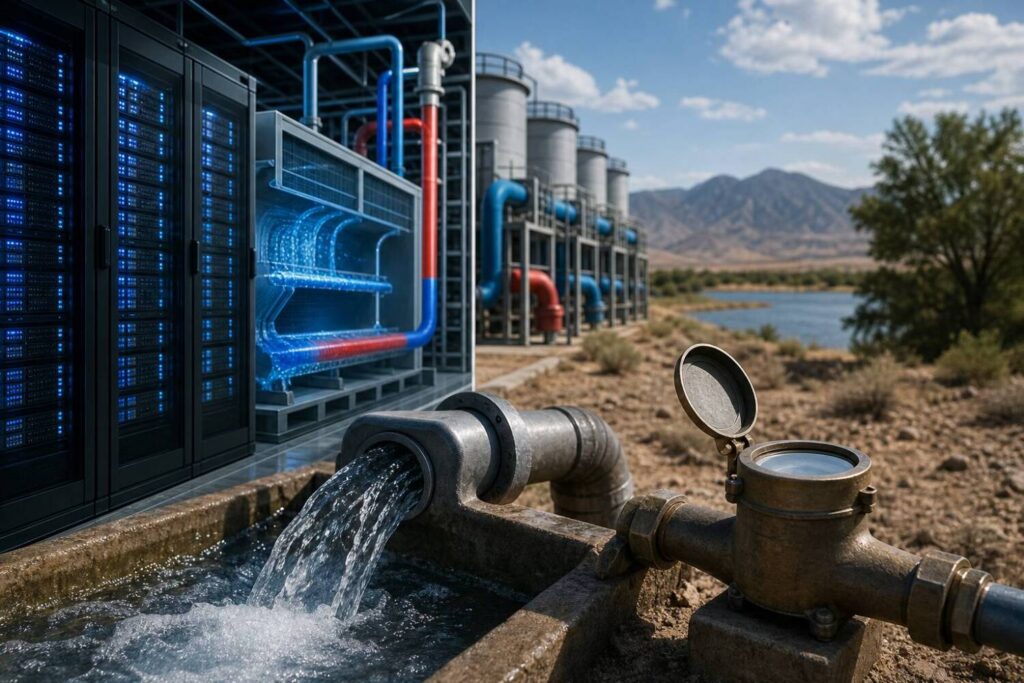
Data centers produce heat as computing equipment operates, so cooling systems must carry that heat away. In a liquid-cooling arrangement, water or another coolant can circulate through equipment and transfer heat to a separate part of the cooling system. The term “closed loop” generally describes recirculation within a circuit; it does not, by itself, establish that the entire facility uses no fresh water or releases no water.
The supplied discussion describes more than one cooling configuration. One commenter distinguishes the liquid circulating near computing equipment from a separate loop connected to outdoor cooling equipment, including evaporative cooling towers. In an evaporative system, some water evaporates as heat is removed. Operators may also need makeup water to replace water lost through evaporation or other processes, and may discharge some water periodically as “blowdown” to manage accumulated minerals and other solids. The discussion says blowdown may occur on a monthly, quarterly, or annual schedule, depending on the system. These points explain why “closed loop” is not a sufficient description of a facility’s total water use.
At the same time, the comments make broad claims about which systems are used in modern facilities, including claims that most data centers use evaporative cooling and that newer designs avoid it. The supplied material does not establish how common each design is. A reliable assessment of an individual facility would require its actual system design and water records, rather than assumptions based on the label “closed loop.”
The reported 30-million-gallon dispute
A Reddit post alleges that a data center used 30 million gallons through water connections that were not properly associated with its account, and claims the use reduced local water pressure during drought restrictions. The discussion also includes a more specific account: one connection was reportedly not hooked into the billing system, while another was installed without the utility’s knowledge. A commenter says the water was used during construction, before the data center was operational, and that the utility later billed the operator and received payment.
Those details complicate the post’s framing of the incident as deliberate theft. An unrecorded or unbilled connection can indicate a serious utility-accounting or oversight failure, but the supplied material does not establish who caused the failure or whether anyone knowingly bypassed billing. Nor does the discussion independently verify the claimed effect on countywide pressure. The post’s assertion that there would be no fine or punishment is also not substantiated in the dossier. A comment says the operator paid a bill; that alone does not establish whether penalties were considered or imposed.
The careful conclusion is limited: the discussion reports a dispute involving substantial water use, connections and billing, and residents’ concerns about pressure. It does not provide the underlying utility records, official findings, or a complete account of responsibility. Calling the episode proven theft, or concluding that local officials were complicit, goes beyond the material supplied.
What an investigation should establish
To distinguish a billing error from unauthorized use, investigators would need to establish how many connections served the site, when each was installed, who authorized the work, and whether each connection had a meter and an active customer account. Comparing meter readings with bills and payment records could show how much water passed through each line and when the utility identified the discrepancy. Construction and operating timelines matter too: water used to build a facility is not automatically evidence of its routine cooling demand.
Pressure complaints require a separate evidentiary trail. Utility operating records, pressure measurements, dates of reported problems, and system-wide demand information could help determine whether the facility’s use contributed to local pressure changes. Drought restrictions and the utility’s enforcement rules would also need to be checked before making claims about unequal treatment or the absence of penalties.
Claims about contaminated water need verification
A separate Reddit post says Oracle’s planned New Mexico data center would use contaminated water for cooling and links that claim to concerns about testing of runoff associated with Los Alamos National Laboratory. The supplied material does not include confirmation from Oracle, regulators, or water authorities that the facility plans to use that water, nor does it establish how any water would be treated or disposed of. A commenter raises disposal as a question, but the question is not evidence of a particular disposal plan.
For any such proposal, the relevant records would include the facility’s water source, permits, treatment requirements, monitoring results, and discharge arrangements. Claims about reduced testing budgets or risks to drinking and agricultural supplies should be checked against the applicable records and authorities; they should not be treated as proof that a data center is contaminating water or creating an incentive to do so.
Separate measurable impacts from speculation
Water demand is a legitimate local concern, especially where residents face restrictions or report pressure problems. But strong conclusions require more than a viral post or an alarming number. The useful questions are concrete: how much water was withdrawn, for what purpose, under what account and permit, how much was consumed or discharged, and what did utility and regulatory records find? Keeping those questions separate from claims of intentional theft, collusion, or contamination makes it possible to scrutinize data-center water use without presenting speculation as a documented finding.