
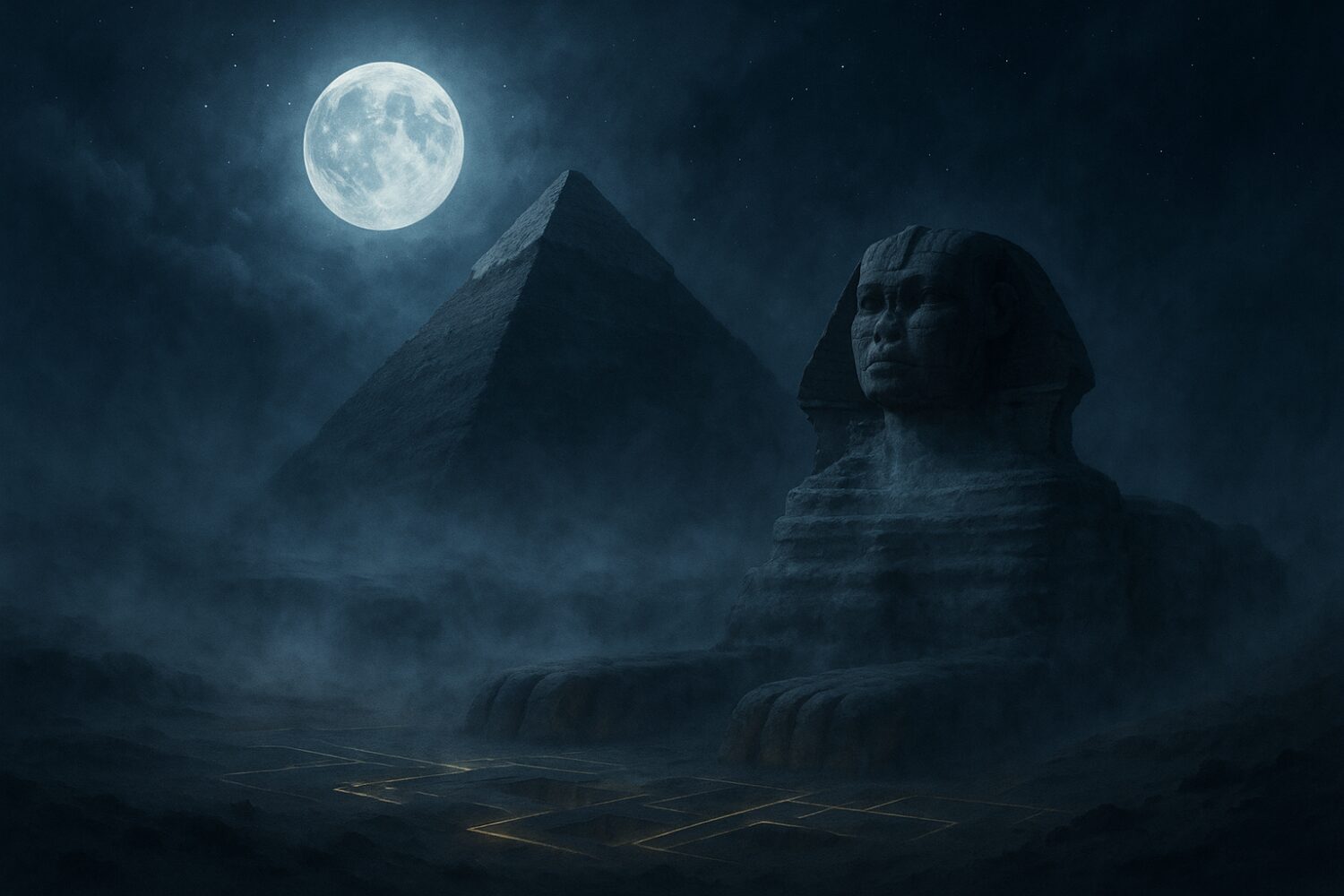

For centuries, the Pyramids of Giza have inspired awe, curiosity, and endless debate about their purpose and construction. In the modern era, that curiosity has shifted toward a deeper question: do we really know everything that lies inside these colossal structures? Despite decades of research, new discoveries continue to hint that there is far more hidden within their walls and beneath the surrounding plateau than most people realize.
At the same time, the Egyptian government maintains tight control over archaeological access and information. Advanced scanning technologies have detected unexplained voids, tunnels, and anomalies, yet further investigation is often delayed or outright blocked. This strict management of knowledge has led some to believe that officials are not just safeguarding heritage, but guarding secrets that could challenge mainstream history.
This clash between scientific discovery and limited transparency has fueled a growing narrative of concealment. Supporters of the idea argue that what has been withheld could redefine humanity’s origins, reveal lost knowledge, or expose ancient capabilities beyond our expectations. Whether these suspicions are justified or not, one thing is certain: silence and secrecy around the pyramids have only amplified the mysteries that continue to surround them.
1. The Hidden Chamber Theory
In 2017, scientists using cosmic-ray muon scanning technology discovered a large, unexplained void within the Great Pyramid of Giza. While the find was made public, the Egyptian government has since restricted further exploration. Conspiracy theorists claim that officials know far more than they are revealing — possibly concealing a chamber containing ancient texts, unknown artifacts, or even evidence of technology lost to time. Authorities maintain that the void is likely a structural feature, but their secrecy has only deepened public suspicion.
2. The Hall of Records Beneath the Sphinx
According to some interpretations of ancient prophecy and psychic visions, a Hall of Records — a vast library of forgotten knowledge — lies hidden beneath the Great Sphinx. During the 1990s, radar scans detected anomalies beneath the Sphinx enclosure, yet excavations were never authorized. Some claim the Egyptian government, along with international partners, discovered something significant and chose to hide it to protect global religious and historical narratives. No official explanation has been given for the halted studies, keeping this theory alive.
3. Political Control Over Archaeology
Egypt’s Supreme Council of Antiquities (SCA) maintains strict control over all archaeological research in the country. While this is partly to protect national heritage, critics argue that the government uses it to suppress inconvenient findings. Access to the pyramids’ deeper chambers is heavily restricted, and independent researchers rarely receive permission to conduct their own studies. Figures such as former antiquities minister Zahi Hawass have been accused of manipulating information and silencing those who challenge traditional Egyptology, though he denies these claims.
4. International Collusion and Academic Secrecy
Some theorists believe the Egyptian government collaborates with foreign institutions to suppress discoveries that might rewrite human history. These alleged partnerships, involving universities, museums, and secret societies, are thought to maintain control over archaeological narratives for political or economic gain. The limited number of authorized research teams and the controlled release of findings only add fuel to these suspicions, suggesting that more is known about the pyramids than the public is allowed to see.
5. The Silence Around Modern Discoveries
Technological advances like ground-penetrating radar and muon imaging have produced remarkable data about the Giza Plateau — but not all of it has been released. Researchers occasionally hint at unexplained anomalies beneath the sand, yet official statements are scarce or delayed. When journalists and filmmakers attempt to investigate independently, they often face shutdowns or censorship. For many, this silence speaks louder than words, implying that what lies beneath Giza may challenge everything we think we know about ancient civilization.
Could the Truth Be Hidden?
There is no undeniable evidence that the Egyptian government is hiding the secrets of the pyramids, but the pattern of secrecy and restricted access cannot be ignored. It’s possible that some findings have been held back to prevent looting, misinformation, or sensationalism. Still, the combination of mysterious voids, unexcavated tunnels, and controlled narratives keeps the idea of a hidden truth alive. Perhaps there are indeed revelations waiting beneath the sands — knowledge so profound that it could reshape our understanding of humanity’s past. Until greater transparency emerges, the whispers of suppression will continue to echo through the desert winds of Giza.