

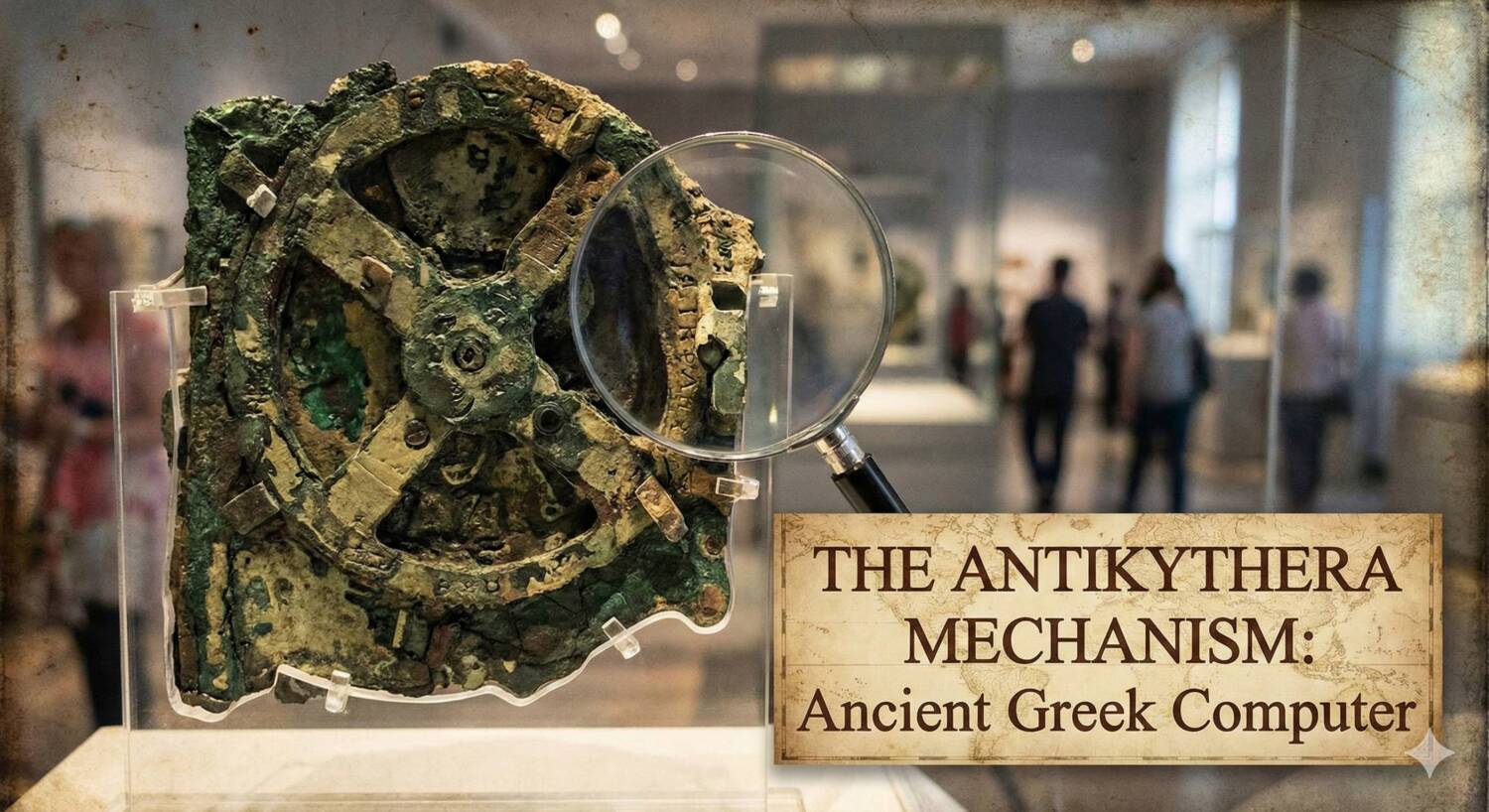

Submerged within the depths of the Aegean Sea near the Greek island of Antikythera, an extraordinary relic of the ancient world lay hidden for centuries. It wasn’t until 1901 that sponge divers, led by the indomitable Elias Stadiatis, unearthed what would become known as the Antikythera Mechanism. The discovery, amidst a Roman shipwreck strewn with statues and luxury goods, comprised a corroded chunk of metal that concealed an intricate ensemble of gears and inscriptions.
This mysterious artefact, dating back to approximately 100 BC, is often hailed as the world’s first analogue computer. Its craftsmanship suggests a sophistication that was not to be replicated for at least another millennium, demonstrating the remarkable ingenuity of ancient Greek science and technology.
Deciphering its Purpose
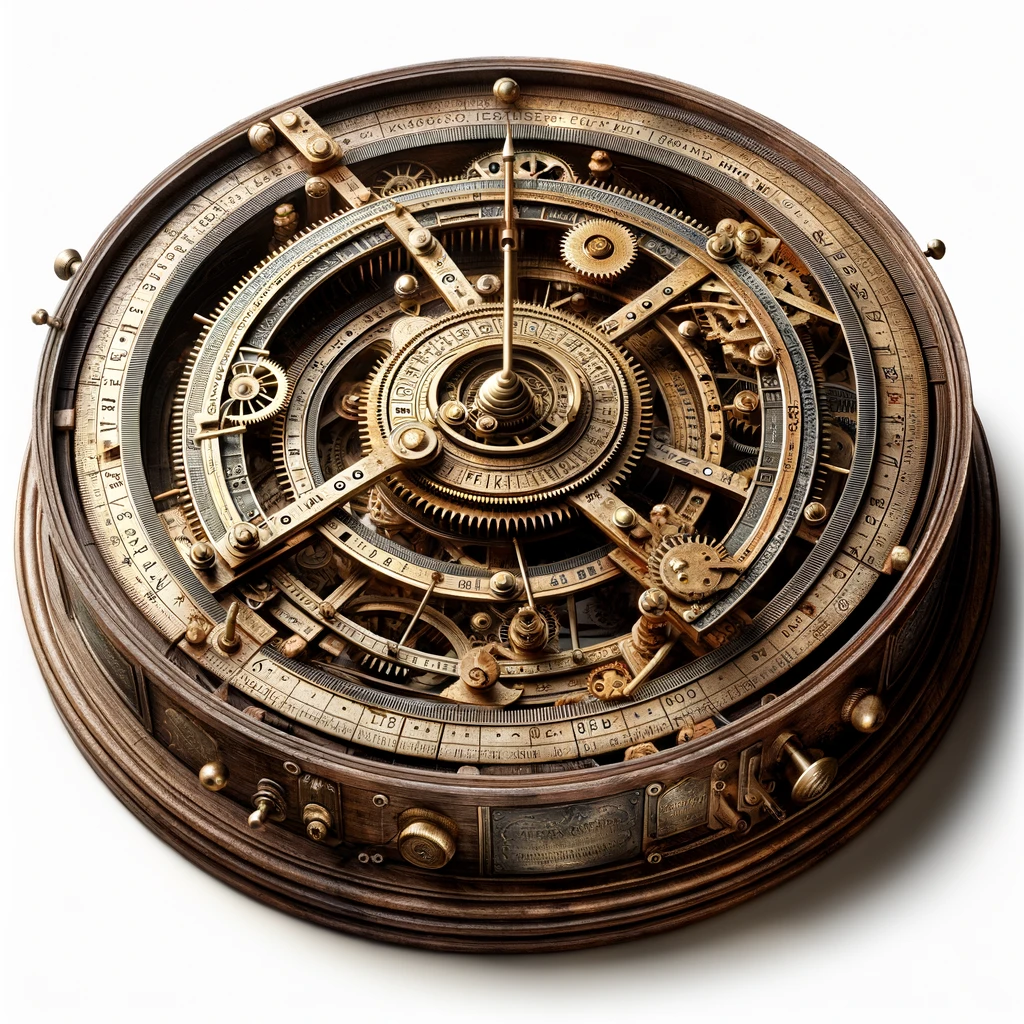
The primary theories around the Antikythera Mechanism propose that it was an astronomical calculator used to predict celestial events like eclipses and planetary positions. Scholars believe it was based on a geocentric view of the solar system, as was common in Hellenistic astronomy. The mechanism’s complex system of dials and gears was capable of mimicking the irregular movements of the Moon, as well as the apparent motion of the Sun and planets through the zodiac.
Constructed from bronze and originally housed in a wooden frame, the device consisted of at least 30 meshing gears, with some estimates suggesting there could have been more than 70 gears in total. It is believed to have been operated by a hand crank, which would have driven the gearwork, simulating the motions of the cosmos as known to the Greeks.
Theories of Origin
Theories about the mechanism’s creation are as varied as the functions it performed. Some suggest it was crafted in a school of astronomy and engineering, possibly linked to the famed ancient Greek mathematician and engineer Archimedes. Others believe that the level of sophistication points to the contributions of multiple minds, perhaps over generations, with knowledge passed down and improved upon.
Was the Antikythera Mechanism a tool for teaching, designed to demonstrate the movements of the heavens? Or was it a practical device used to predict celestial events and thus guide navigational, agricultural, or even ritual activities? These questions fuel ongoing research and debate. What is clear is that the device stands as a testament to the astronomical knowledge and mechanical skills of the ancients.
The Wider Implications
The existence of the Antikythera Mechanism has compelled historians to reconsider the technological capabilities of the ancient world. It raises profound questions about the transmission of knowledge and the possible existence of other advanced devices that may have been lost to time.
Today, the remains of the Antikythera Mechanism are housed in the National Archaeological Museum in Athens, where they continue to bewitch and inspire awe. As modern science unveils its secrets layer by layer, the mechanism serves as a poignant reminder of human ingenuity’s boundless reach across the expanse of history. Each gear and inscription embodies a story of human curiosity, a saga of our quest to comprehend the cosmos and our place within it.