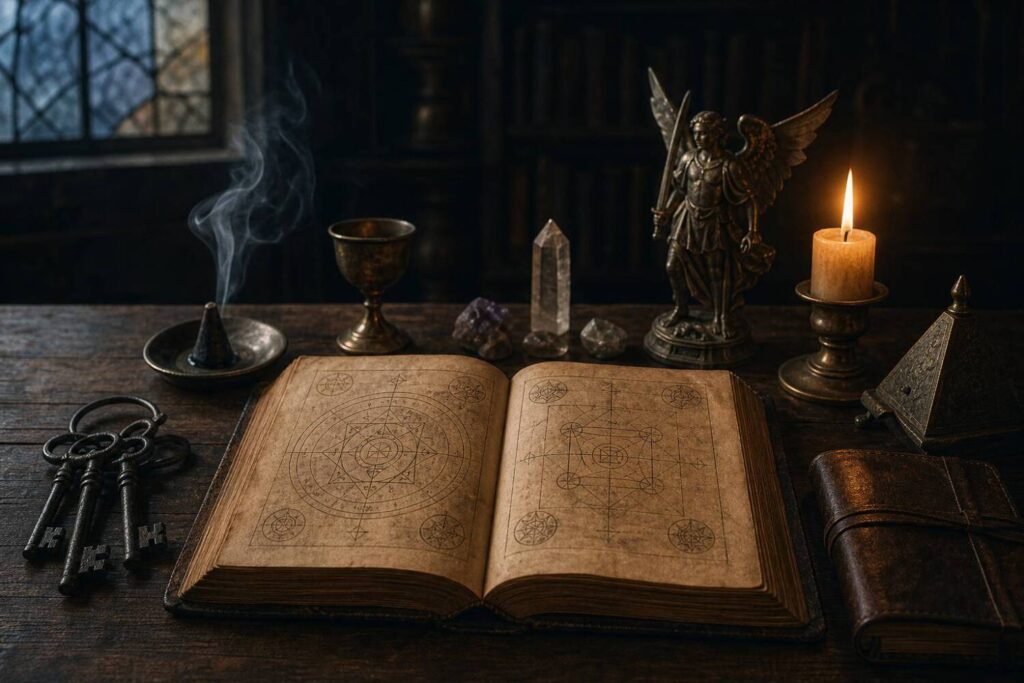
The Keys of Solomon are part of the grimoire tradition: texts that present magical ideas and, in some cases, instructions for ritual practice. The name covers more than one work. The Greater Key of Solomon and the Lesser Key of Solomon are distinct texts, and the Lesser Key is associated with the Ars Goetia. They are often discussed alongside other old grimoires, though sharing a broad genre does not mean the books contain the same methods or assumptions.
The title connects the works with Solomon, but that association should not be confused with proof that the historical Solomon wrote them. The source material here does not establish the books’ dates, authorship or manuscript histories. Those questions require checking the introduction and editorial notes of a particular edition, rather than treating a traditional attribution as a verified historical fact.
Their religious and ritual setting
Solomonic magic is strongly shaped by Christianity. Practitioners describe its ritual language as drawing on the Bible and invoking divine authority when addressing spirits or demons. That context matters: a reader may encounter Christian prayers and assumptions even if they approach the text as a historical document or do not identify as Christian.
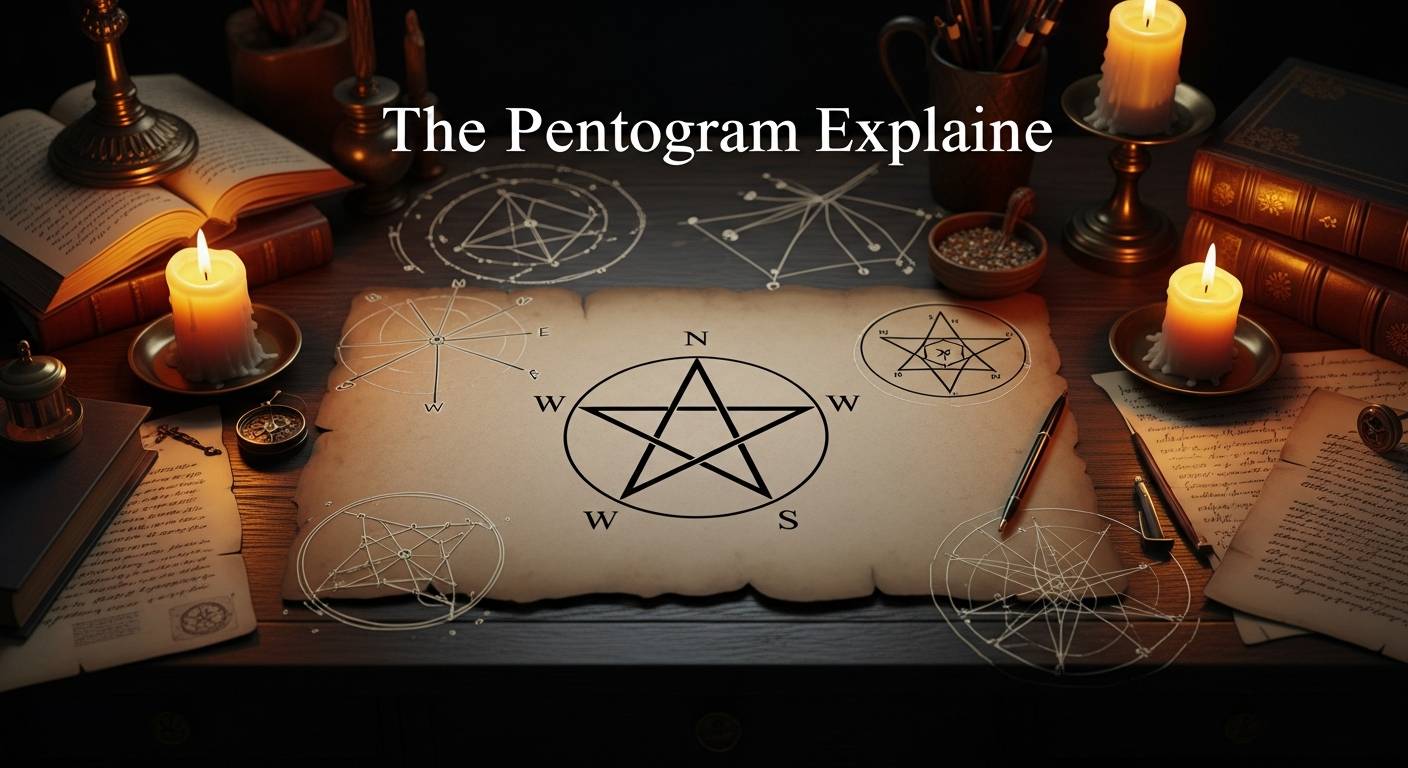
The Lesser Key’s Ars Goetia is especially associated in contemporary discussion with the evocation of demons. The discussions represented in the source material also describe ceremonial magic as comparatively prescriptive. A practitioner following a traditional or “by the book” approach may use a set of ritual objects and arrangements, such as circles, a triangle, robes, rings, a sword, a wand and candles. These examples describe what practitioners say their methods involve; they do not demonstrate that any supernatural effect occurs.
How modern practitioners approach the books
There is no single modern approach. Some readers aim to follow a text closely, while others adopt simpler contemporary practices. Demonolatry, for example, is described by some participants as a less elaborate approach, but even practitioners disagree about its methods and terminology. One discussion disputes the importance and origins of “enns,” chants associated by some people with demonolatry. That disagreement is a useful reminder that contemporary practices can be contested and may not be part of an older text’s instructions.
Opinions also differ on whether ceremonial magic is suitable for beginners. Some practitioners recommend years of study before attempting a ritual; others consider introductory study or practice accessible. Material requirements can be a practical obstacle, although some practitioners improvise or make inexpensive versions of ritual objects. Neither view is universal, and a beginner should not mistake a confident comment online for a consensus.
A careful way to begin
If the books interest you, start by reading rather than attempting a working. Compare what a text actually says with an editor’s explanations, and note where a modern author is translating, interpreting or adapting it. A notebook can help you track unfamiliar terms, ritual steps and questions for further research. Basic meditation and critical thinking are also frequently recommended by practitioners in the discussions, though claims about meditation or “energy” should be understood as personal or spiritual perspectives, not established facts.
- Choose a clear purpose. Decide whether you are studying the books as literature and history, exploring a spiritual tradition, or considering practice. These aims are related but not identical.
- Check the edition. Look for information about translation, editorial choices and whether instructions have been reconstructed or changed.
- Consider the religious framework. The Christian character of Solomonic magic may be important to your comfort and interpretation.
- Use practical caution. Do not treat frightening claims about spirits as proven, but also do not ignore ordinary concerns such as cost, fire safety, emotional distress or pressure from people selling guidance.
- Stay alert to unsupported promises. The discussions include warnings about frauds and scammers in occult communities. Be wary of anyone promising guaranteed results or insisting that you must pay for access or protection.
Separating historical claims from spiritual beliefs
Historical statements concern matters that can be investigated through texts and their publication or editorial history: what a particular edition contains, how its editor describes its sources, and what language or ritual instructions appear on the page. Spiritual statements, such as whether a spirit is present, whether a ritual works, or whether a perceived danger comes from supernatural forces, belong to belief and personal experience. Practitioners may sincerely hold different views, but sincerity alone does not settle a historical or scientific question.
The same distinction applies to safety. Some practitioners consider fears about Goetic demons exaggerated or rooted in religious prejudice; others regard the work as serious and unsuitable for casual experimentation. These are positions within a diverse community, not evidence that supernatural risks have been established. For a beginner, the most grounded approach is to study the texts and their context, identify what you can verify, and keep interpretations and personal beliefs clearly labelled as such.