Project Blue Beam is a recurring conspiracy theory about a staged global revelation, usually a fake alien invasion, designed to frighten populations and consolidate political power. It has resurfaced alongside public interest in unidentified anomalous phenomena, but the theory itself remains an unsupported claim rather than a documented government program.
What Project Blue Beam is supposed to be
In its most familiar form, the theory says that governments or other powerful institutions would manufacture supernatural or extraterrestrial events to manipulate the public. Believers variously describe holographic projections, lasers, low-frequency sound, mind control, advanced aircraft, or a coordinated media campaign.
The alleged objective changes depending on the version. Some accounts describe a false alien invasion intended to create a unified world government. Others frame it as a way to impose a new religion, distract the public from political crises, or claim responsibility for technology that supposedly originated elsewhere.
These shifting explanations are important. A theory that can absorb aliens, artificial intelligence, secret aircraft, religious spectacle, and manipulated media can remain relevant even when one predicted scenario fails to occur.
The theory’s reported origins
Online discussions commonly associate Project Blue Beam with former NASA scientist Wernher von Braun, although the dossier provides no documentary evidence establishing that attribution. A separate recurring claim presents the theory as a plan that would have been implemented in the 1980s, then the 1990s, and later by 2000.
Those predictions did not come to pass as described. That has not ended the theory. Instead, later versions argue that the plan was postponed, repurposed, or is still waiting for the necessary technology. In current discussions, artificial intelligence is sometimes proposed as a substitute for an alien-invasion scenario because a digitally generated crisis might be easier to stage.
Why the idea persists
Project Blue Beam survives partly because it provides a single explanation for several different kinds of uncertainty. A strange video, an official UAP statement, an unexplained light, or a dramatic news event can be interpreted as evidence either that the alleged operation has begun or that it is being prepared.
The theory also benefits from deep distrust of institutions. In the discussions reviewed here, commenters repeatedly treat official explanations as inherently deceptive and connect unrelated events through suspicion. One post, for example, interprets a person’s appearance in older and newer social-media material as evidence of a paid-actor operation. Other commenters reject that inference, noting that the person was simply a travel vlogger and that appearing online in different years is not evidence of coordination.
That exchange illustrates a central feature of conspiracy reasoning: ordinary coincidences become meaningful when they are placed inside a larger narrative. Once the narrative is accepted, the absence of proof can also be recast as proof of concealment.
UAP reports are not evidence of Blue Beam
There is a meaningful difference between documented developments in the UAP debate and claims about a global false-flag operation.
Public discussion of UAP can involve military videos, testimony, government reports, historical records, and ongoing investigations. Those materials may raise questions about what observers saw or what information has been withheld. They do not, by themselves, establish that governments are projecting images into the sky or preparing an artificial alien invasion.
The dossier includes claims about a purported Pentagon release, a French report, the “Tic-Tac” incident, lunar images, and historical flying-disc summaries. The comments themselves also warn that some material is decades old, that translations and investigations may be incomplete, and that interpretations have changed over time. Such disputes are reasons to examine evidence carefully, not confirmation of Project Blue Beam.
Likewise, reports of unusual skies do not automatically indicate projection technology. In one discussion, commenters suggest that apparent structures near the Sun could be thin clouds viewed against intense brightness. That is a proposed natural explanation, not a final determination, but it demonstrates why photographs and videos require careful analysis rather than immediate attribution to a secret program.
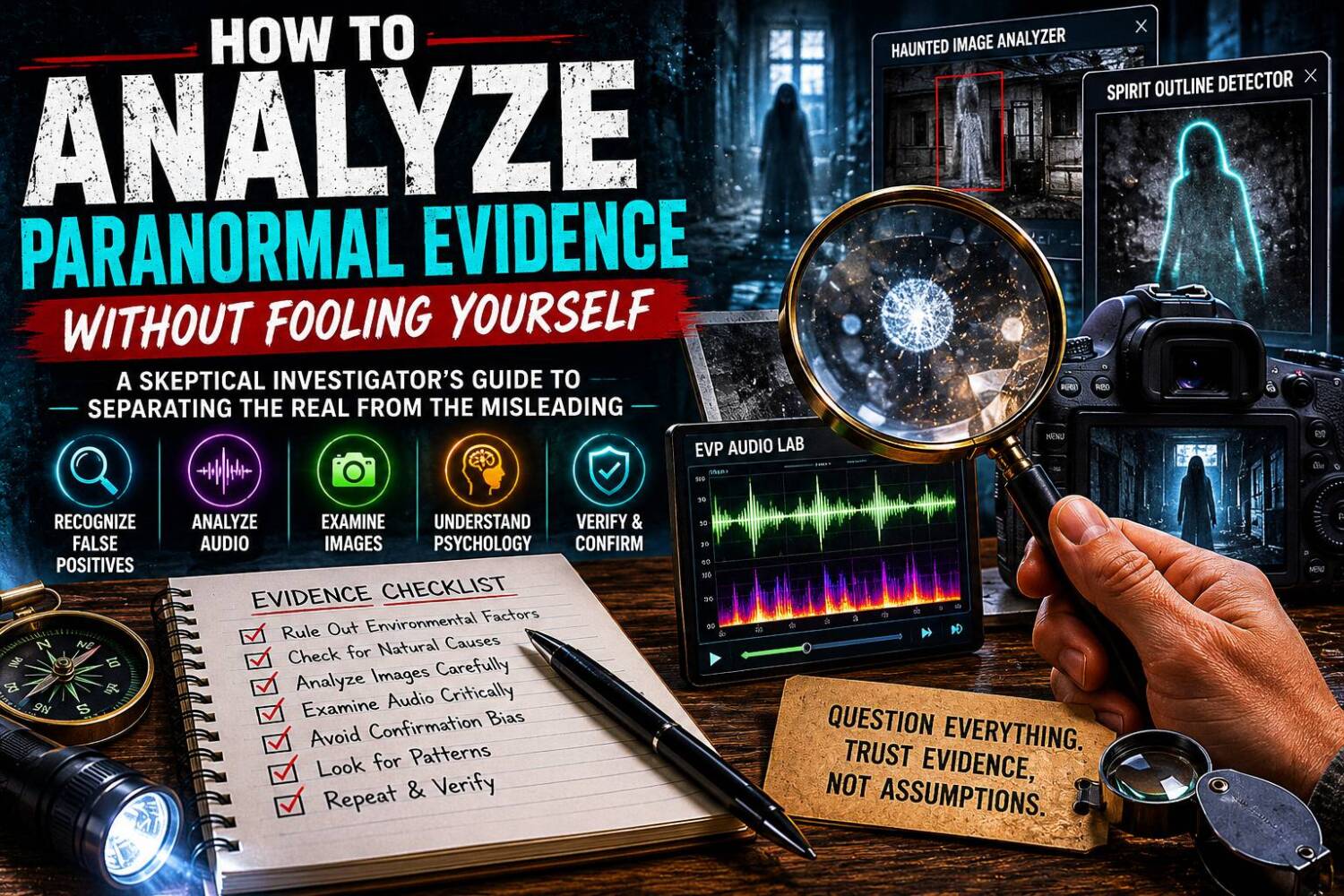
How to distinguish evidence from unsupported claims
- Separate the event from the explanation. A recorded light or unusual object may be real as an observation while its cause remains uncertain. “Unidentified” does not mean extraterrestrial, and it does not mean holographic.
- Ask what is actually documented. Look for original records, dates, witnesses, collection methods, and a clear chain of custody. A post, edited video, or repeated assertion is not equivalent to an independently verifiable document.
- Test alternative explanations. Aircraft, satellites, atmospheric effects, reflections, clouds, camera artifacts, and perspective can produce extraordinary-looking images. An extraordinary interpretation should explain why ordinary possibilities fail.
- Do not treat censorship claims as confirmation. The removal of a social-media account or the poor visibility of search results may have many explanations. It does not demonstrate that the underlying allegation is true.
- Track predictions precisely. If a theory repeatedly predicts an imminent event and then shifts the date or changes the mechanism, that is evidence of an adaptable narrative, not evidence that the prediction succeeded.
- Distinguish testimony from corroboration. A witness may be sincere and still be mistaken. Multiple independent sources, physical evidence, and reproducible analysis are stronger than an account that exists only through commentary.
- Watch for unfalsifiable claims. If every outcome, including no event, a delayed event, or a different event, is treated as proof, the claim cannot be tested in a meaningful way.
Why skepticism should apply in both directions
Rejecting Project Blue Beam does not require dismissing every UAP report. It is possible to acknowledge that some sightings remain unresolved while also concluding that there is no documented evidence of a coordinated holographic invasion plan.
The same standard should apply to official and unofficial accounts. Governments can make mistakes, release incomplete information, or pursue their own agendas. Online communities can also magnify speculation, mistake coincidence for coordination, and treat technical possibilities as proof that an operation exists.
Project Blue Beam remains influential because it converts uncertainty into a dramatic story with a ready-made explanation. The more reliable approach is narrower: identify what happened, establish what is documented, compare competing explanations, and preserve the distinction between an unanswered question and an unsupported conclusion.