

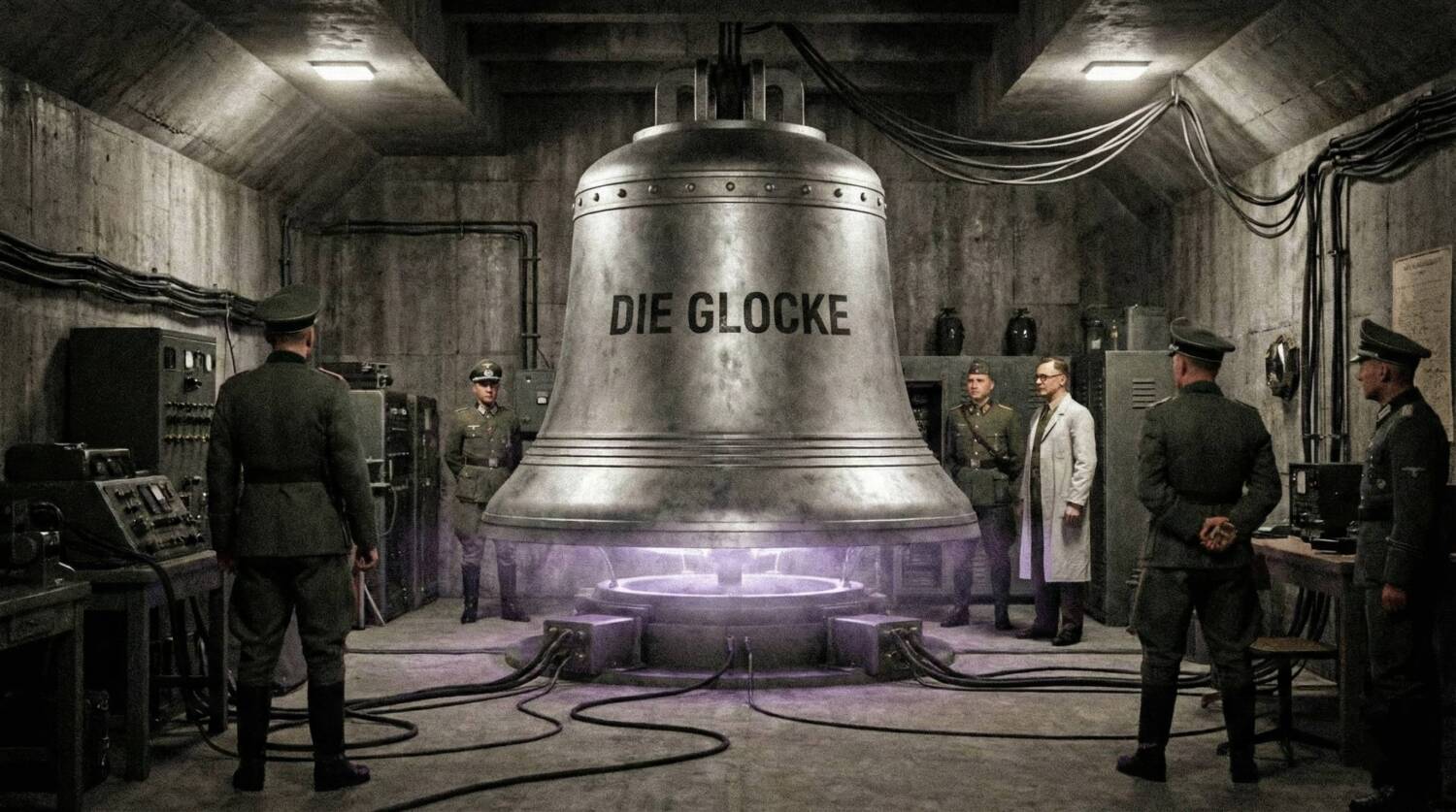

Among the many enigmas of the Second World War, few stories have captivated researchers quite like that of Die Glocke—the Bell. Described as a heavy, metallic device capable of producing strange energy fields and dangerous radiation, it has become the centerpiece of speculation about Nazi Germany’s alleged pursuit of exotic technologies. While mainstream historians consider it little more than a myth, a web of circumstantial evidence suggests the possibility that Die Glocke was not lost at all, but rather captured and quietly absorbed into Allied research at the war’s end.
Wartime Origins: The Kammler Connection
Accounts of Die Glocke originate from reports tied to SS General Hans Kammler, a man who oversaw several of the Third Reich’s most secret programs, including the V-2 rocket and underground weapons complexes. The alleged testing site for the Bell, the Der Riese facility in Lower Silesia, still exists today—a network of tunnels and concrete structures built deep in the Owl Mountains. Researchers such as Igor Witkowski have claimed that Polish archives once contained testimony describing the device as a bell-shaped machine that generated intense radiation and gravitational effects during experiments. Though no primary documentation has been verified, the overlapping accounts of Kammler’s work and his unexplained disappearance in 1945 have fueled enduring suspicion.
Operation Alsos and the Race for German Secrets
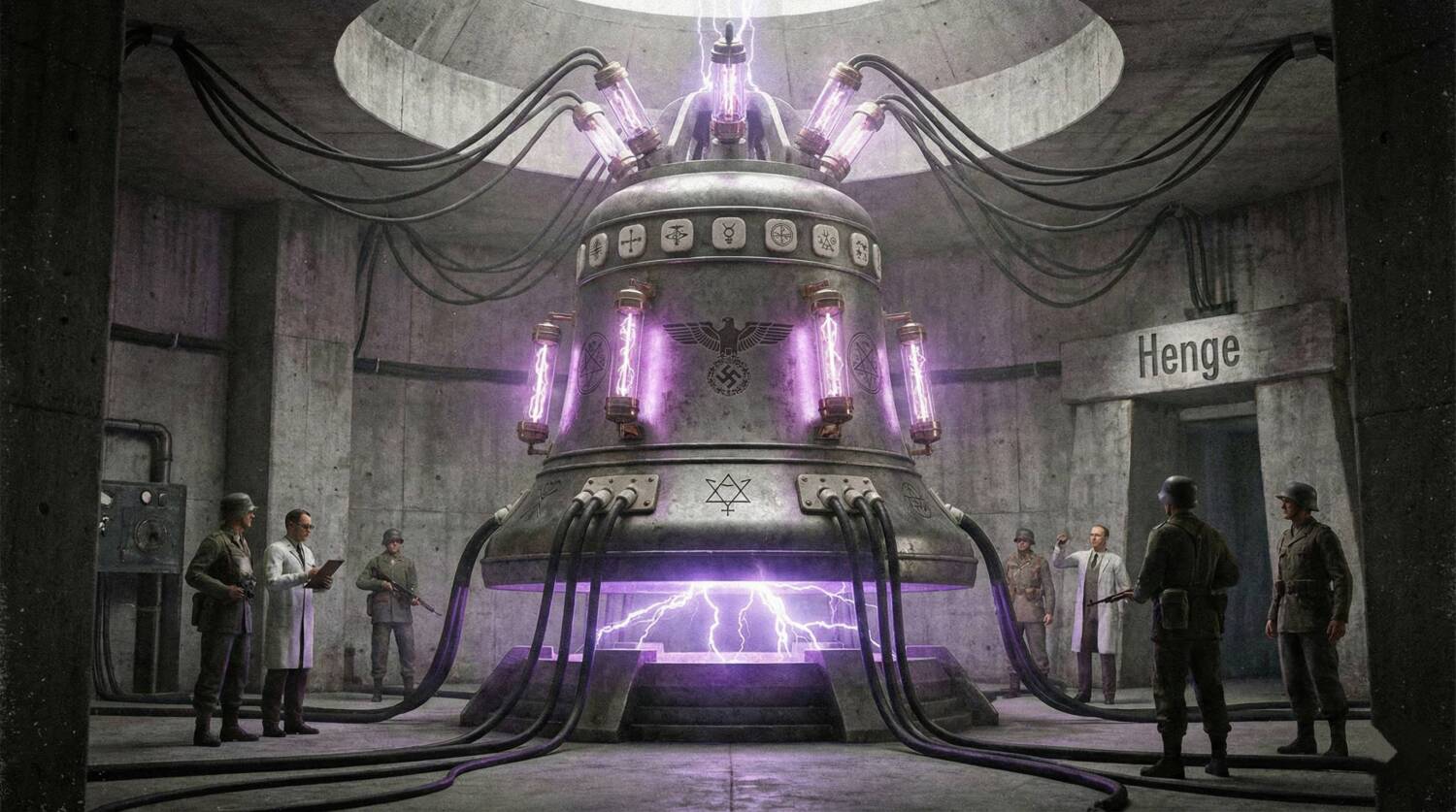
When the Allied forces advanced into Germany, they launched a series of missions to seize scientific knowledge before it could fall into Soviet hands. The Alsos Mission, led by U.S. and British intelligence officers, focused on nuclear and advanced propulsion research. Meanwhile, Operation Paperclip transferred hundreds of scientists—including Wernher von Braun and other rocket engineers—to the United States. If Die Glocke represented an experimental energy or propulsion system, it would have fit perfectly within the objectives of these operations. Yet, no official record lists such a device. Some researchers propose that this absence is precisely what points to its recovery: that the Bell was classified so deeply it never appeared in standard archives.
Kammler’s Disappearance and the Shadow Transfer Theory
Hans Kammler’s fate remains one of the most persistent mysteries of the war’s final days. Conflicting reports claim he committed suicide, fled to South America, or was secretly taken into American custody. The last theory is particularly compelling in light of the U.S. military’s postwar appetite for advanced German technology. If Kammler possessed knowledge of Die Glocke or other exotic research, bringing him into American hands would have been a major intelligence victory—and a secret too valuable to publicize.
Traces in Postwar Black Projects
By the early 1950s, classified U.S. Air Force programs began exploring electrogravitics and field propulsion—concepts eerily similar to those attributed to Die Glocke. Engineers like T. Townsend Brown reported experiments involving high-voltage fields that appeared to produce lift. At the same time, covert facilities such as Wright-Patterson Air Force Base and the newly established Area 51 became hubs for advanced aerospace testing. Some conspiracy researchers see these programs as the natural continuation of knowledge captured from Germany’s black laboratories. While mainstream historians attribute such work to independent American innovation, the timing and secrecy surrounding these efforts continue to raise eyebrows.
Buried Evidence and the Culture of Secrecy
If Die Glocke was recovered, its total disappearance from the historical record might reflect not absence, but deliberate suppression. During the early Cold War, scientific breakthroughs with potential military applications were routinely classified at extreme levels. Any device linked to Nazi experimentation—especially one rumored to generate antigravity or high-energy effects—would have been politically and ethically radioactive. A quiet integration into ongoing research programs would have been far simpler than public disclosure.
A Plausible Legacy?
Speculation surrounding Die Glocke’s capture persists because it fits into a broader pattern of wartime secrecy and technological continuity. We know that the Allies seized revolutionary jet, rocket, and nuclear technologies from Germany, many of which directly shaped modern aerospace and energy research. If the Bell existed, its absorption into hidden U.S. projects would not be an anomaly, but the logical outcome of that same process. The absence of proof may not settle the question—it may simply confirm how effectively the truth was buried.
Whether myth, misinterpretation, or the seed of a classified reality, Die Glocke remains one of history’s most haunting enigmas. Its shadow lingers in the margins of postwar science, where speculation about antigravity drives, field propulsion, and secret aerospace breakthroughs continues to blur the line between legend and hidden history.