

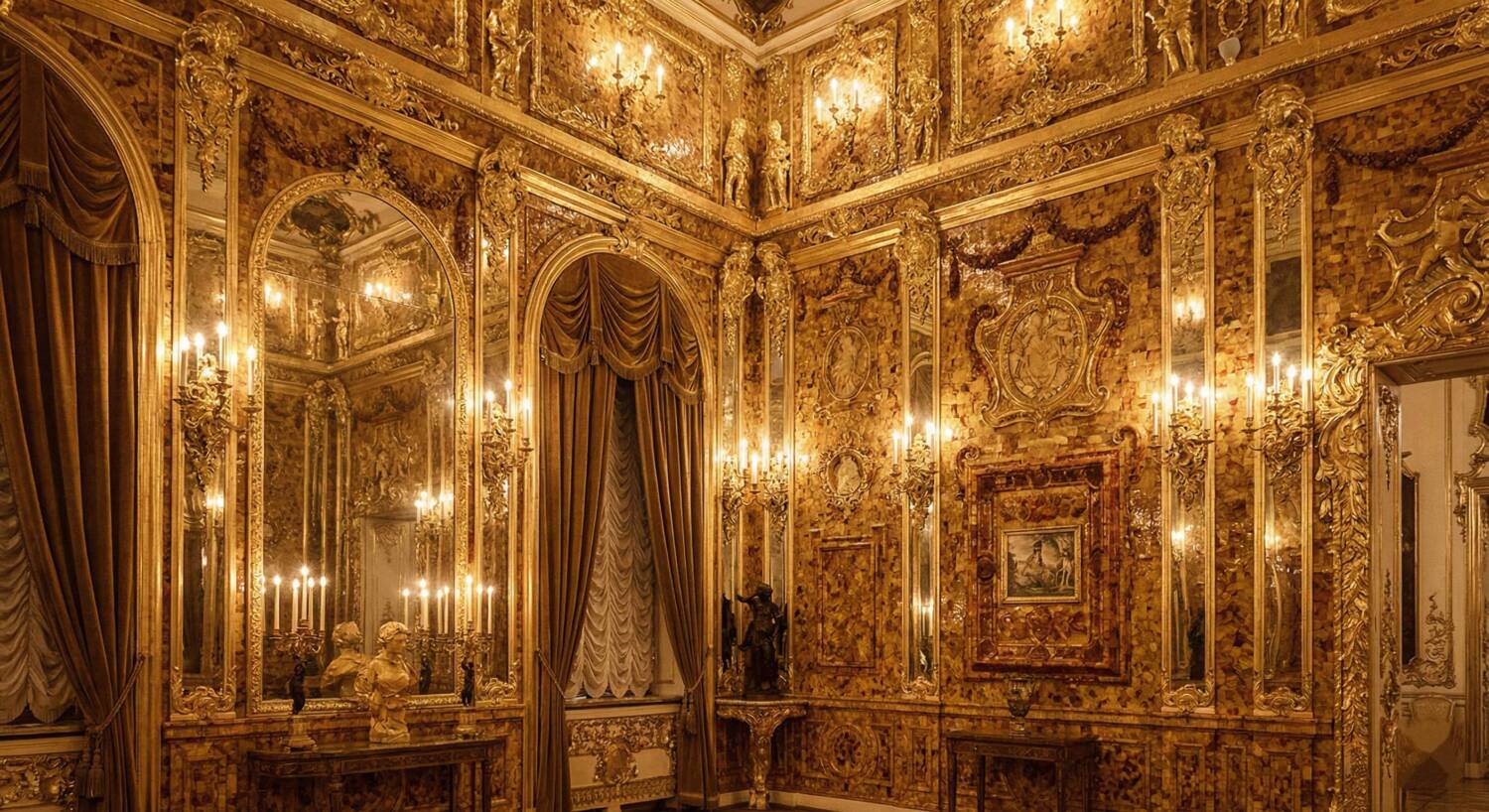
The Amber Room, often called the Eighth Wonder of the World, vanished without a trace during the final months of World War II. It was last documented in Königsberg Castle, meticulously packed into crates by the Nazis. When the city fell in 1945, the room simply disappeared, leaving behind one of the greatest art mysteries of all time. While many believe it was destroyed in Allied bombings, a far more fascinating theory suggests that the Amber Room survived and still exists—secretly installed in a private mansion, owned by someone who either doesn’t know or doesn’t dare to reveal what they have.
It’s entirely plausible that the Amber Room escaped destruction. Many priceless works of art were smuggled out of Germany and hidden in estates, castles, or neutral territories as the war turned against the Nazis. Wealthy industrialists, party officials, and art dealers often used their resources to safeguard looted treasures for personal gain. The Amber Room, made of gold leaf, mirrors, and six tons of carved amber, could have been quietly dismantled, transported, and reassembled in a place where only a handful of trusted individuals knew its true identity.
Imagine an estate in the Bavarian countryside, an Austrian manor, or even a secluded villa in Switzerland. Deep within its halls lies a room glowing with golden light, its amber walls glistening under chandelier bulbs. Generations later, the estate may have changed hands several times, inherited by distant relatives, sold to foreign investors, or bought by elites who appreciate the room’s beauty but remain ignorant of its origin. To them, it’s just an unusual historical feature—something exotic from a forgotten era. They may never suspect they’re standing inside one of the world’s most sought-after lost masterpieces.
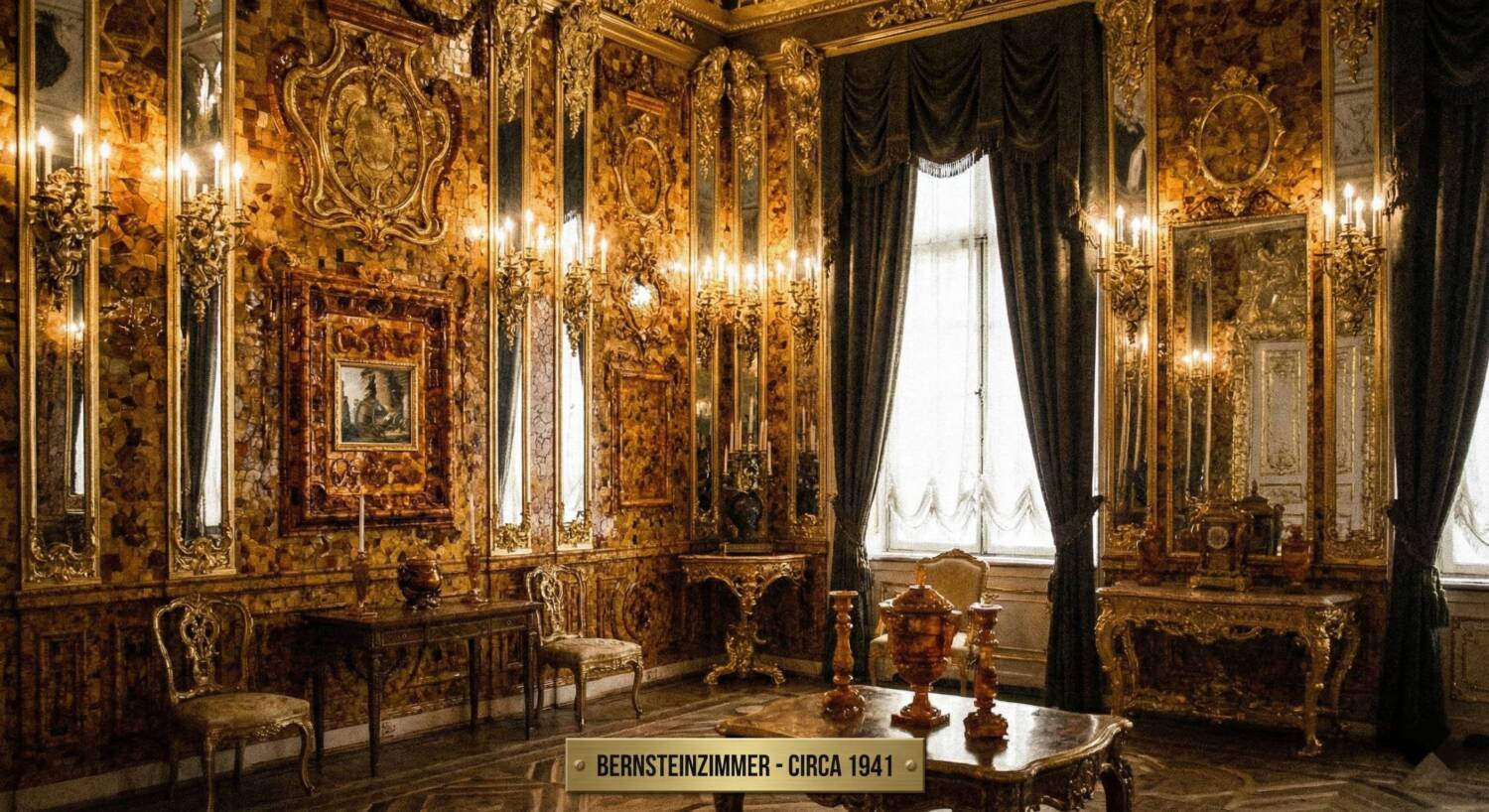
Then again, perhaps the current owner knows exactly what they possess. The fear of exposure would be immense. The Russian government has long declared that the Amber Room rightfully belongs to Russia, and any proven discovery would lead to international legal battles, confiscation, and media chaos. For someone of wealth and influence, it might be far easier to remain silent—to let the room remain a private treasure admired only by a select few. Visitors might enter the glowing chamber, remark on its strange beauty, and move on, never realizing they’ve stepped into a piece of stolen legend.
Considering the number of looted artworks that have resurfaced decades later in private collections—the Gustav Klimt paintings, the missing Van Goghs, the Monuments Men discoveries—the possibility of the Amber Room’s survival is not far-fetched. History has shown that wealth and secrecy can hide the unimaginable. If the Amber Room does still exist, it may not lie buried beneath rubble or sealed in a mine, but instead gleam silently within the walls of privilege, guarded by the passage of time and the fear of losing what should never have been taken.
 The Amber Room