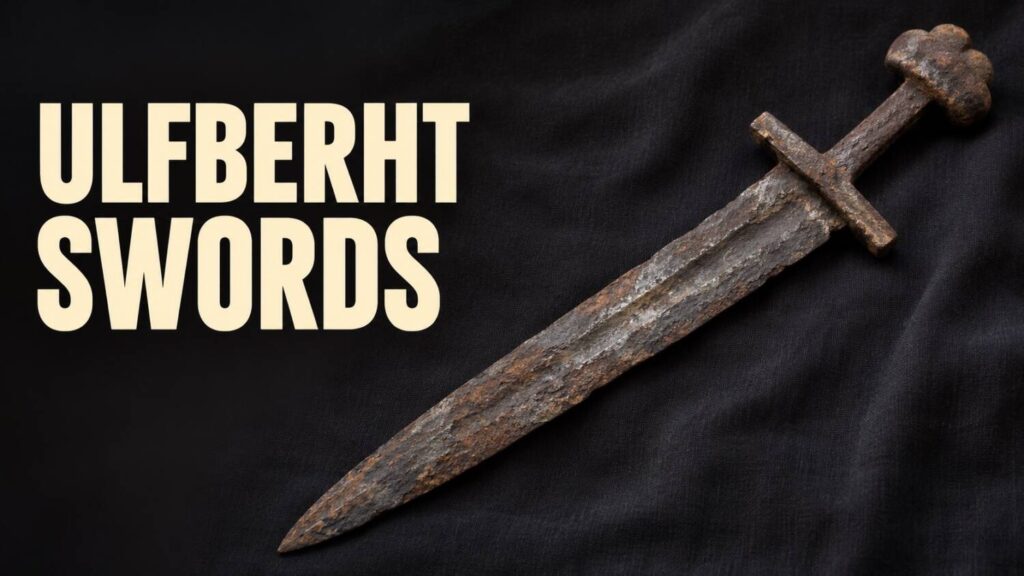
The blade of a sword dredged from the Elbe carries the same name on both sides. The Museum of Hamburg History’s record reads it as +VLFBERH+T and dates the fragment to the late tenth or early eleventh century. At the Metropolitan Museum of Art, another blade bears a version with the last cross after the T. The difference is small enough to overlook and large enough to change how some researchers have grouped the swords.
A name found on different blades
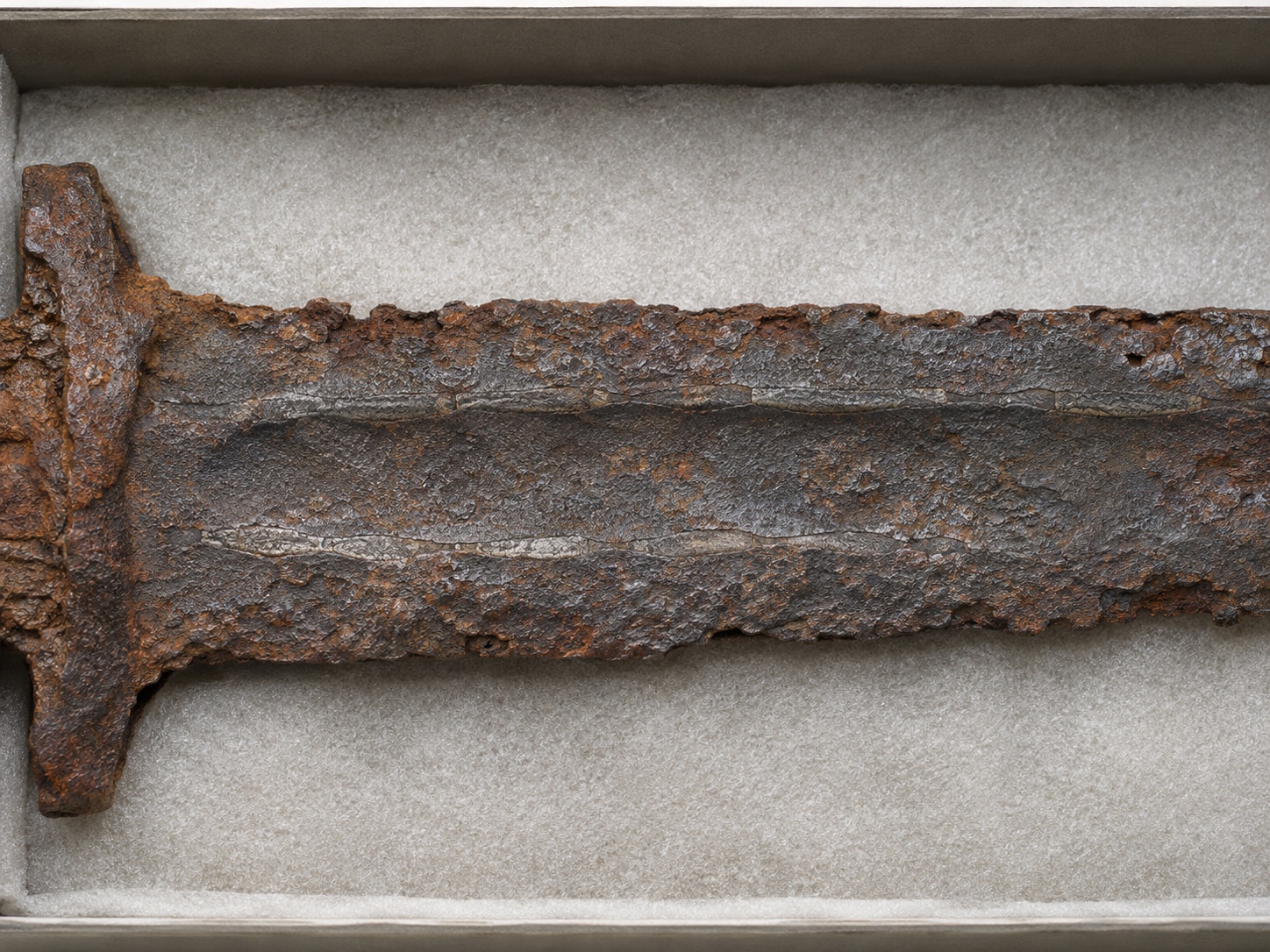
The letters were inlaid into the blade. A reading can be incomplete where corrosion has eaten away part of the surface. An early medieval sword could also change hands or have its hilt replaced. The inscription, the style of the hilt and the place the sword was found each offer evidence about a different part of its history.
The Met links the name to a swordsmith thought to have worked in the Middle Rhine region and notes that other craftsmen emulated the signature. The blade in Hamburg was recovered from a river, away from any identified workshop. The findspot tells us where the object ended up. Working back to where it was made takes other evidence.
What the microscope found
In a 2009 study, archaeometallurgist Alan Williams examined 44 Ulfberht and other Viking Age swords. His samples included high-carbon steel with few slag inclusions, as well as blades of lower-carbon material and different construction. In his sample, high-carbon metal appeared especially in one group with the final cross before the T. He proposed crucible steel for some blades. That process produces steel by heating material in a vessel under controlled conditions.
A microscope can reveal slag, changes in carbon content and how the iron and steel meet in the piece examined. A sample from the edge may tell a different story from one taken closer to the middle. In their study of Viking Age swords from Telemark, chemist Eva Elisabeth Astrup and archaeologist Irmelin Martens considered the Ulfberht comparisons while examining how particular blades were constructed. The evidence has to be read at the scale of the sample.
How far the evidence takes us
A blade with high-carbon metal and little slag gives researchers clues about how it was made. It takes independent evidence to place the production of that steel in a particular region or to tie the finished blade to a named workshop. An inscription repeated on different blades also leaves room for different makers and sources of metal.
How to Read an Ancient Artefact looks at how material, date and custody can be checked against one another. On the Elbe sword, the letters survive on both faces. The route by which its metal reached the smith is still open.