Stories of gods descending from the sky, angels appearing to people, or mysterious beings crossing between worlds can sound strikingly familiar to modern readers steeped in science fiction and reports of unidentified aerial phenomena. Online discussions often turn that resemblance into a question: could ancient religious beings have been extraterrestrials described in the language available at the time?
The idea is compelling partly because it connects subjects that can feel like competing explanations of the unknown. In one discussion, commenters compared Irish traditions about the Fomorians and the Tuatha Dé with modern claims about abductions, hidden bases, and human-alien hybrids. Others proposed that angels, spirits, or beings encountered in altered states might be extraterrestrial or multidimensional. These are examples of contemporary interpretation, not evidence that the traditions themselves describe visitors from another planet.
There is a basic difference between noticing a resemblance and establishing a historical connection. A story about a being arriving from the sky can invite an extraterrestrial reading, but that reading depends on assumptions supplied by the modern audience. The same image or narrative might carry religious, symbolic, political, or other meanings within the culture that produced it. Without evidence that identifies a being as an extraterrestrial, similarity alone cannot settle what the story meant.
Ancient stories and modern frameworks
People interpret older traditions through the ideas available in their own time. A miracle may be understood as divine action, an encounter with a spirit, or, in a modern speculative account, as advanced technology. The Reddit post “Angels are ALIENS” captures this shift by suggesting that stories once considered impossible may look different if extraterrestrial life is possible. That is a way of re-reading religious narratives; it is not independent confirmation of the re-reading.
The same distinction matters when discussions connect religion with the afterlife. Some commenters believe extraterrestrials would understand death, or describe aliens as spiritual or multidimensional beings. Others speculate about links between religious belief and government secrecy. These comments show how the alien question can become a vehicle for thinking about consciousness, death, and faith. They do not establish what happens after death or what extraterrestrial beings know.
Even accounts associated with named spiritual figures need careful treatment. A discussion of Edgar Cayce’s readings describes a proposed connection between the figure Ra Ta, reincarnation, and extraterrestrial ideas. Participants also disagree about how to interpret those readings and about claims made in their retellings. Such material can be examined as part of modern spiritual belief and interpretation, but it should not be presented as verified evidence of ancient contact.
What the “aircraft” carvings claim can, and cannot, show
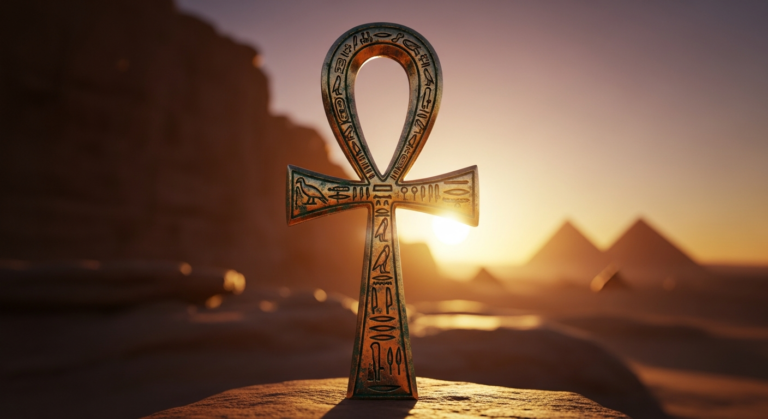
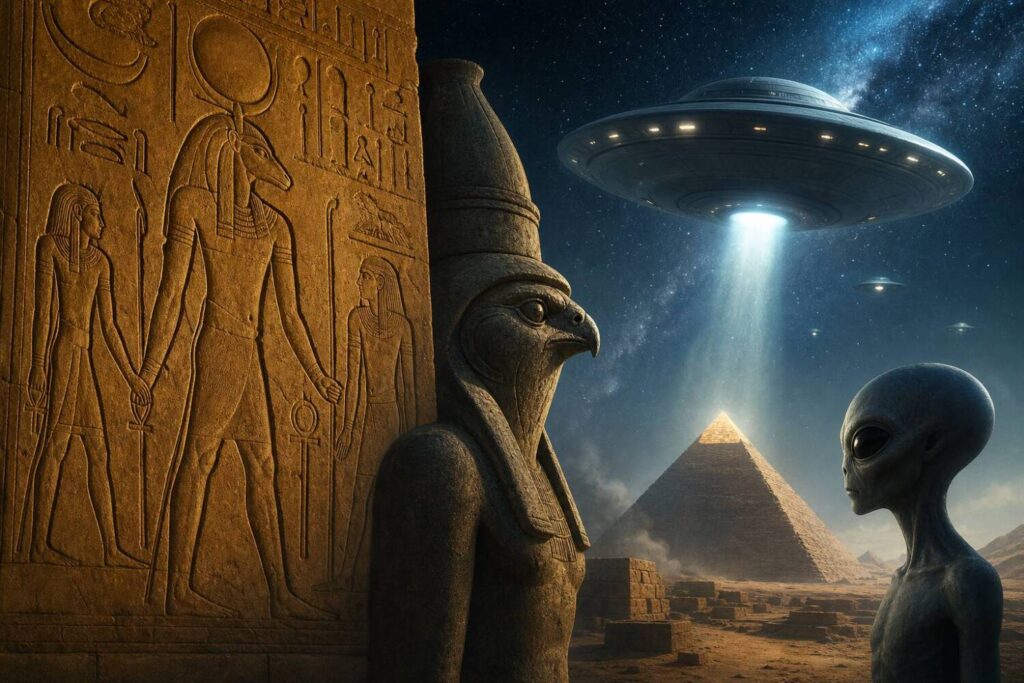
Viral claims that Egyptian carvings depict aircraft rely heavily on visual resemblance: an ancient shape is compared with a modern machine, and the resemblance is treated as proof. But a suggestive outline is not enough to establish that an image represents a plane, helicopter, or other vehicle. A responsible interpretation would need to account for the image’s historical and cultural context and show why the proposed reading fits better than alternatives.
The source material offers no evidence confirming that the alleged aircraft images depict extraterrestrial technology. The careful conclusion is therefore limited: the claim is speculation, not a demonstrated historical fact. That does not require dismissing religious traditions or declaring that life beyond Earth is impossible. It means keeping separate questions separate. Whether extraterrestrial life exists is not the same as whether a particular ancient carving depicts it.
How to weigh the evidence
- Separate observation from interpretation. “This image resembles a machine to me” describes a reaction; it does not identify what the image meant to its makers.
- Distinguish testimony from verification. Personal spiritual experiences and modern interpretations can matter to the people sharing them, but they do not by themselves establish an ancient event.
- Allow traditions their own context. Religious beings need not be translated into extraterrestrials to be meaningful or worthy of study.
- Keep uncertainty explicit. Speculation can be discussed openly, as long as it is not presented as settled history.
Ancient religion and extraterrestrial speculation overlap because both address encounters with the unfamiliar and questions about humanity’s place in a larger reality. That overlap makes comparison understandable, and sometimes imaginative. It does not erase the difference between a modern hypothesis and historical evidence. The most useful approach is to explore the parallels without turning resemblance into proof.