

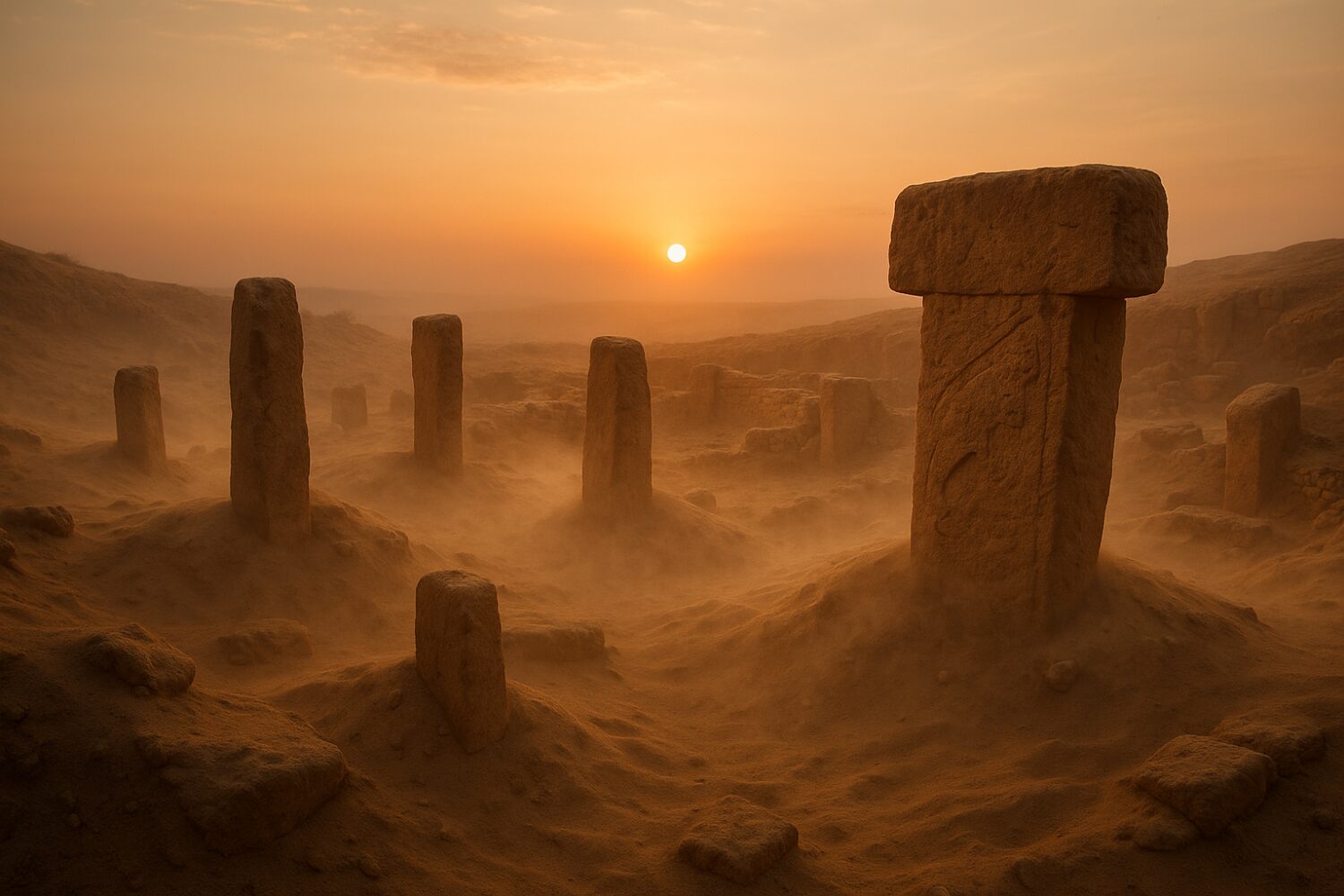
Hidden beneath a mound of earth for nearly twelve thousand years, Göbekli Tepe in southeastern Turkey is one of archaeology’s most confounding discoveries. The site’s vast megalithic enclosures, crafted by hunter-gatherers long before the first known cities, were not destroyed by time or war. They were deliberately buried by the very people who built them. This act of concealment preserved the monuments in near-perfect condition, but it also left behind a haunting question: why would anyone intentionally hide such an extraordinary creation?
Excavations led by archaeologist Klaus Schmidt in the 1990s revealed that Göbekli Tepe was not a settlement but a ceremonial site. The towering T-shaped pillars, carved with intricate depictions of animals and symbols, suggest it served as a gathering place for ritual or spiritual purposes. Yet at some point around 8000 BCE, the builders filled the enclosures with earth and debris, sealing their sacred spaces under tons of stone and dust. Archaeologists have long debated whether this was an act of reverence, fear, or necessity.
One theory suggests the burial was a deliberate closure, a kind of ritual farewell. Ancient societies often practiced the symbolic ‘killing’ of sacred objects or spaces once their purpose had been fulfilled. Göbekli Tepe may have been covered as part of a grand ceremonial act, marking the end of an era or the transition to a new belief system. In this view, the burial was not destruction, but devotion.
Another possibility is that the region’s changing climate forced its abandonment. Around the time Göbekli Tepe was sealed, the last Ice Age was ending, and the environment of the Fertile Crescent was shifting dramatically. As people began to experiment with farming and permanent settlements, the nomadic culture that had created Göbekli Tepe may have dissolved. The act of burying the site could have been a way to preserve it, an offering to the past as humanity moved toward a new way of life.
More speculative ideas suggest the builders hid something, knowledge, relics, or even dangers, beneath the stones. The precision and effort involved in the burial hint that this was not a hurried act but a carefully orchestrated one. Some believe that Göbekli Tepe’s enclosures may have held esoteric symbols or practices later deemed forbidden. Others see the burial as protection from outside threats or perhaps from forces they feared within the site itself.
Whatever the reason, the intentional concealment of Göbekli Tepe turned it into a time capsule of the prehistoric world. Its rediscovery has rewritten the timeline of human civilization and challenged everything we thought we knew about our ancestors. By hiding it, those ancient builders ensured its survival, and in doing so, they left us with one of the greatest archaeological enigmas ever unearthed.
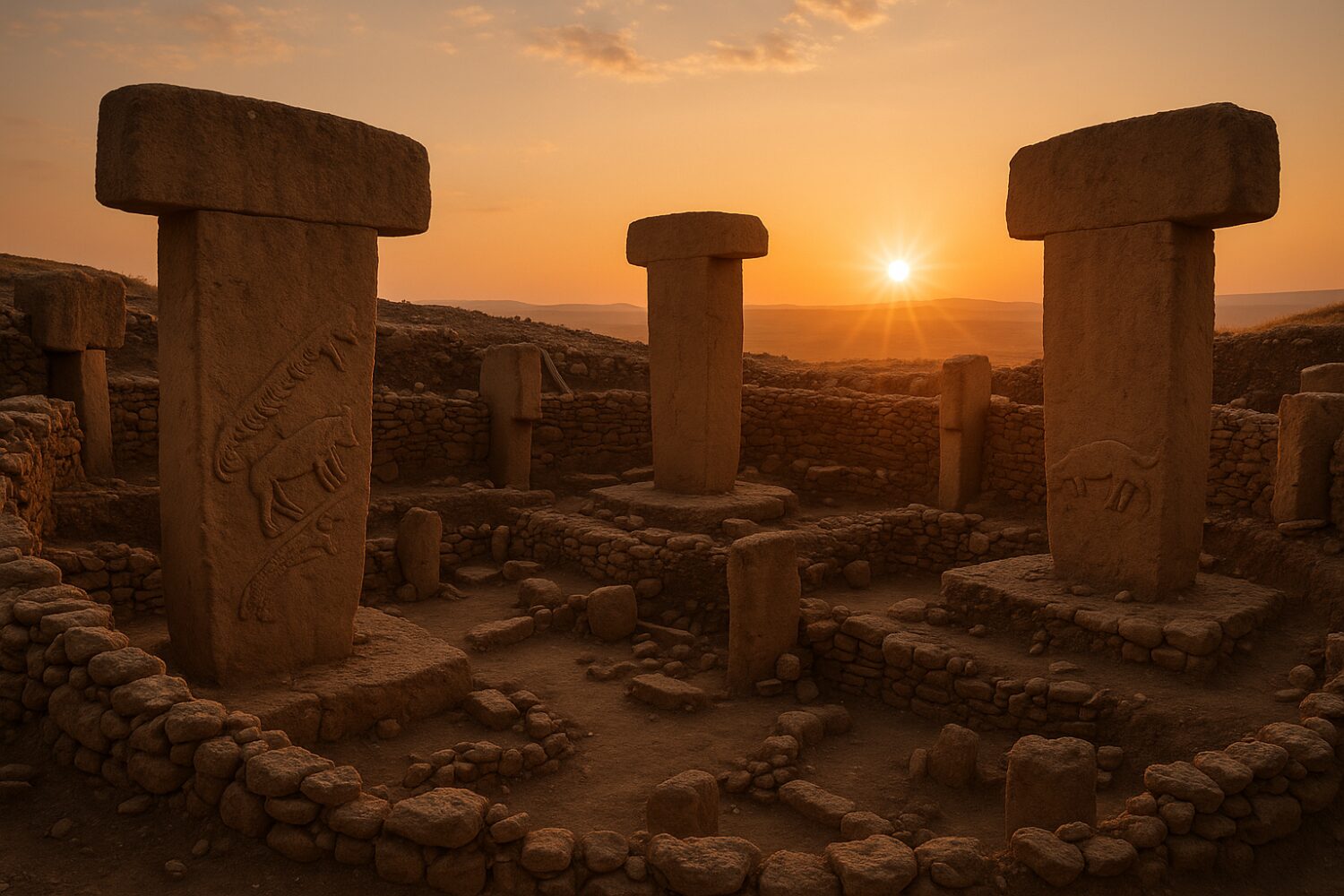 Göbekli Tepe