

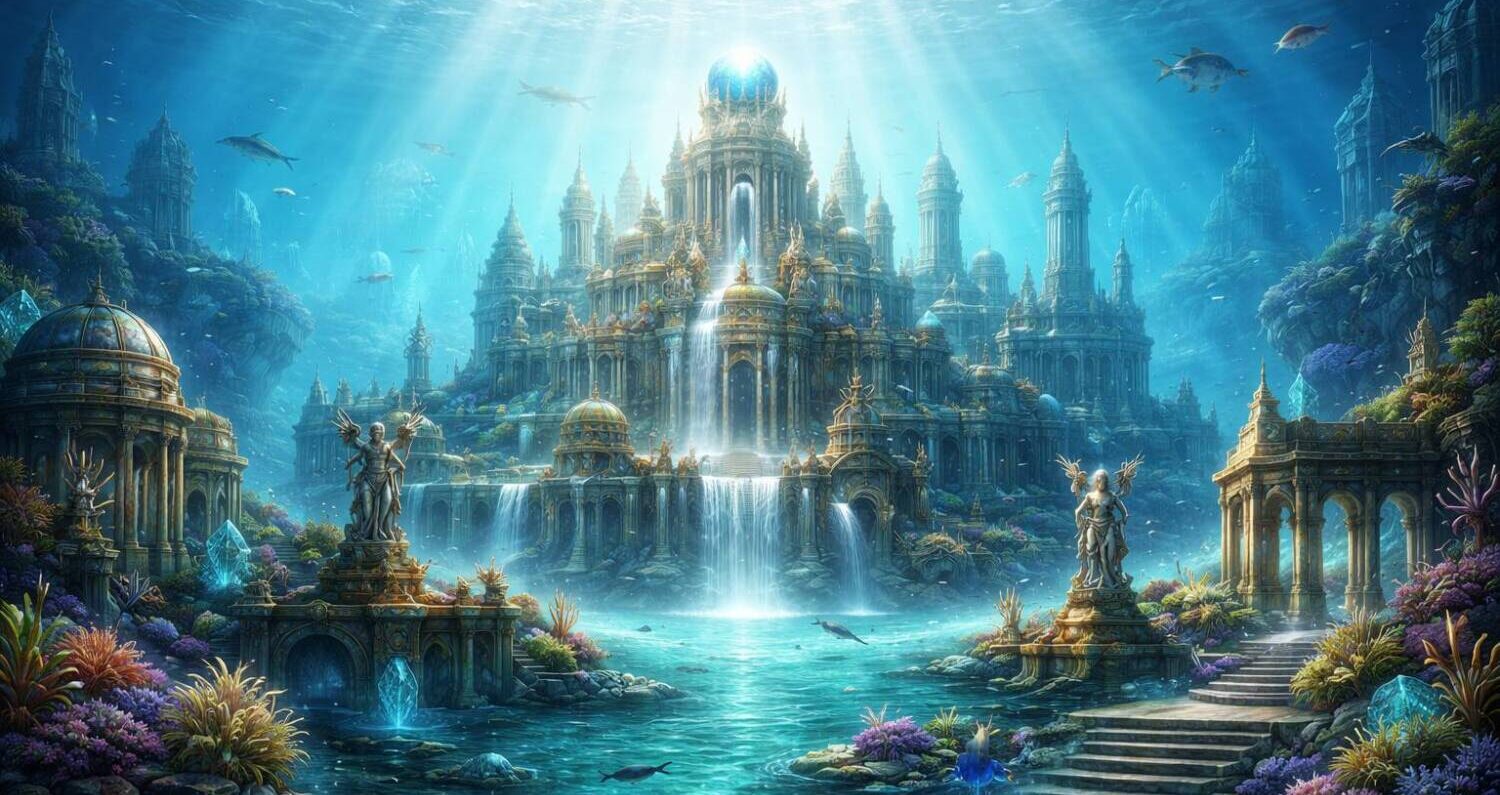
The legend of Atlantis continues to puzzle explorers and historians, leaving one haunting question — if such a great civilization existed, why can’t we find it? Despite centuries of searching, no evidence of the fabled city has ever been discovered. Yet the mystery refuses to die, inspiring countless theories that range from scientific to supernatural.
According to ancient Greek philosopher Plato, Atlantis was a massive island empire that existed over 9,000 years before his time. He described it as a paradise filled with wealth, technology, and powerful fleets, until it fell out of favor with the gods and was swallowed by the sea in a single catastrophic day. If his story was based on real events, then the traces of Atlantis must be somewhere beneath the ocean — but where?
1. The Ocean is Vast and Largely Unexplored
One of the most practical reasons we can’t find Atlantis is the sheer scale of the oceans. More than 80% of the ocean floor remains uncharted in detail. If an island-sized civilization sank thousands of years ago, it could now lie miles below the surface, buried under layers of sediment or volcanic rock. With crushing pressure, darkness, and shifting tectonic plates, even stone monuments could crumble or become completely unrecognizable.
2. Plato’s Story Might Have Been Symbolic
Many historians believe that Plato invented Atlantis as a cautionary tale about pride and corruption. In this view, Atlantis was never a physical place, but a moral lesson — a warning that even the greatest civilizations can fall when greed takes over. If that’s true, then there is nothing to find, only an idea that became myth. Yet, the level of detail in Plato’s account has led others to suspect he drew inspiration from real historical events or older legends.
3. We May Be Looking in the Wrong Place
Plato said Atlantis lay “beyond the Pillars of Hercules,” often interpreted as the Strait of Gibraltar. For centuries, explorers have searched the Atlantic Ocean for signs of the lost empire. However, some researchers argue that Atlantis might actually lie closer — perhaps in the Mediterranean, off the coast of Spain, or even in the Caribbean. Others have proposed that parts of Antarctica once supported a warm, advanced civilization before shifting ice buried it completely. With so many theories, pinpointing the right location becomes nearly impossible.
4. Natural Disasters and Geological Change
Earth’s surface is in constant motion. Over thousands of years, continents drift, volcanoes erupt, and sea levels rise and fall. If Atlantis was real, any remaining structures might have been crushed, submerged, or scattered beyond recognition by these forces. Some scientists link the Atlantis myth to the eruption of the Thera volcano around 1600 BCE, which destroyed much of the Minoan civilization on Crete and Santorini — an event that eerily mirrors Plato’s description of sudden destruction.
5. The Power of Myth and the Limits of Proof
Even as technology improves, the mystery of Atlantis might never be solved. Myths have a way of blending truth and imagination, growing richer with each retelling. The absence of evidence has done little to weaken the legend — if anything, it strengthens it. The idea that a great, forgotten civilization might be waiting somewhere beneath the waves captures the imagination like few other stories can.
Perhaps Atlantis was never meant to be found. Maybe its true purpose is to remind us of how fragile human achievement can be, and how quickly even the greatest empires can vanish. Until the day when the ocean yields its deepest secrets, Atlantis will remain the ultimate riddle of history — half memory, half myth, and entirely captivating.
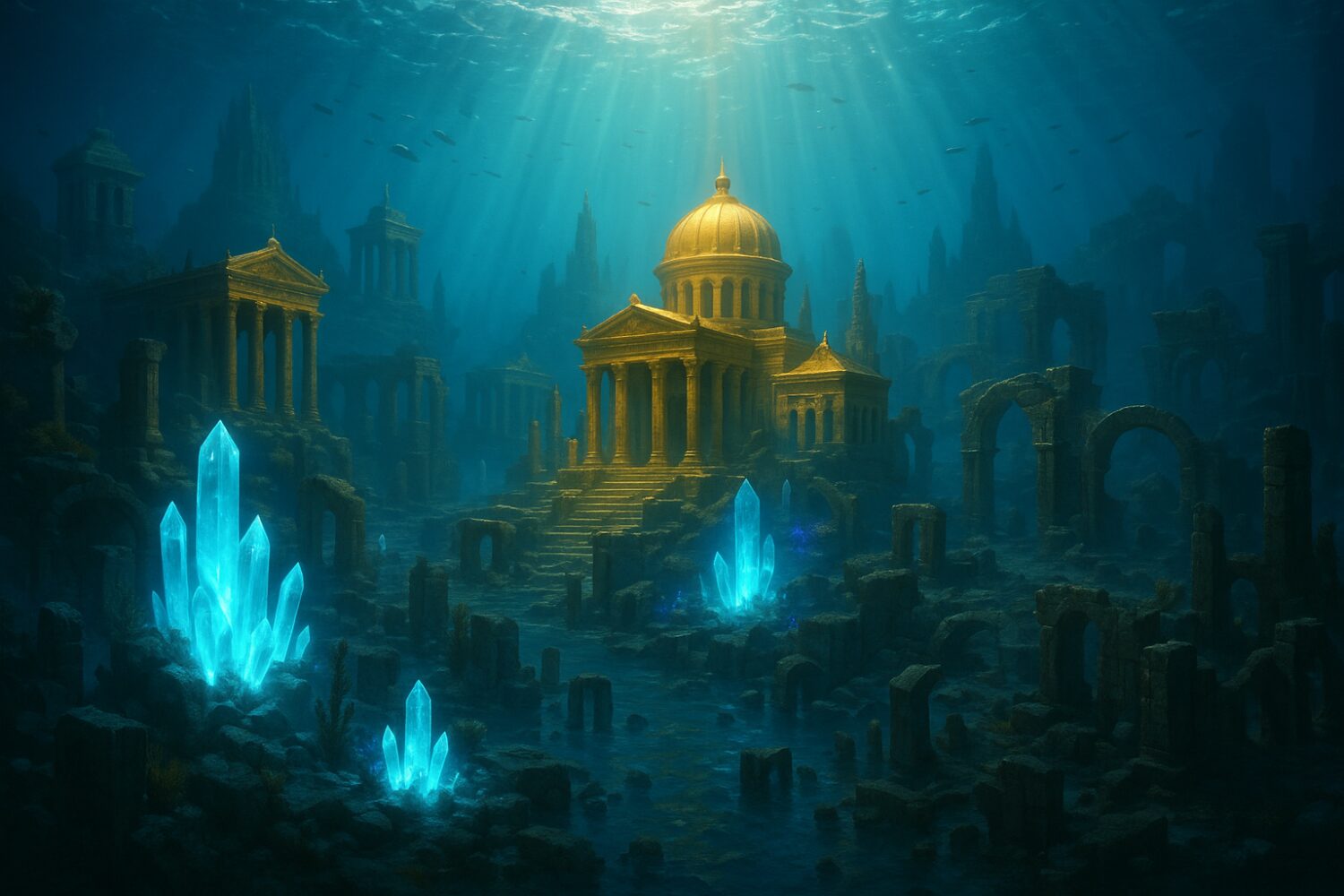 The Lost City of Atlantis