

The Indus Valley Civilization, flourishing from approximately 2600 to 1900 BCE, stands as one of humanity’s most profound and sophisticated ancient societies. Often hailed as a great cradle of development, its meticulously planned cities, Harappa, Mohenjo-Daro, and Dholavira, were architectural wonders of their time. These urban centers boasted advanced, grid-like street layouts, complex water management and drainage systems, uniform brick construction, and clear evidence of extensive trade networks that stretched across regions. This level of organization points to a highly structured and intellectually advanced culture.
Yet, for all its tangible achievements in urban planning and commerce, the civilization guards a deep, silent secret: its written language. The enigmatic Indus Valley Script, found inscribed on thousands of seals, tablets, and artifacts, remains one of archaeology’s most stubborn and captivating puzzles. Despite over a century of intense scholarly scrutiny and the application of modern computational analysis, the script continues to defy all attempts at deciphering. This enduring mystery cloaks the true voice, beliefs, and daily records of this ancient people, leaving a haunting gap in our understanding of their world.
The Enigmatic Symbols
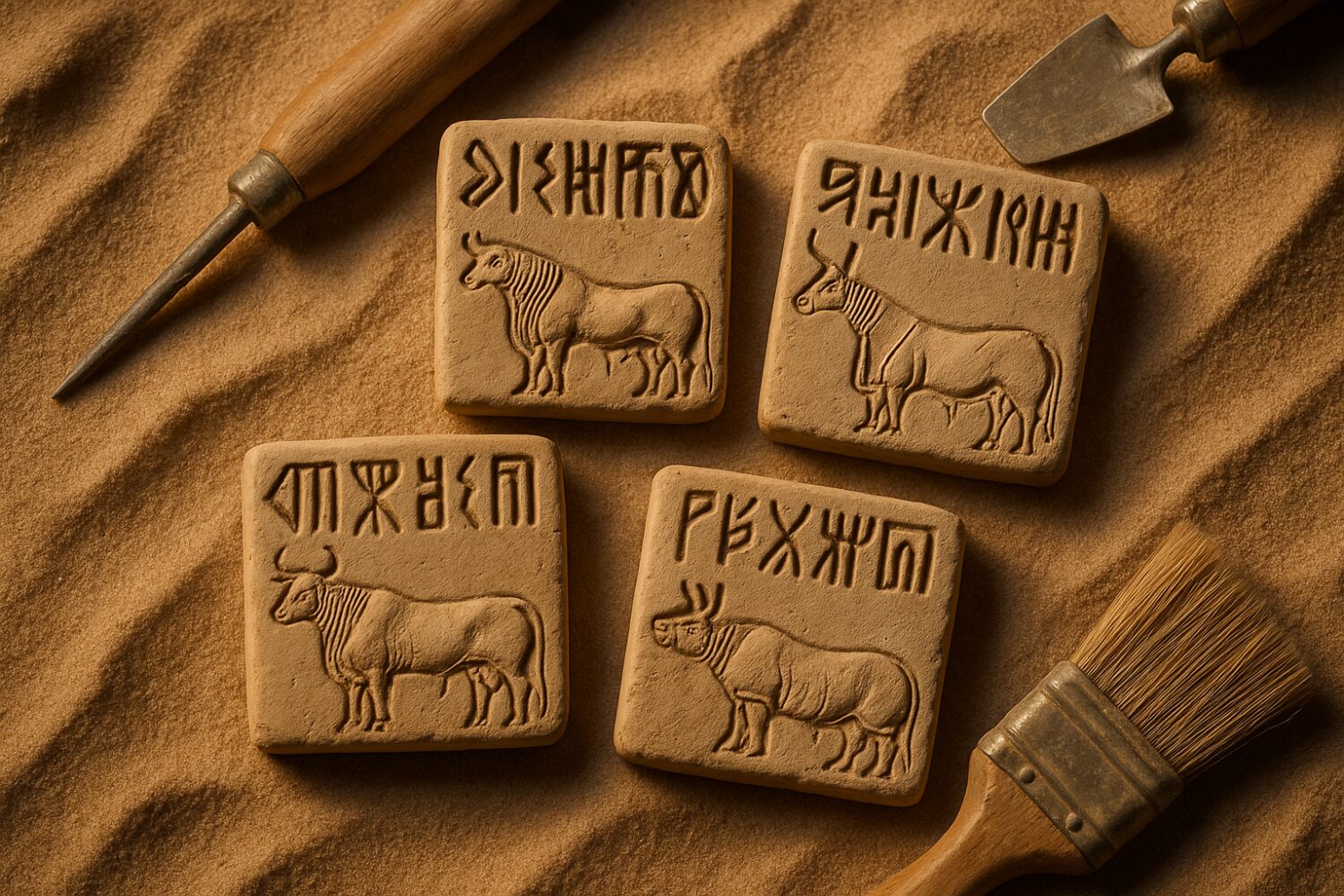
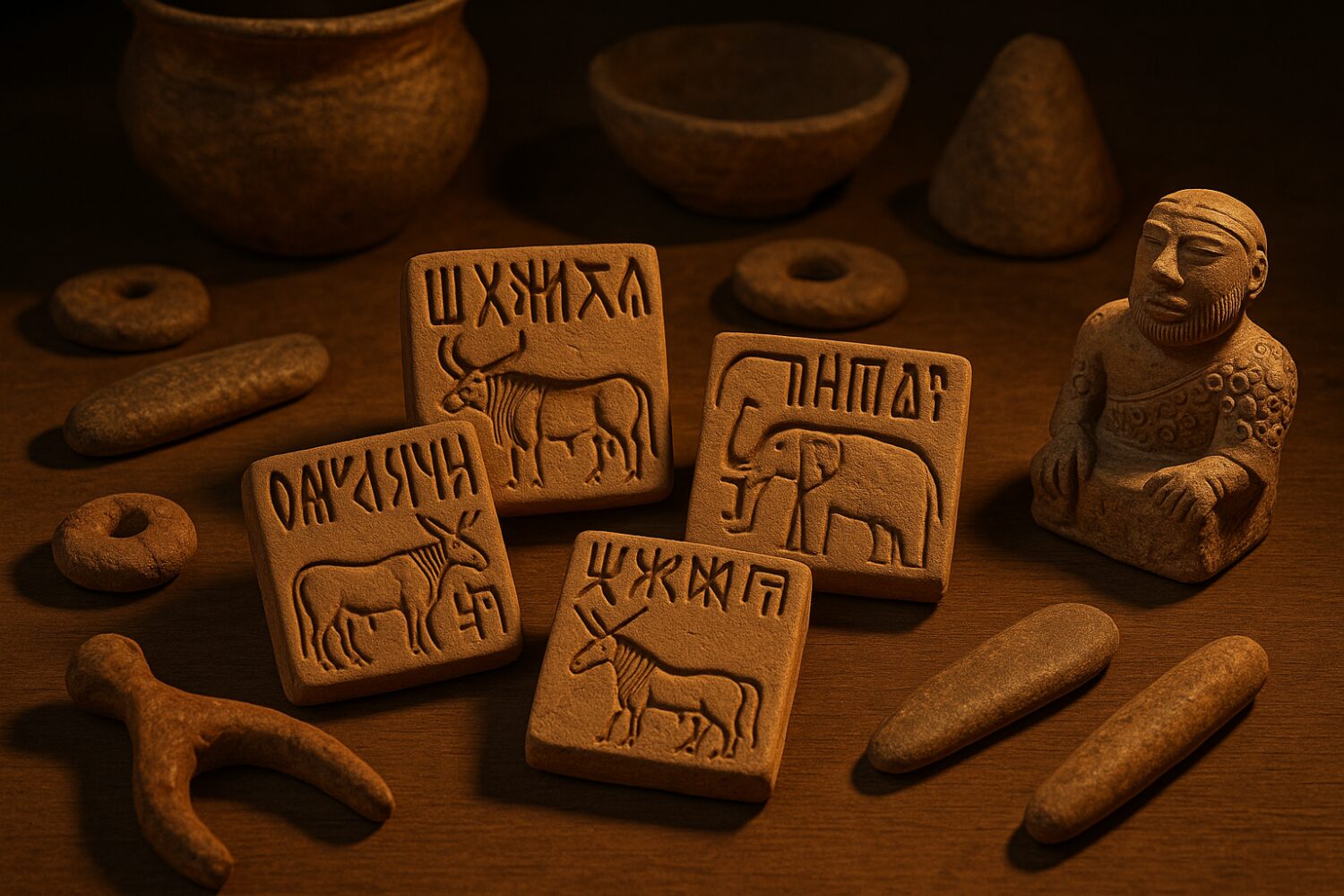
Over 4,000 artifacts have been discovered bearing short inscriptions in this mysterious script. These inscriptions appear on seals, pottery, copper tablets, and tools. Each inscription is composed of carefully arranged symbols, sometimes accompanied by animal motifs such as bulls, elephants, or unicorn-like creatures. The symbols appear standardized, suggesting a structured system of communication, yet none of the sequences are long enough to reveal grammar or syntax. Most inscriptions contain fewer than ten characters, leaving researchers with little material to analyze.
Where the Puzzle Begins
The main reason we cannot decipher the Indus Valley Script is the lack of a bilingual text. Other ancient writing systems, such as Egyptian hieroglyphs and Mesopotamian cuneiform, were unlocked because they had translations, most famously, the Rosetta Stone for Egyptian. The Indus Script has no such artifact. Without a known language to compare it against, experts can only speculate about what the symbols mean or even what language they represent.
Another challenge lies in the brevity of the inscriptions. Longer texts allow linguists to identify patterns, repetitions, and grammatical structures, but the Indus symbols appear only in short bursts. This has led some to question whether the symbols represent a full writing system at all. They might have been markers of ownership, religious symbols, or trade identifiers rather than true linguistic expressions.
Competing Theories
Over the years, researchers have proposed many possible linguistic origins for the script. Some suggest it represents an early form of Dravidian, the language family still spoken in southern India. Others believe it could be Proto-Indo-Iranian, linking it to later Sanskrit traditions. There are even theories that the script represents multiple languages or a symbolic system that does not encode speech at all.
Computational analysis and artificial intelligence have been applied in recent decades to search for repeating patterns in the symbols. While these studies show statistical similarities to linguistic scripts, they have not produced a definitive translation. The results remain inconclusive, keeping the mystery alive.
The Lost Voice of an Ancient Civilization
One haunting possibility is that we may never decipher the Indus Valley Script. If the civilization’s language has no surviving relatives, then even advanced AI might not be able to bridge the gap. The script could remain an isolated island of meaning, a code from a culture whose voice was silenced thousands of years ago. Each seal and tablet is a whisper from that forgotten world, inviting us to listen, but offering no translation.
The Indus Valley Script stands as one of archaeology’s greatest unsolved riddles. It reminds us that for all our technological and intellectual progress, some secrets of the past remain hidden. Perhaps, in the quiet lines of those ancient symbols, lies the story of a people who spoke in a language the modern world can no longer understand.
 The Indus Valley Script