

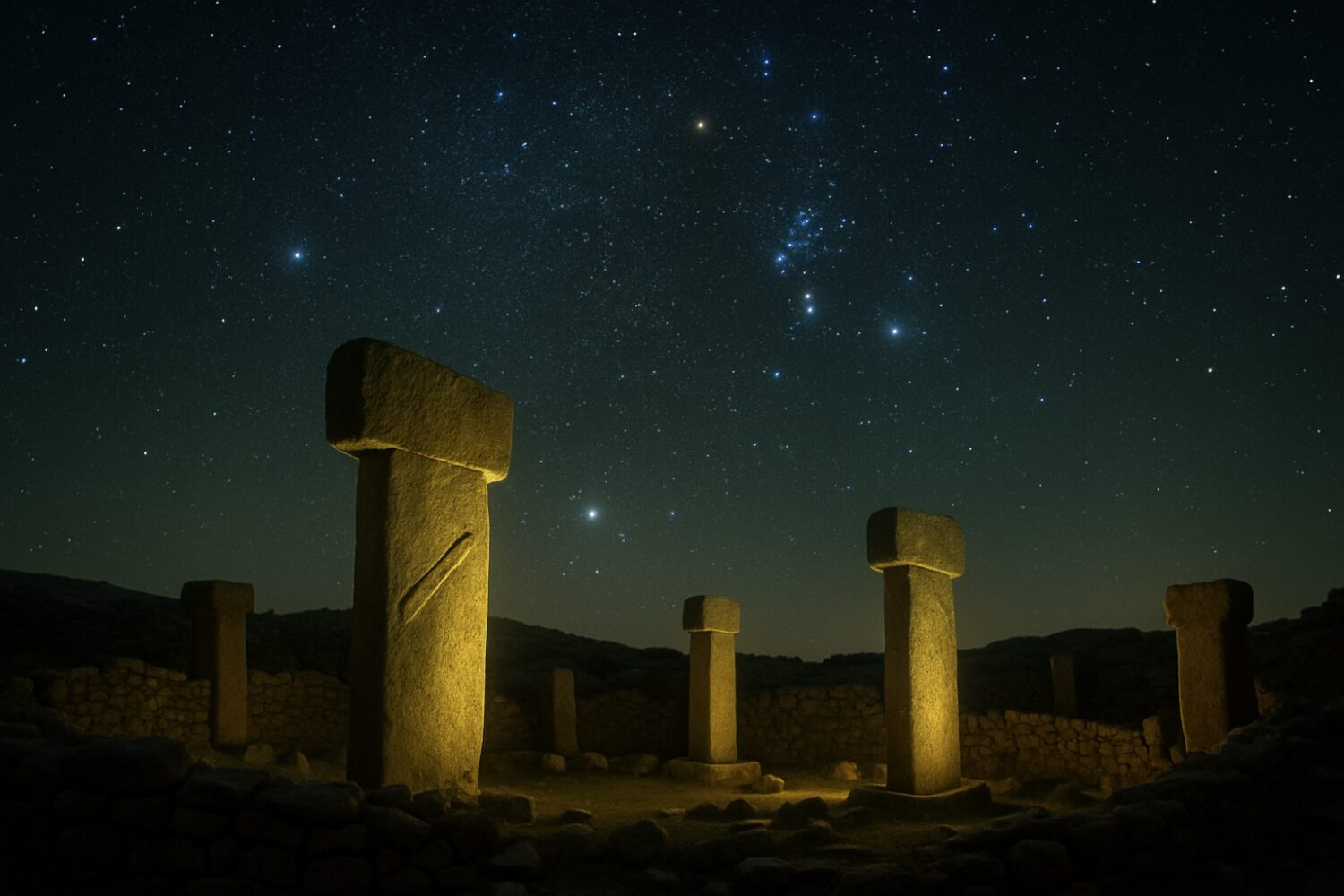
There are moments in history when discovery forces us to question everything we thought we knew about human origins. For me, Göbekli Tepe is one of those moments. The ancient stone pillars rising from the hills of southeastern Turkey feel too deliberate, too advanced, and too astronomically aligned to be the random work of hunter-gatherers. I have always wondered if what we are looking at is not merely humanity’s first temple—but a message left behind by an intelligence far older and wiser than we are.
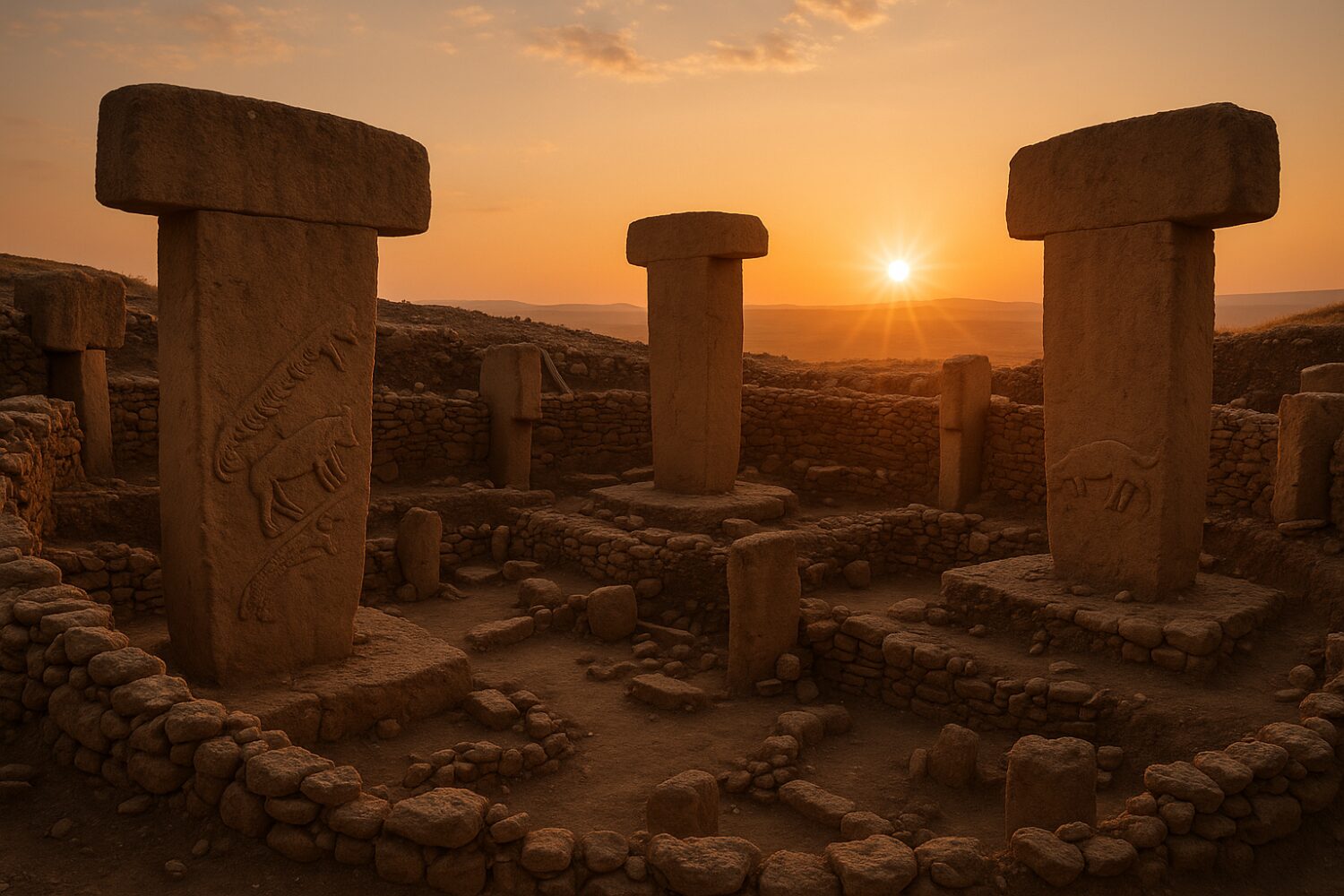
Göbekli Tepe, dated to around 9600 BCE, predates agriculture, pottery, and written language. Its builders somehow quarried and erected multi-ton pillars with intricate carvings that appear to hold symbolic meaning. To some, this is the dawn of organized religion. To others—myself included—it’s evidence of knowledge that should not have existed at that time. The symmetry, the precision, and the astronomical hints carved into stone all point to a possibility that refuses to fade: perhaps Göbekli Tepe was not built entirely by human hands.
The theory that ancient extraterrestrial visitors helped early humans is often dismissed as fantasy, yet it continues to intrigue because it explains what conventional archaeology cannot. How did nomadic tribes possess such architectural mastery? How did they understand celestial patterns so complex that they align with star constellations visible only at specific epochs in Earth’s precession cycle? Some researchers, including alternative historians, suggest that the builders of Göbekli Tepe may have been guided—or even taught—by beings who came from beyond our world.
What captivates me most is the idea that Göbekli Tepe might be a kind of star map. The arrangement of the enclosures and their carvings appear to mirror constellations like Cygnus and Orion, both associated with flight, transformation, and cosmic gateways in ancient mythologies. If the site was meant to reflect the heavens, then perhaps it was also meant as a message: a celestial map pointing back to the home of those who inspired it. It’s as if they left us a cosmic breadcrumb trail, a way to find them again once humanity was advanced enough to look skyward and understand.
The similarities between Göbekli Tepe and the Egyptian pyramids only deepen the mystery. Both sites display an uncanny connection to Orion’s Belt, both use massive stones of almost incomprehensible scale, and both seem to encode knowledge of the stars. Could this mean the same influence reached across continents and millennia? If an alien culture once visited Earth, perhaps they left traces in many places, teaching early civilizations to look to the heavens not just for worship—but for remembrance.
Of course, there’s no definitive proof of extraterrestrial intervention. Archaeology relies on what can be touched, measured, and dated. But absence of evidence is not evidence of absence. Göbekli Tepe defies the timeline of human progress in ways that beg for deeper questions. To me, the possibility that it was a gift from the stars is not only thrilling—it’s humbling. If those ancient architects wanted us to rediscover their message one day, then maybe, just maybe, our rediscovery of Göbekli Tepe means that day has finally come.
 Conspiracy
 Göbekli Tepe