The Challenge of an Uncracked Code
The Voynich Manuscript, housed at Yale University, is filled with over 170,000 characters written in an alphabet found nowhere else. The script shows patterns similar to natural language — word frequency, structure, and repetition — yet it matches no known tongue. This mixture of linguistic logic and total opacity makes it both tantalizing and frustrating for codebreakers.
Historically, cryptographers from World War II codebreakers to NSA linguists have tried their hand at cracking it. Every attempt — substitution ciphers, polyalphabetic decoding, even steganographic techniques — has failed, leaving it as one of the most famous ancient ciphers. Traditional methods simply cannot make sense of a text without context, grammar, or clear translation anchors.
Why AI Might Succeed Where Humans Have Failed
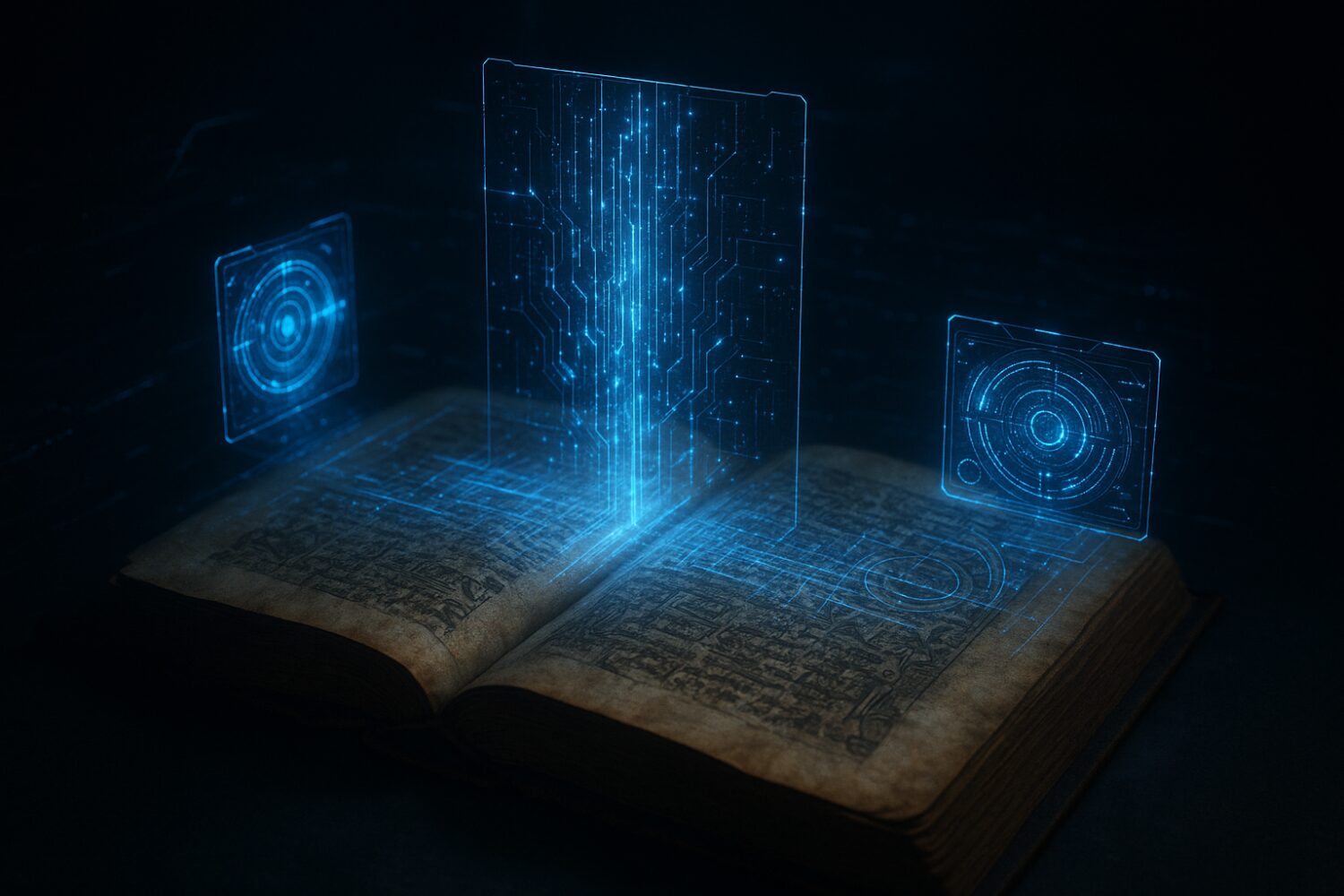
Artificial intelligence has opened new possibilities for textual analysis that did not exist even a decade ago. Machine learning algorithms can process massive datasets, detect non-obvious statistical correlations, and find structural consistencies that the human eye cannot easily spot.
- Pattern Recognition: Neural networks can identify repeating glyph structures, prefixes, and suffixes across thousands of words, helping researchers hypothesize grammar-like features.
- Language Modeling: AI trained on hundreds of languages can attempt to find hidden similarities between Voynichese and obscure or extinct dialects, mapping characters to phonemes or syntax patterns.
- Cross-Modal Analysis: By linking illustrations and text blocks, computer vision models might infer relationships between specific drawings and recurring word clusters — for example, plant images and botanical terminology.
In 2018, a University of Alberta team used an AI algorithm trained on 400 languages. Their system suggested that some Voynich words could correspond to Hebrew, but the translation was incomplete and largely speculative. The test proved that AI could at least narrow the field of possibilities — even if it could not yet offer a readable translation.
The Obstacles for Artificial Intelligence
Despite its promise, AI faces unique challenges with the Voynich Manuscript. Machine learning depends on having examples to learn from — parallel texts, translations, or training corpora. Voynichese has none of these. The model cannot compare it to confirmed samples of the same language, which limits how much it can “learn.”
Furthermore, without knowing whether the text encodes meaning or is pure invention, AI risks overfitting patterns that are coincidental. A neural network might find apparent rules that do not correspond to any linguistic reality, simply because the manuscript’s structure mimics real language patterns.
There is also the possibility that the manuscript’s text was generated by a cipher algorithm that AI models are not equipped to interpret. If each glyph represents a complex substitution or multiple letters, even the most advanced natural language models might fail without cryptographic insight.
Recent Research Directions
Some modern studies combine cryptography and AI. In 2024, a hybrid model trained on ancient scripts used deep learning and symbolic logic to identify potential sub-word clusters in Voynichese, revealing repeating patterns similar to those in Indo-European languages. Another project applied image recognition to connect recurring plant shapes with words that appeared near them, aiming to generate context clues from visuals.
Although none of these efforts have yielded a translation, each brings researchers closer to understanding the manuscript’s internal structure — whether linguistic, coded, or artistic. The consistent spacing, word length, and syntax-like behavior all suggest that it follows some underlying system, however obscure.
Could the Mystery Be Solved?
Artificial intelligence alone may not “read” the Voynich Manuscript in the traditional sense, but it can reveal structural truths that guide human researchers. It might confirm whether the text follows linguistic rules or random generation, and whether recurring symbols represent grammar, code, or nonsense. By doing what humans cannot — processing every character, every pattern, and every relationship — AI can map the terrain of the mystery, even if it cannot yet name it.
Perhaps the final decoding will not come from a single AI breakthrough, but from collaboration: humans interpreting the statistical patterns that machines uncover. The Voynich Manuscript has resisted every human codebreaker for centuries. If it ever yields its secrets, artificial intelligence will almost certainly play a crucial part.