

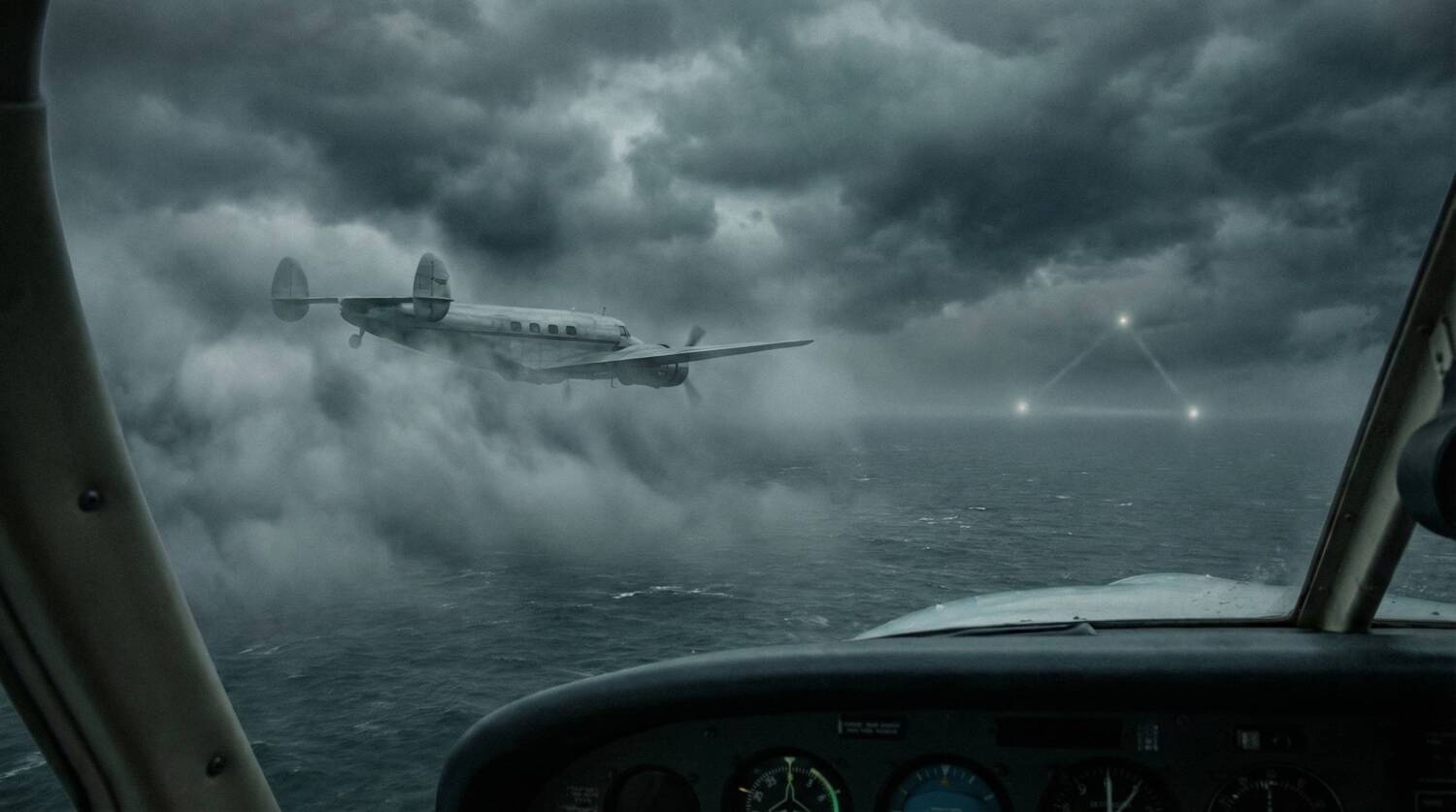
The Bermuda Triangle once stirred global fascination, a patch of ocean stretching between Miami, Bermuda, and Puerto Rico that seemed to swallow ships and planes without a sound. For most of the twentieth century, newspapers and television specials chronicled its alleged victims: Flight 19 in 1945, the SS Marine Sulphur Queen in 1963, and countless others that supposedly vanished in calm weather. Yet in recent years, the Triangle has fallen silent. People no longer disappear there in mysterious circumstances. What changed?
The Decline of the “Mysterious Disappearance”
From the 1950s through the 1980s, the Bermuda Triangle was a symbol of the unknown. Pilots reported compass failures, sailors transmitted frantic distress calls, and writers wove theories of magnetic anomalies, alien abductions, and dimensional rifts. But as technology advanced, these tales grew harder to sustain. The accidents never truly stopped, but the veil of mystery around them did.
Modern analysis by organizations such as the National Oceanic and Atmospheric Administration (NOAA) and insurance groups like Lloyd’s of London has shown that the number of incidents in the Bermuda Triangle is not statistically unusual compared with other heavily traveled ocean regions. The triangle’s infamy came not from data, but from storytelling. Early researchers, lacking satellite tracking or accurate weather records, could only guess what had happened to lost vessels. Today, we have far more to go on.
Technology and Transparency
The main reason we hear fewer stories about people getting lost in the Bermuda Triangle is that it is now almost impossible for a large vessel or aircraft to simply vanish. Global Positioning System (GPS) tracking, satellite communication, radar coverage, and automatic distress beacons ensure that even when tragedy strikes, rescuers can locate the wreckage within hours or days. In earlier decades, navigation errors of only a few degrees could send a ship or plane hundreds of miles off course. Today, autopilot systems and precise instrumentation make that kind of drift nearly impossible.
Weather forecasting has also transformed maritime and aviation safety. The same region that once spawned sudden squalls, rogue waves, and hurricane-force winds is now monitored in real time by meteorological satellites. Modern ships and aircraft receive continuous updates about storm activity, allowing captains and pilots to alter their routes long before encountering dangerous weather. In the early twentieth century, a ship might sail blindly into disaster. Today, storms are mapped, named, and tracked from their first moments of formation.
Recent Incidents: Still Accidents, Not Mysteries
Even in the twenty-first century, ships and planes occasionally meet disaster within the geographic bounds of the Bermuda Triangle, but these losses are quickly explained. In May 2021, a small twin-engine plane disappeared between the Bahamas and Florida. Within days, wreckage was found floating near its last known coordinates. Investigators concluded mechanical failure or pilot disorientation, not anything supernatural. In October 2015, the cargo ship El Faro sank in hurricane conditions within the Triangle’s region, killing all 33 aboard. The ship’s voyage data recorder, recovered from the seafloor, confirmed that the tragedy was the result of human decision-making and extreme weather — not an inexplicable disappearance.
These cases remind us that the ocean remains dangerous. Storms, equipment failure, and human error still claim lives. The difference is that such incidents are documented, explained, and recorded, leaving no room for myths to grow. The so-called Triangle remains one of the most heavily traveled shipping and flight corridors on Earth, and modern monitoring ensures that even when something goes wrong, it rarely becomes an enduring mystery.
The End of a Modern Myth
The Bermuda Triangle’s mystery faded not because the sea grew calmer, but because knowledge caught up with imagination. The very idea of a region where things “disappear without a trace” belonged to an age before digital tracking, satellite imaging, and instantaneous communication. In today’s world, every aircraft’s transponder signal, every vessel’s AIS beacon, and even the weather itself is monitored in real time. There are fewer dark spaces left on the map where legends can grow.
Still, the Bermuda Triangle retains its allure. It stands as a reminder of how easily mystery can arise from uncertainty — and how quickly it fades under the light of understanding. The Triangle has not stopped taking lives, but it has stopped taking them without explanation. What once seemed a supernatural enigma is now a case study in the evolution of technology, human curiosity, and the shrinking frontiers of the unknown.
 The Bermuda Triangle